South Georgia is a large, mountainous, treeless island located in the South Atlantic ocean, approximately 940 (1,515 km) miles northeast of the Antarctic Peninsula. It is one of the more remote places on Earth, reached by a 3-day boat ride from the Falkland Islands. James Cook made the first landing and survey of the island and took possession for Britain in January of 1775. The island was invaded by Argentina during the Falklands War in 1982 and recaptured by the British after about a month.
Today, there is a small population of mostly scientists, ranging from about 20-30 people during the course of the year. Aside from them, the island is mostly inhabited by seals (Southern Elephant and Fur) and millions of penguins – primarily King, Macaroni, and Gentoo, with smaller numbers of Chinstrap, Adelie, and Rockhopper.
Elephant Seals
About 50% of the world’s population of Southern Elephant Seals – some 400,000 animals – make their home on South Georgia. These animals are enormous, as the largest of the Carnivora, twice as large as a walrus, and 6-7 times as large as a Polar Bear; males can grow as large as 8,800 lbs (4,000 kg) and can be almost 20 feet (6m) in length.

During the mating season, the males fight for dominance and ownership of a section of the beach; they may have a harem of dozens of females which they must continue to defend during the breeding period. These battles are rarely fatal, but can result in serious wounds. And, while the seals are not generally aggressive to people, it is very important to pay attention, as if you find yourself between the dominant male and an invader, it’s possible to be flattened by the beachmaster as he races to defend his turf.

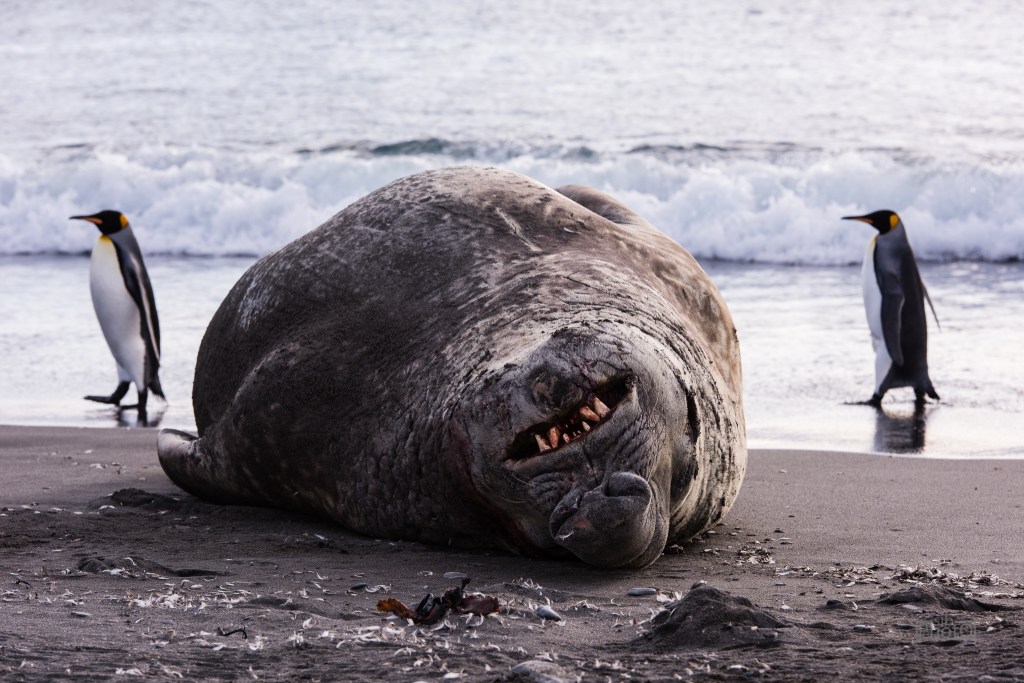
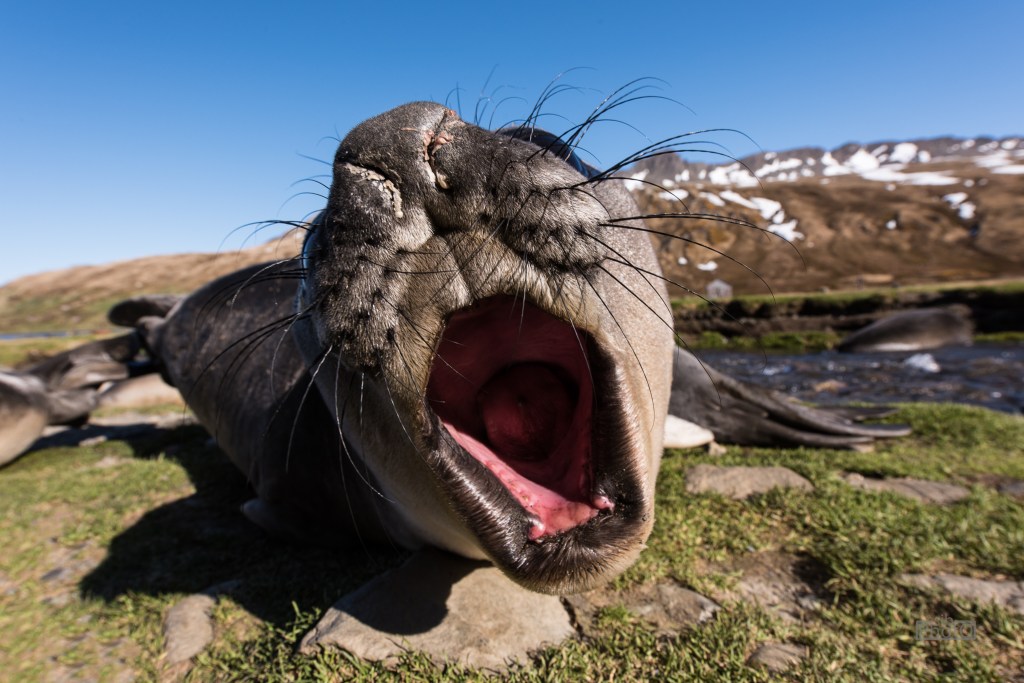
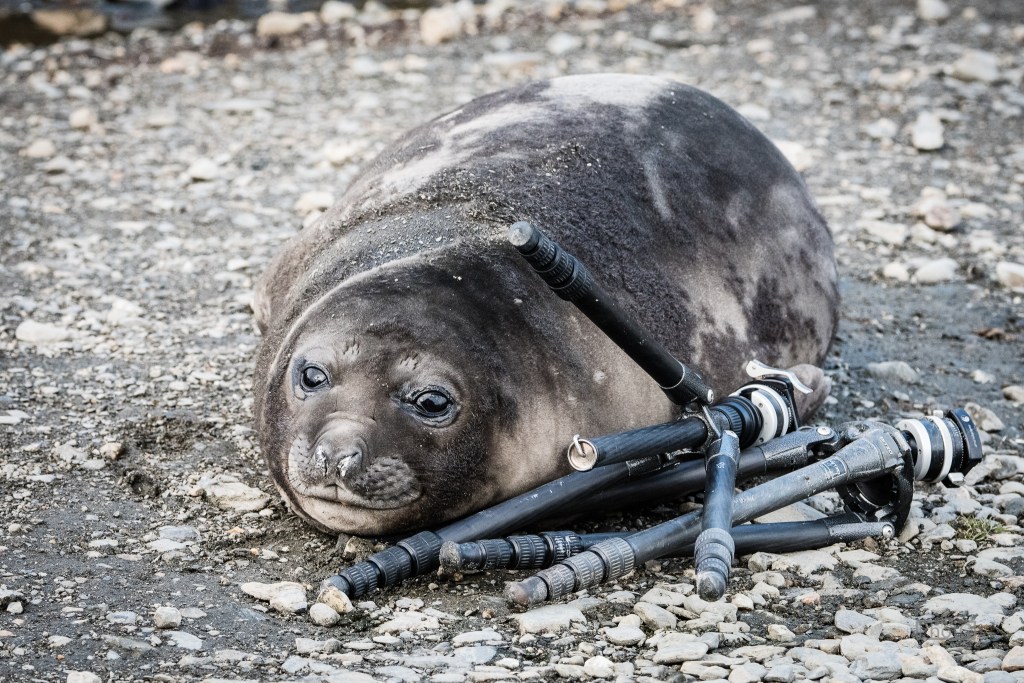
While the adult males are quite ugly, and often covered with scars from dominance battles, the young seals are very cute and curious and don’t hesitate to approach people.
Penguins
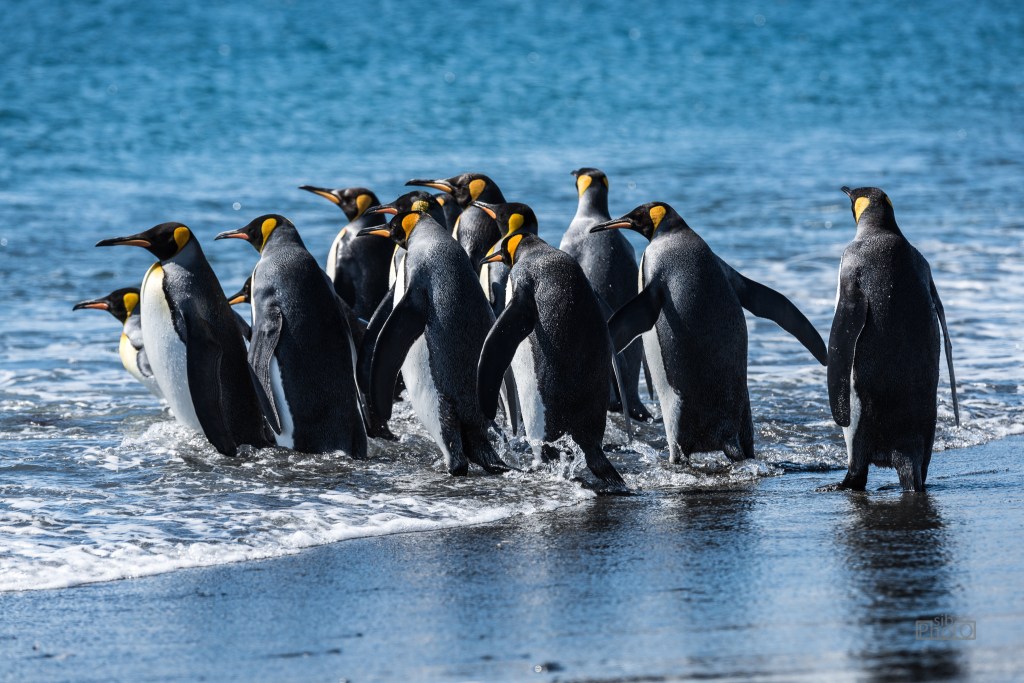
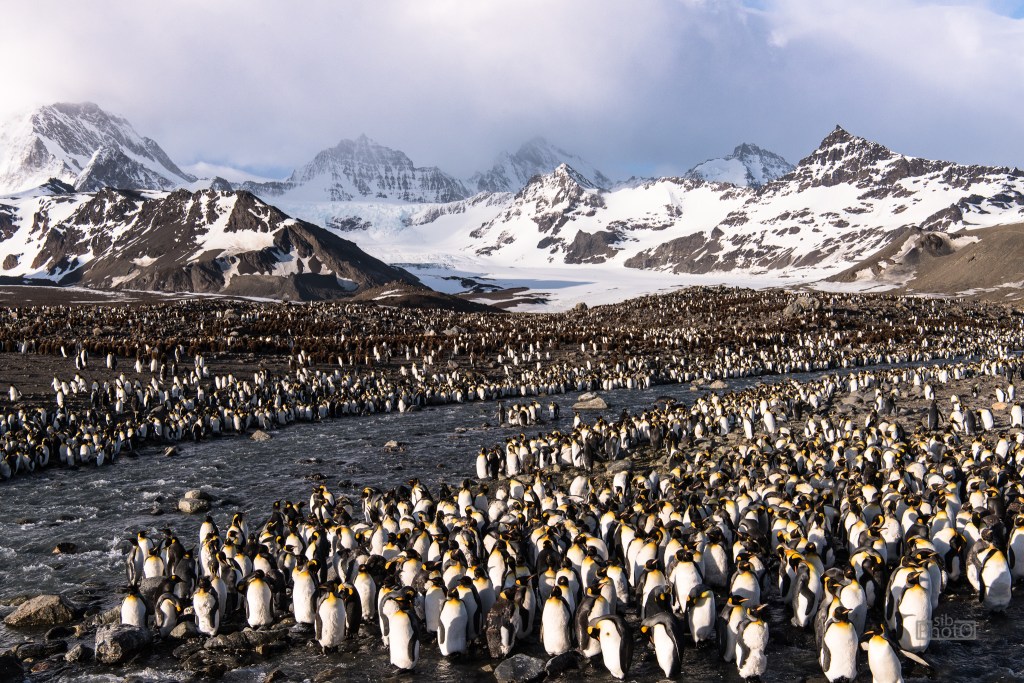
South Georgia is full of penguins – on some individual beaches there are more than 250,000 individual King Penguins, which is an amazing sight to see. The King Penguins are the second largest of all penguins, with adults ranging from 28-39 inches (70-100 cm) tall and 21-40 lbs (9-18kg) in weight.
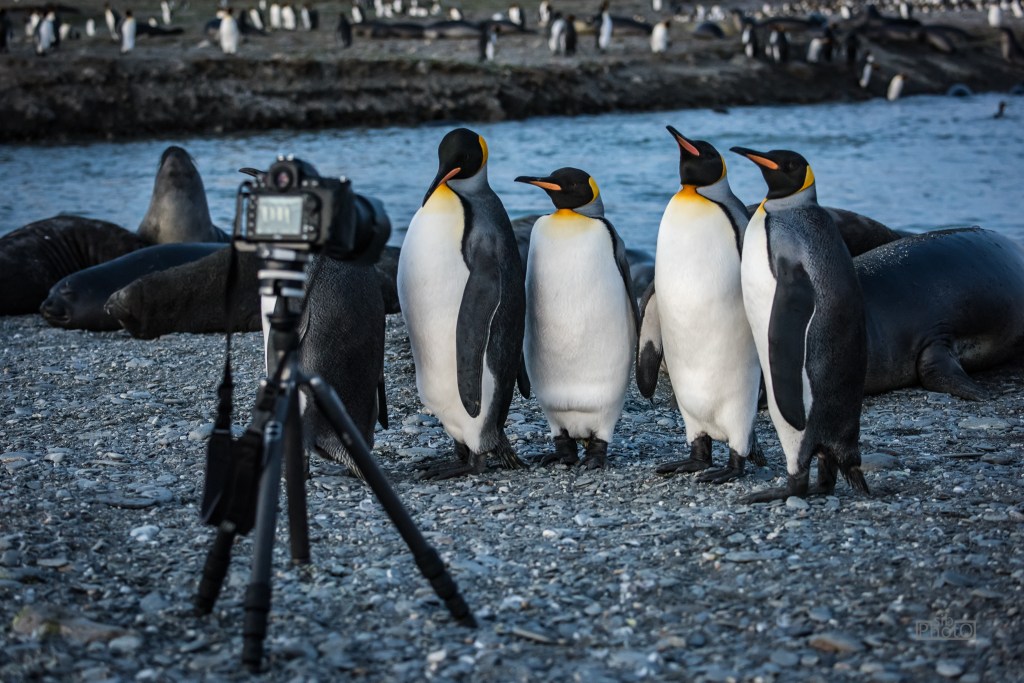
The penguins don’t seem to mind our presence; we mostly sat in place and just watched them conduct their business around us. Sometimes the scenes looked quite funny, as when this group seemingly paused for a portrait in front of my camera.

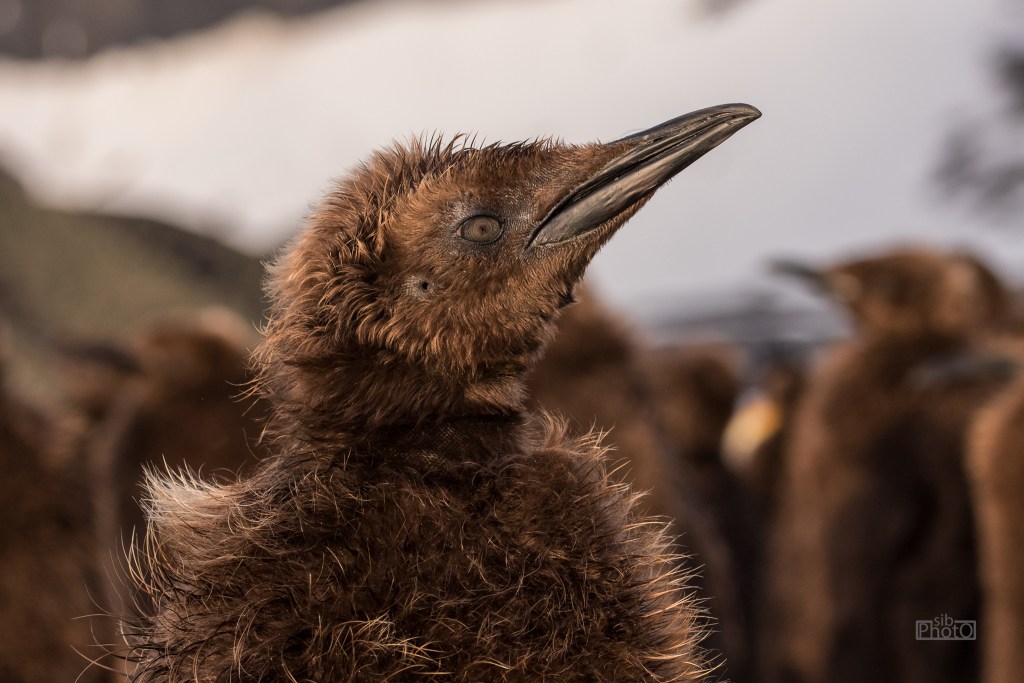
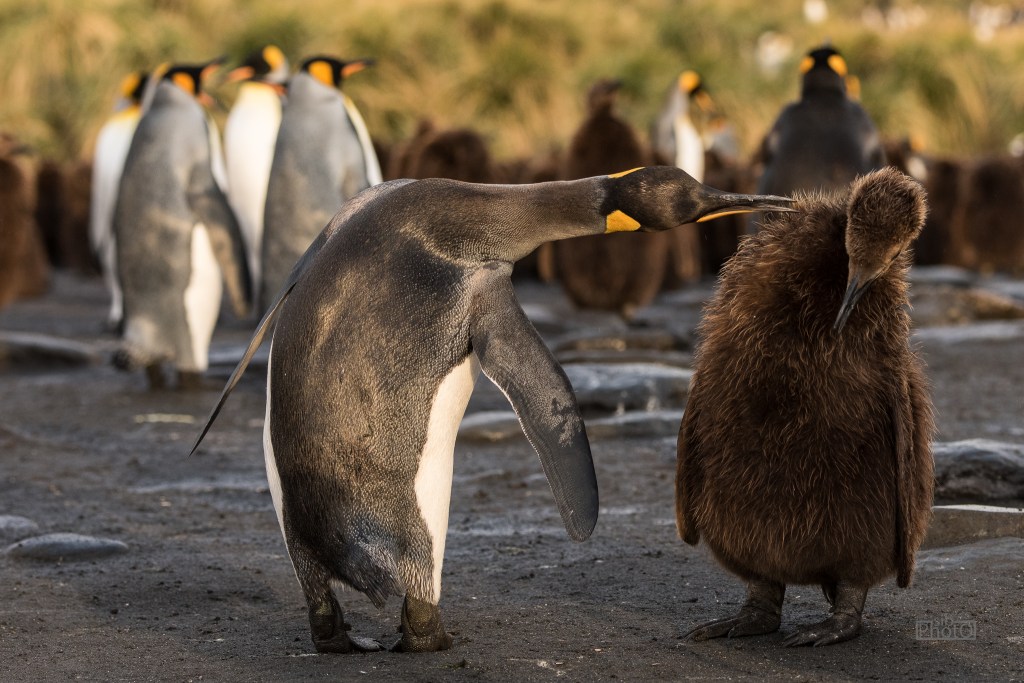
Unlike the Elephant Seals (and most animals), the baby penguins (chicks) are a bit strange-looking compared to the adults.
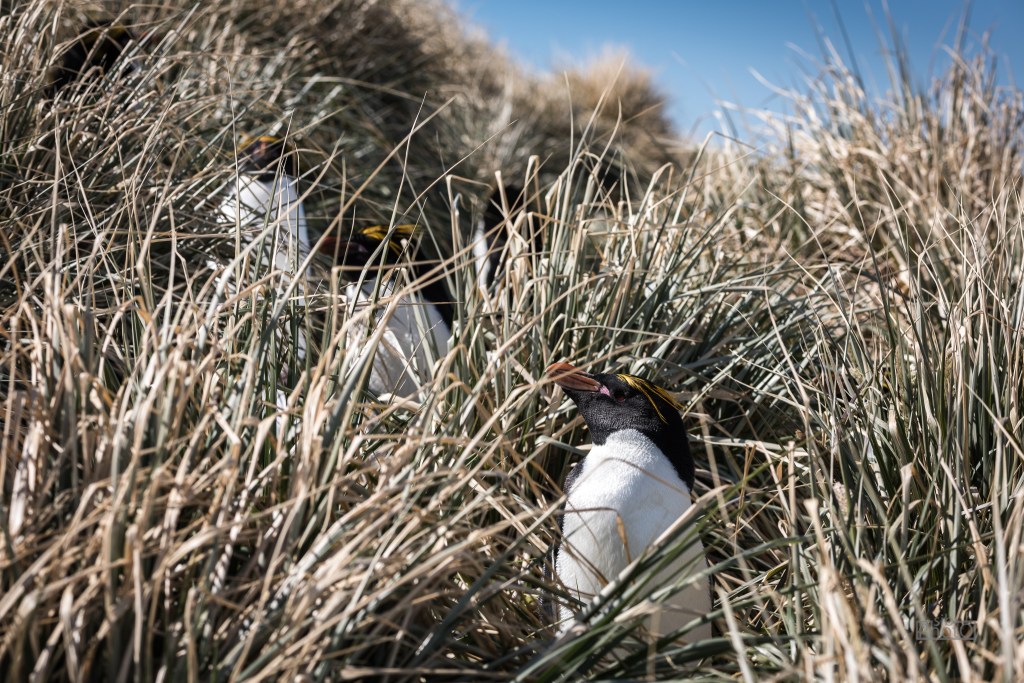
Macaroni Penguins are also found in large numbers on South Georgia. Smaller than the Kings, they are known and named for the bright yellow crest above the eyes.

While the Kings live on the flats just above the beach, the Macaronis prefer to nest hidden by the tall grasses on steep hillsides.
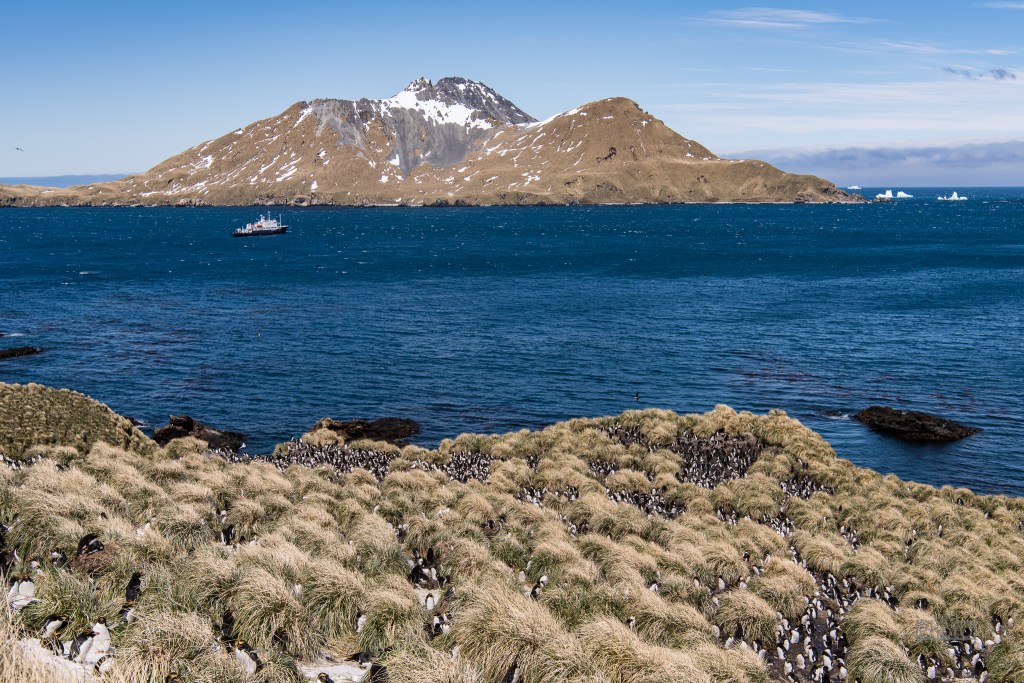
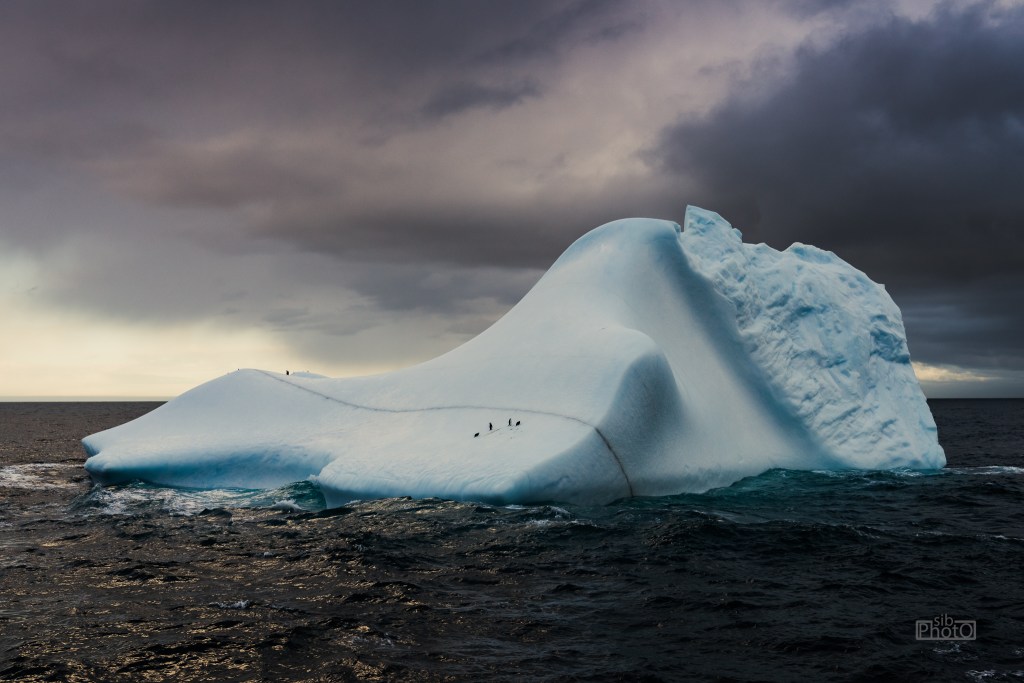
The penguins spend much of their time at sea, swimming long distances (hundreds or even thousands of miles) to feed and bring back nutrients for their chicks. Sometimes they hitchhike on the icebergs that float past the island.



 Fernweh
Leave a comment