Kodiak Island lies off Alaska’s southern coast, across the Shelikof Strait from Katmai National Park. We traveled there to photograph brown bears during the late summer salmon run, using Kodiak as our base and taking two floatplane trips into different parts of Katmai.
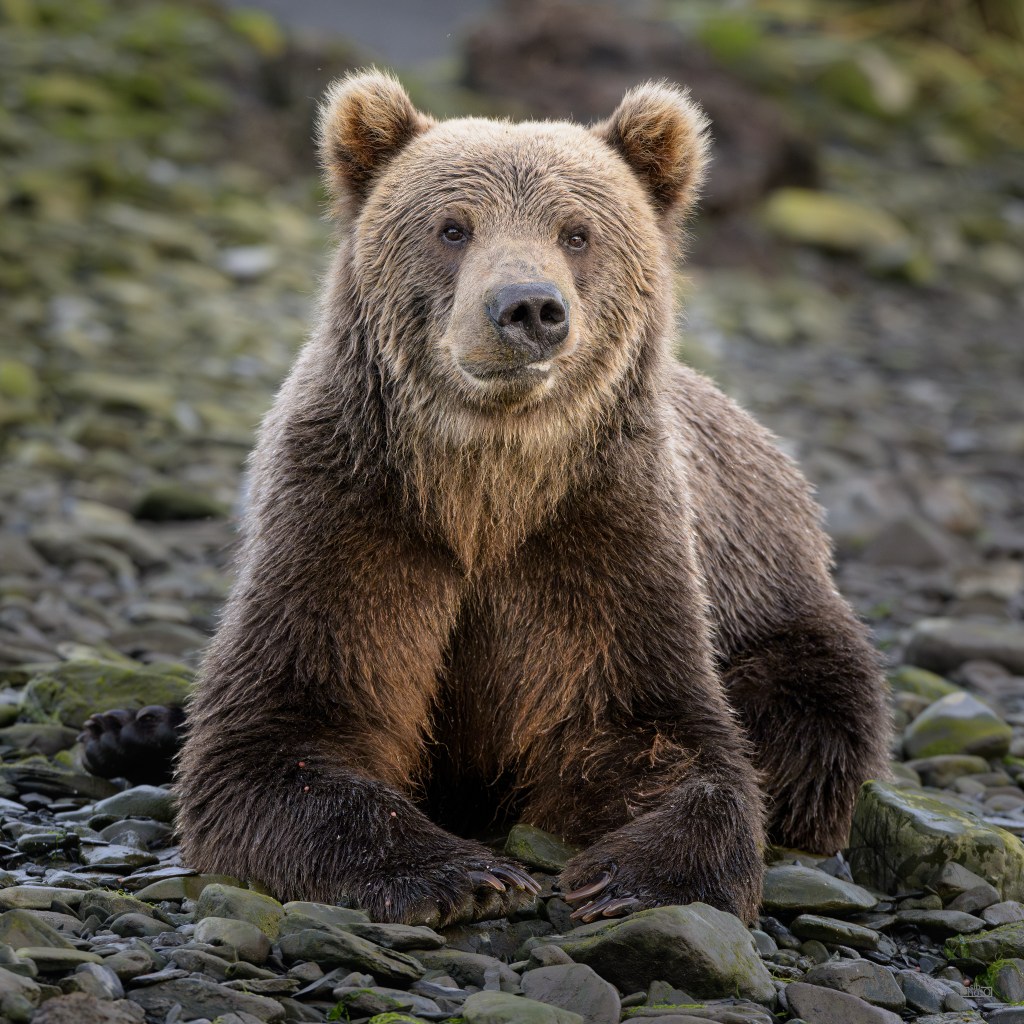
Kodiak Island covers about 3,600 square miles, making it the second-largest island in the United States. It supports an estimated 3,500 Kodiak brown bears (Ursus arctos middendorffi), a subspecies found only in the Kodiak Archipelago. Large males can weigh as much as 1,500 pounds (680 kg).
Kodiak Island and Katmai National Park
We flew from Los Angeles to Anchorage, then continued to Kodiak with our friends Wes and Ben. After checking into a bed and breakfast, a local guide showed us the town and several places where bears regularly appear.
Near sunset, we found our first bears fishing close to the mouth of the Buskin River, just west of town and near the airport. The location was less remote than expected; aircraft noise and salmon fishing occupied the same patch of river.

Kodiak bears are larger on average than brown bears on the mainland. Their size is generally attributed to the island’s abundant food, particularly salmon, and the absence of competing large predators. Size did not make them easier to follow through tall grass.
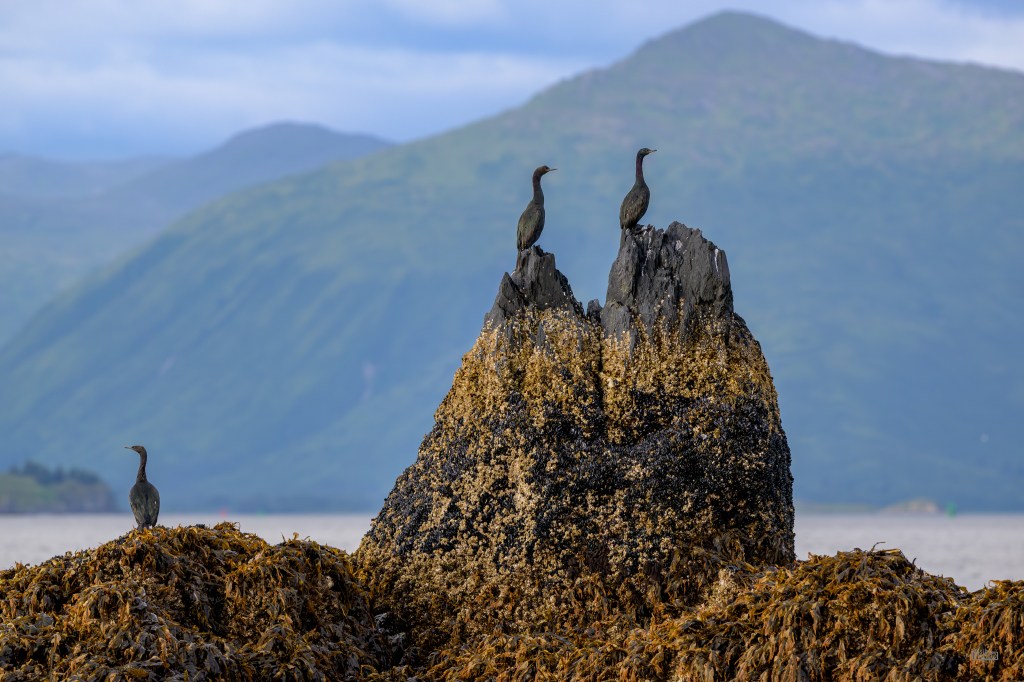
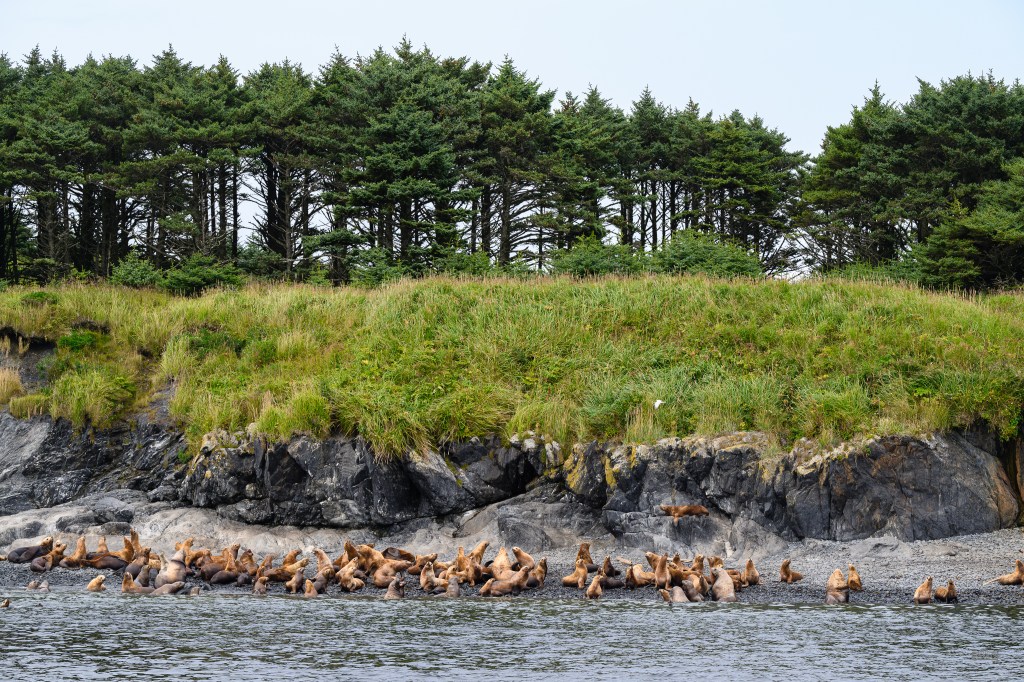
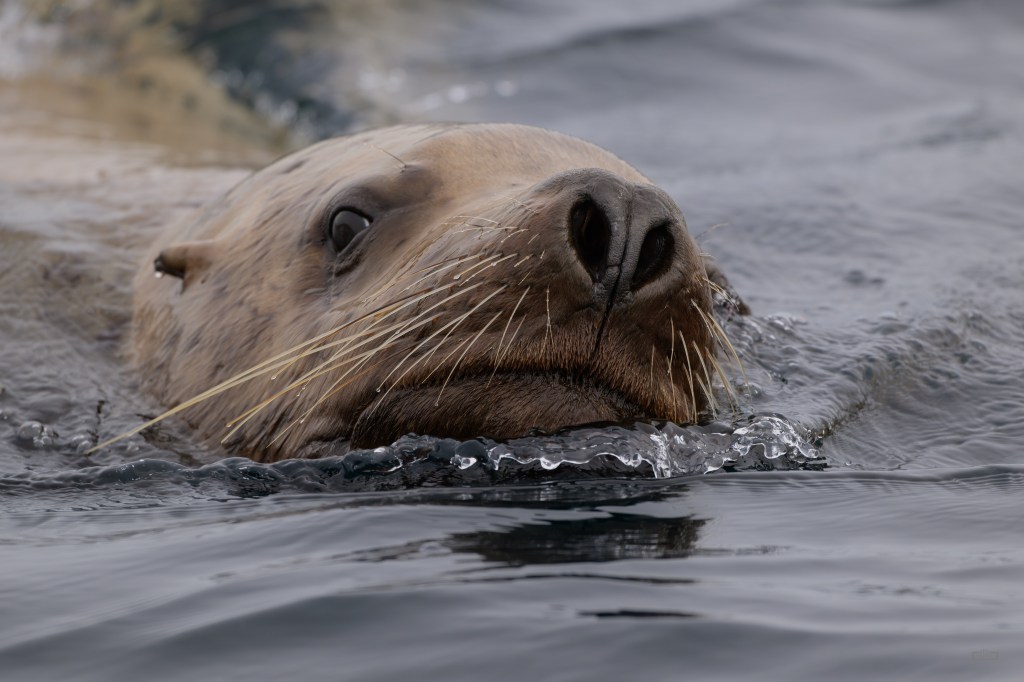
We spent two other days exploring the island. A boat trip with Lee Robbins took us through the Kodiak Archipelago, where we saw sea otters, sea lions, seabirds, and whales. On land, Kodiak Hana, the Olds River Inn, Harborside Coffee, and Bean & Bloom kept us fed and caffeinated.
Big Ray’s great outdoors shop supplied replacements for gear we had forgotten. This was useful, although remembering the gear would have been cheaper.
Geographic Harbor
We met Willy, our pilot, and Jen, our guide and naturalist, from Kodiak Island Expeditions. Their floatplane carried us across the strait to Geographic Harbor in Katmai National Park. After landing, we hiked upstream and waited beside a salmon stream for the bears to arrive.
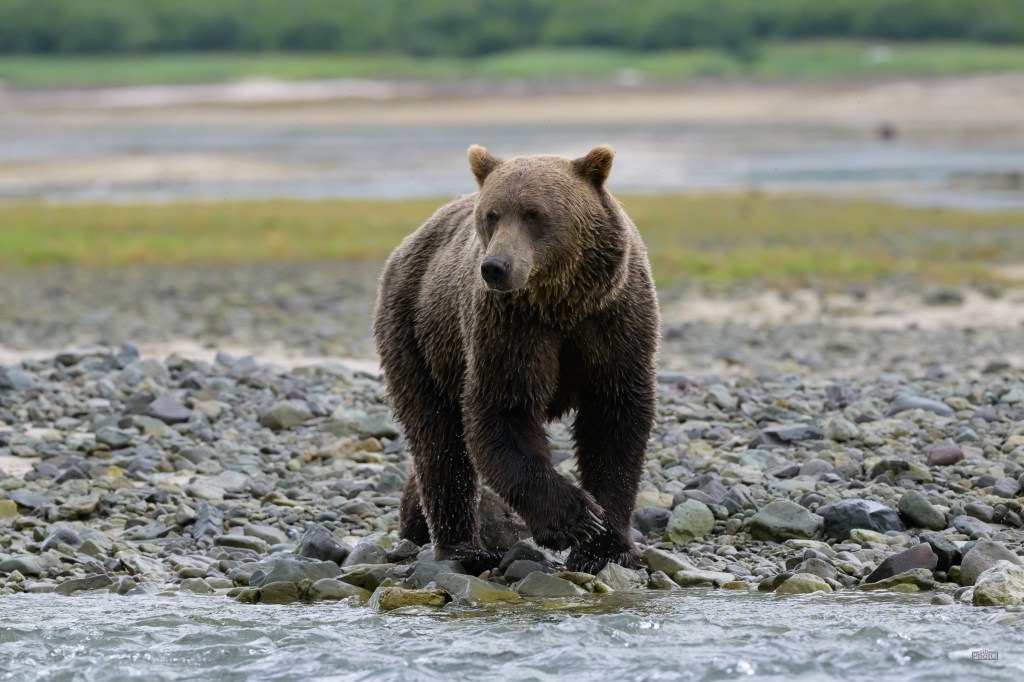
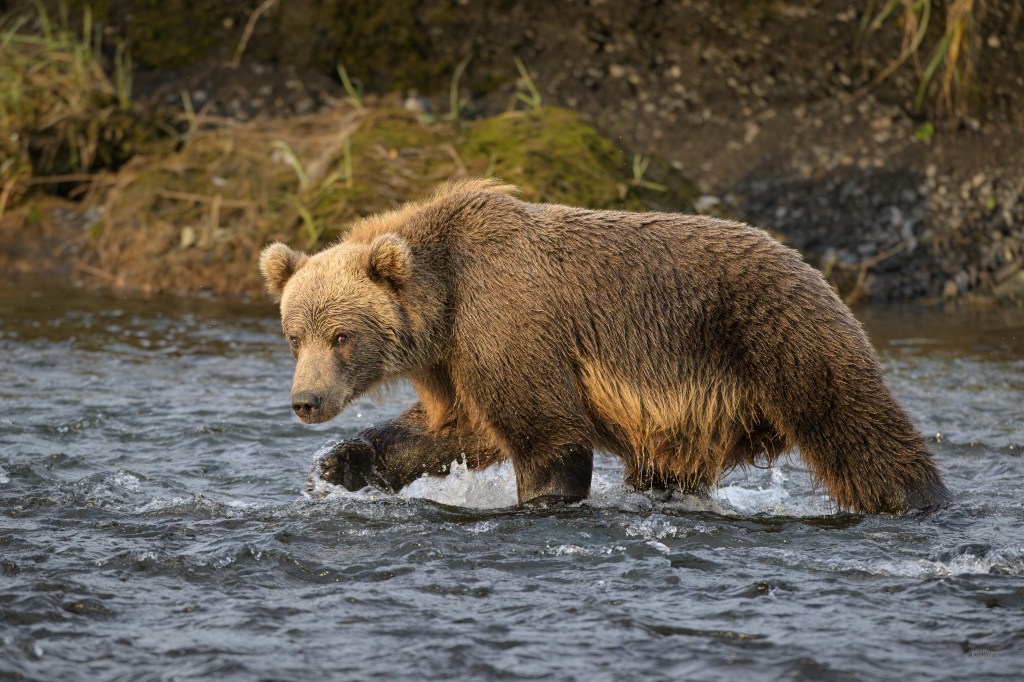
Over about six hours, we saw adult males and females, subadults, yearlings, and cubs of the year. Different ages used the stream differently. Some bears stood in one channel and waited; others paced the bank or charged through shallow water after individual fish.
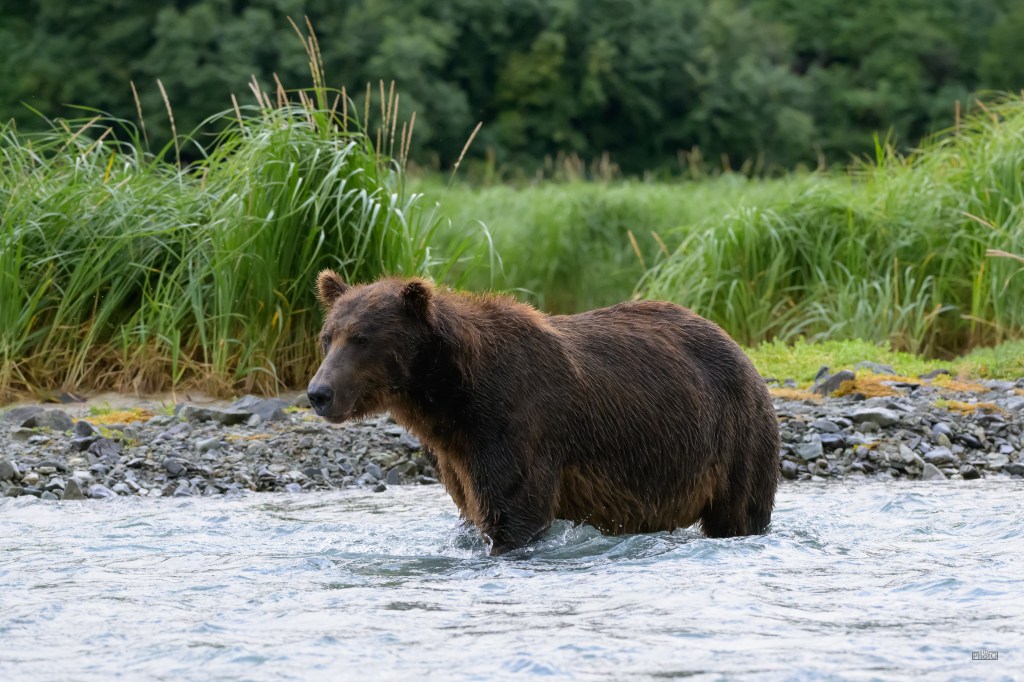
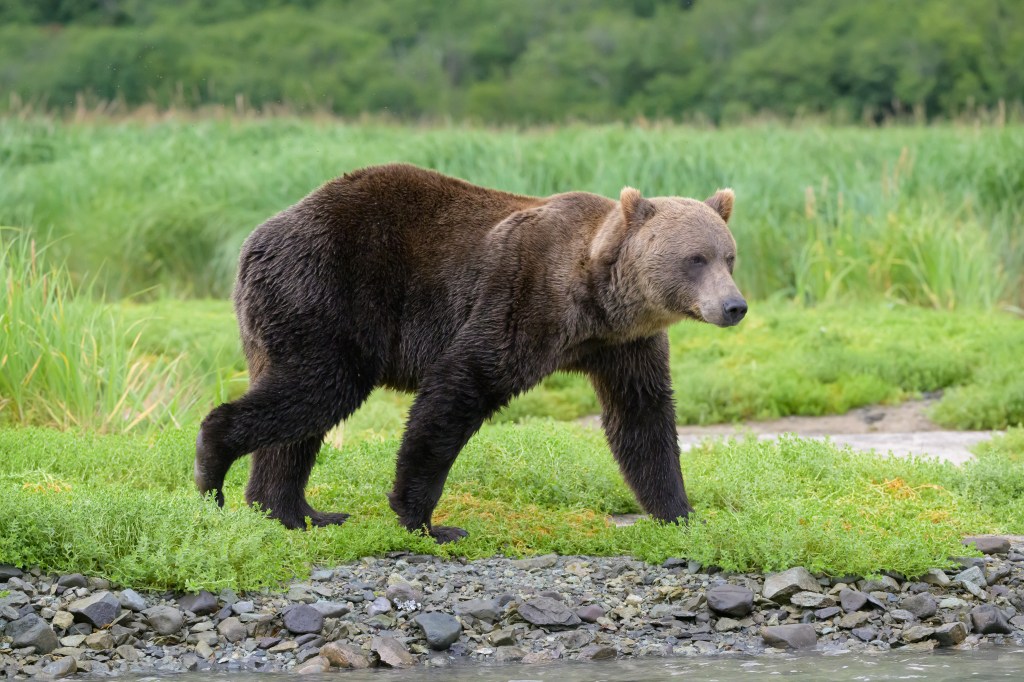
During the salmon run, feeding occupies much of the bears’ attention. A bear might pass within five or ten feet of us while moving between sections of the stream, but that did not mean it was unaware of us. Jen chose where we waited, monitored each approach, and kept the group together.
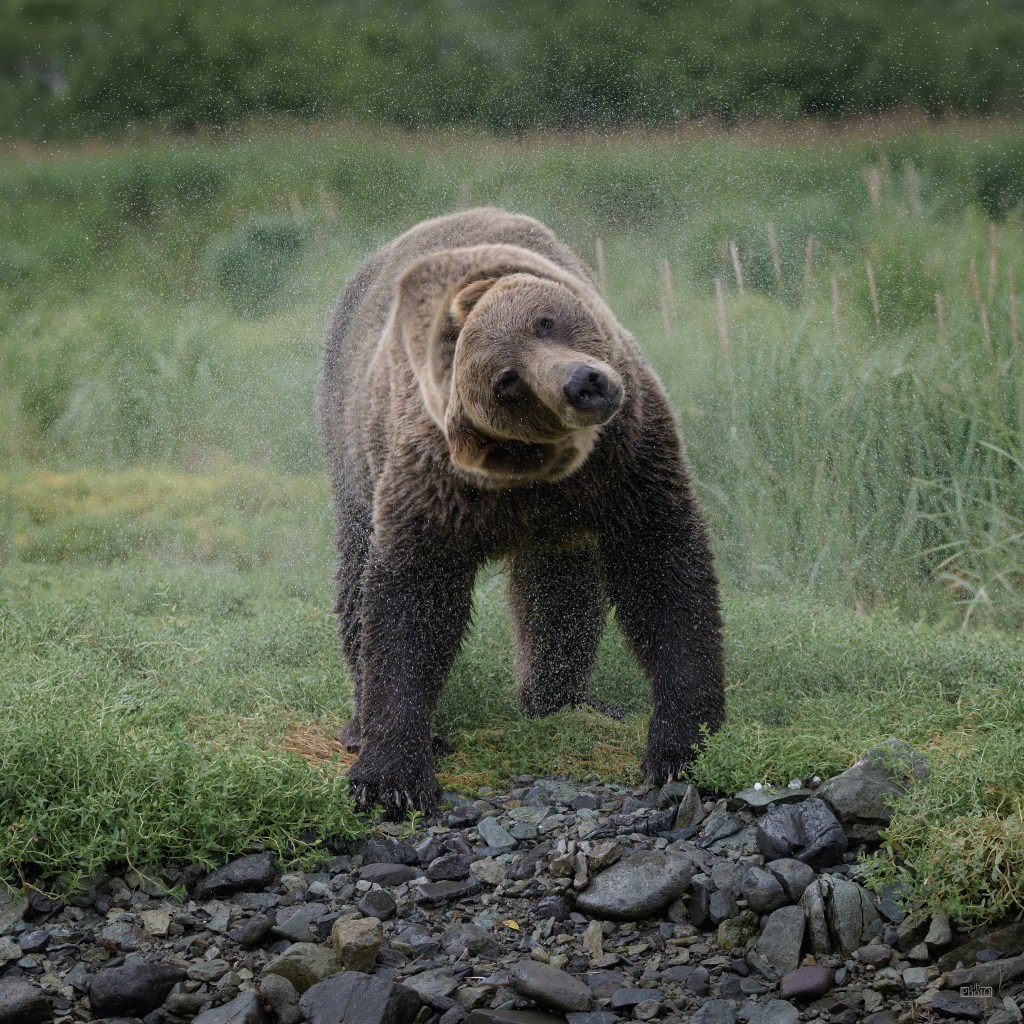
Most of the photographs were made at 1/800 second or faster. That was enough to hold detail in walking bears and splashing water, although a full-speed chase sometimes required more. The harder problem was deciding where the next fish, and therefore the next bear, would appear.
Katmai became protected in 1918, initially as a national monument around the site of the 1912 Novarupta eruption and the Valley of Ten Thousand Smokes. The eruption lasted three days and was the largest of the twentieth century, roughly 30 times the volume of the 1980 Mount St. Helens eruption. Its ash deposits and the collapse of Mount Katmai remain part of the landscape, even though we had come to watch the streams.
Kinak Bay
Our second flight with Willy and Jen landed in Kinak Bay, in another part of Katmai. From there we hiked several miles along a stream, with enough repeated climbing and descending to make the distance feel understated.
There were fewer bears than we had seen in Geographic Harbor. Having already spent a day beside the streams, we were less inclined to photograph every movement. We watched longer and waited for behavior that differed from the first visit.
Some bears ate grasses and sedges between fishing sessions. The vegetation provides food early in the season and continues to supplement the heavy salmon diet later in the summer.
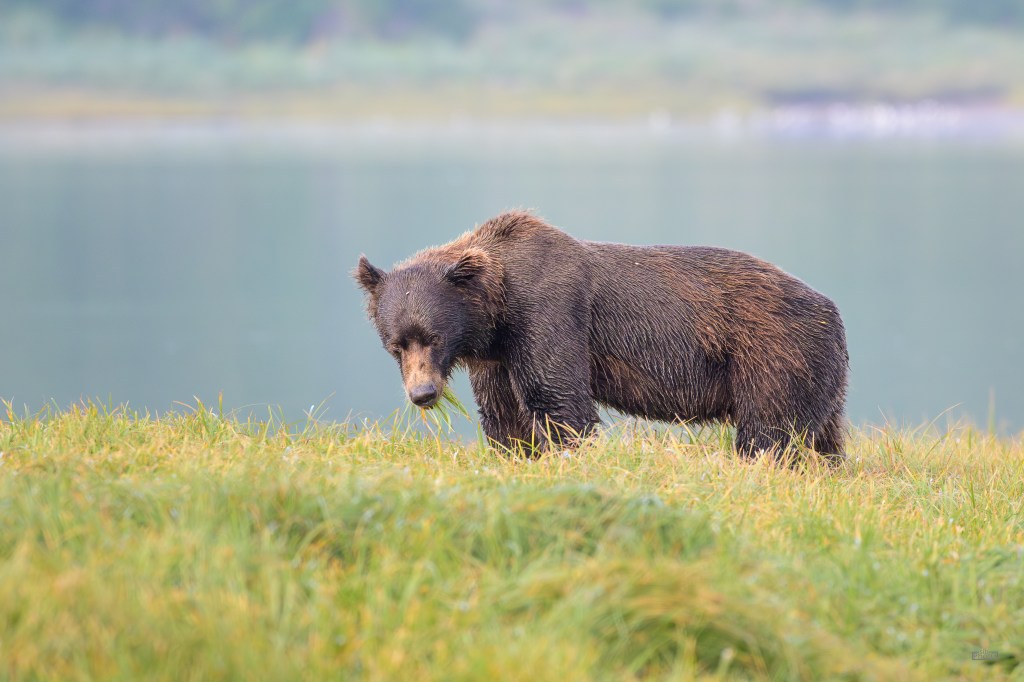
The bears always knew where we were, even when they appeared to ignore us. They worked the stream methodically, checking pools and shallow runs where salmon were visible. Fishing involved repeated failures and short bursts of speed.
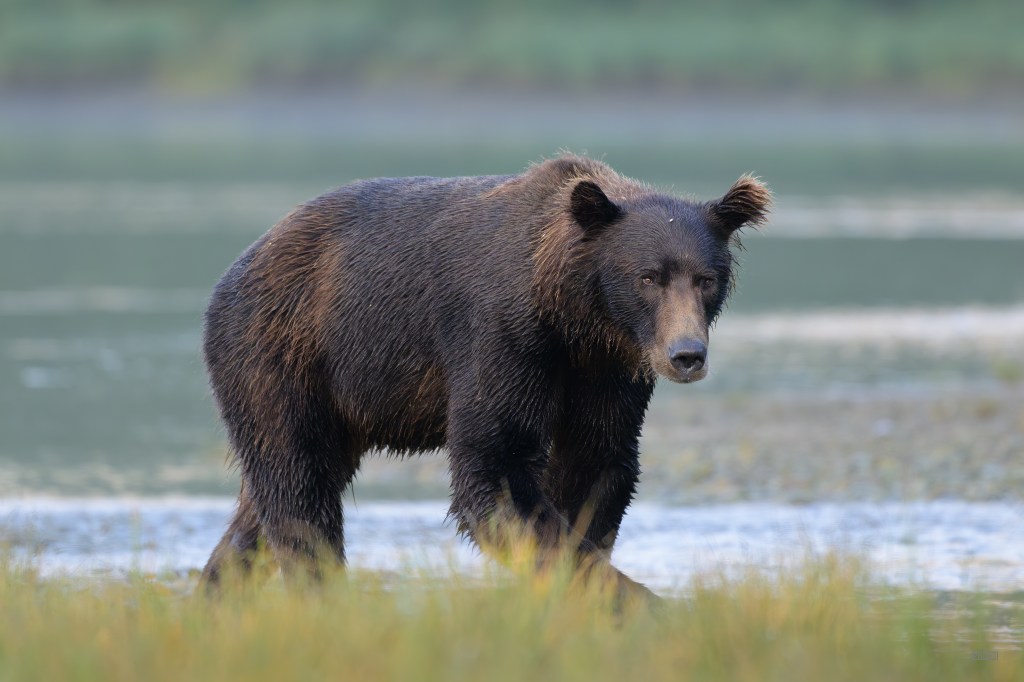
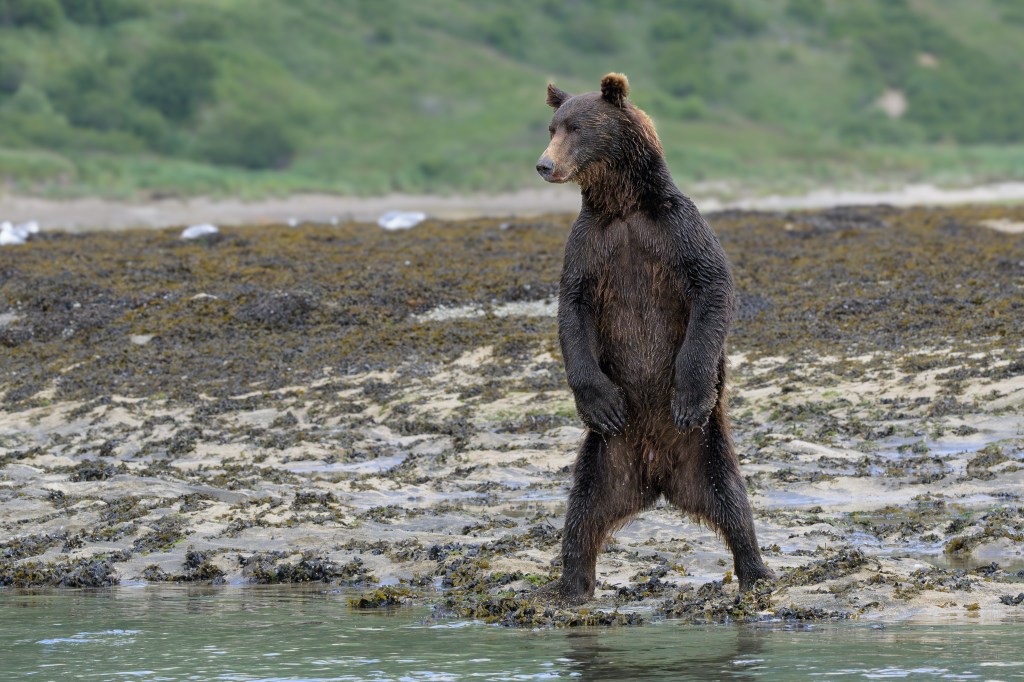
One bear tore downstream after a fish fast enough to require a 1/1600-second shutter. Another stood upright to see over the grass and inspect the stream. Standing made the bear easier to photograph and substantially more imposing.

One bear caught two salmon at once. Given the number of missed attempts we had watched, the result was very impressive.
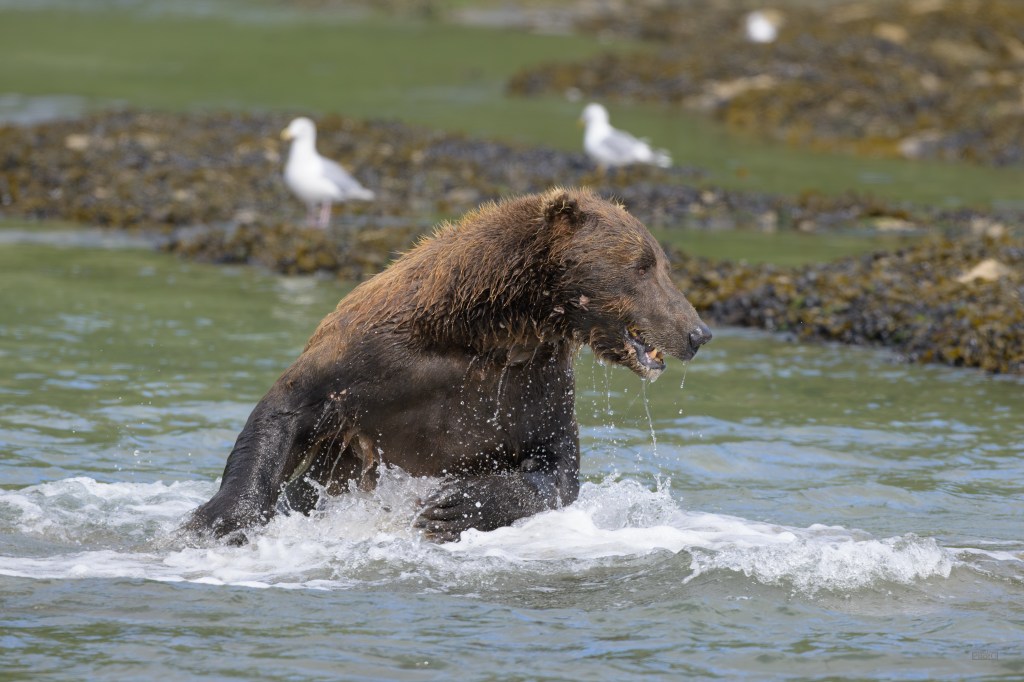
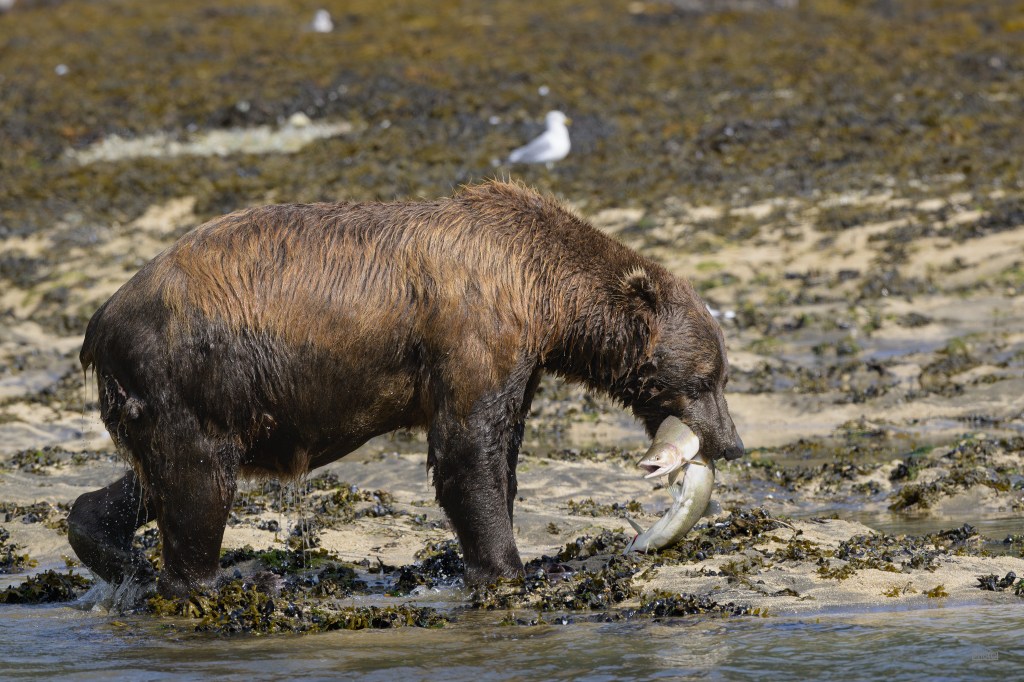
Wind on our final day
Strong winds cancelled our planned third flight to Katmai. Instead, we searched local streams on Kodiak without a guide. By then we had learned to recognize some productive sections of water and to look for tracks, disturbed vegetation, and fish remains.
We found several bears fishing. After catching a salmon, a bear killed it by shaking it forcefully from side to side, then carried it away from the stream to eat.
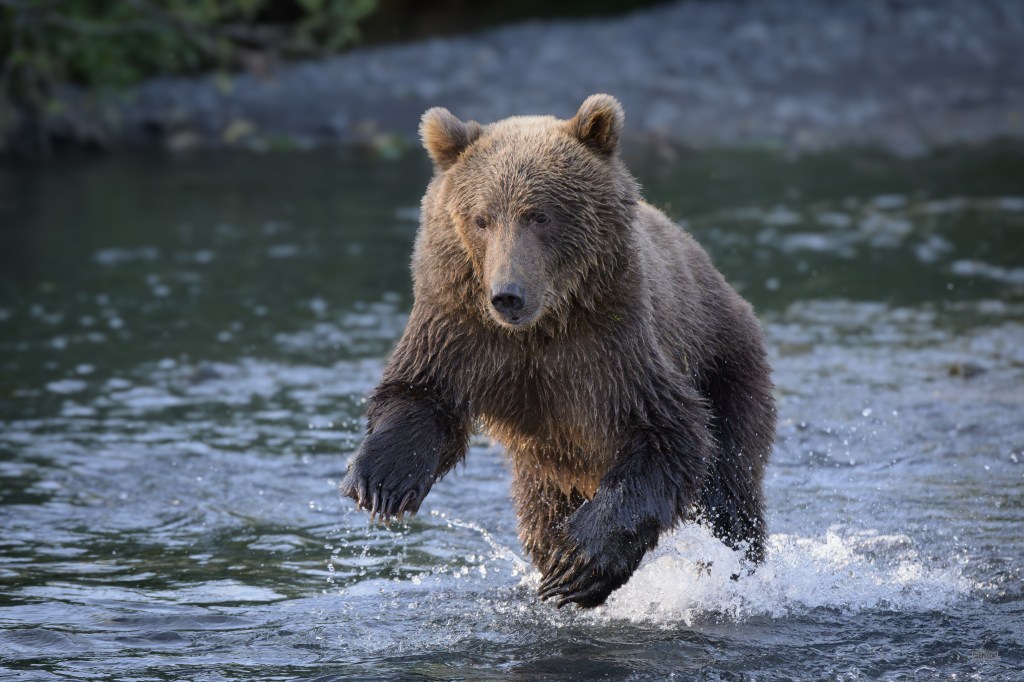
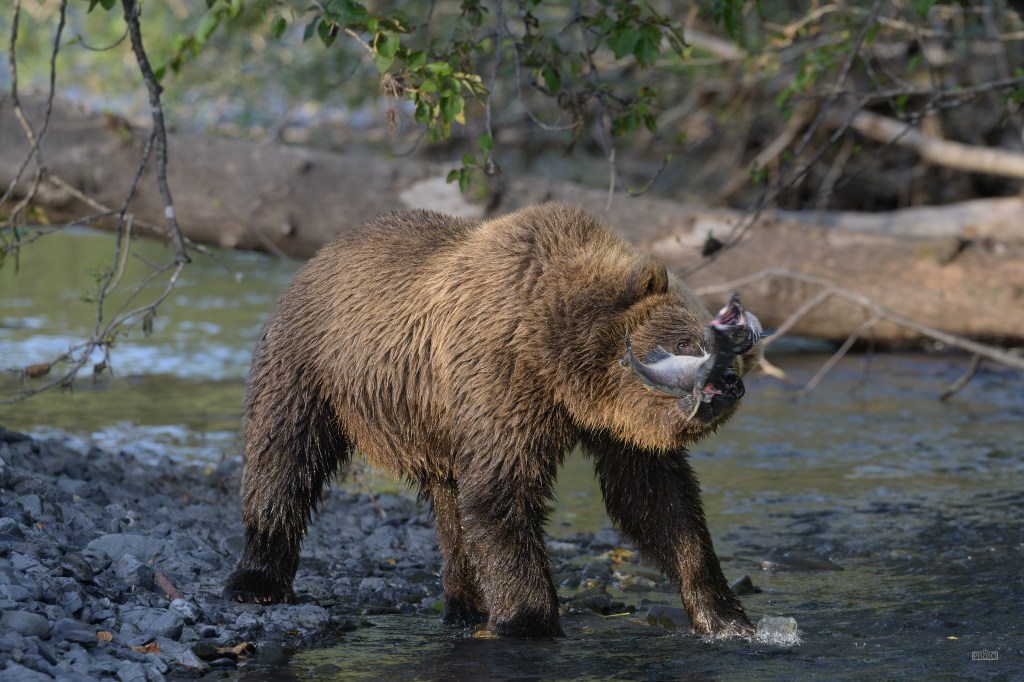
The self-guided day required more caution. Bears were not always in the water or in an open patch of grass. We found one resting in a tree and another eating behind branches close to the trail.
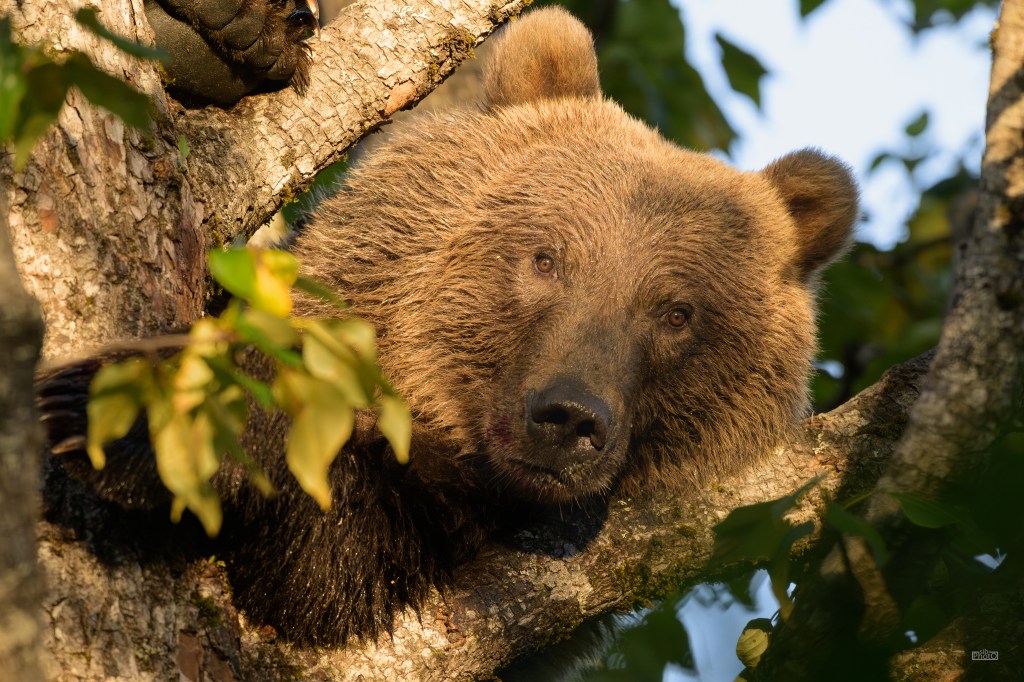
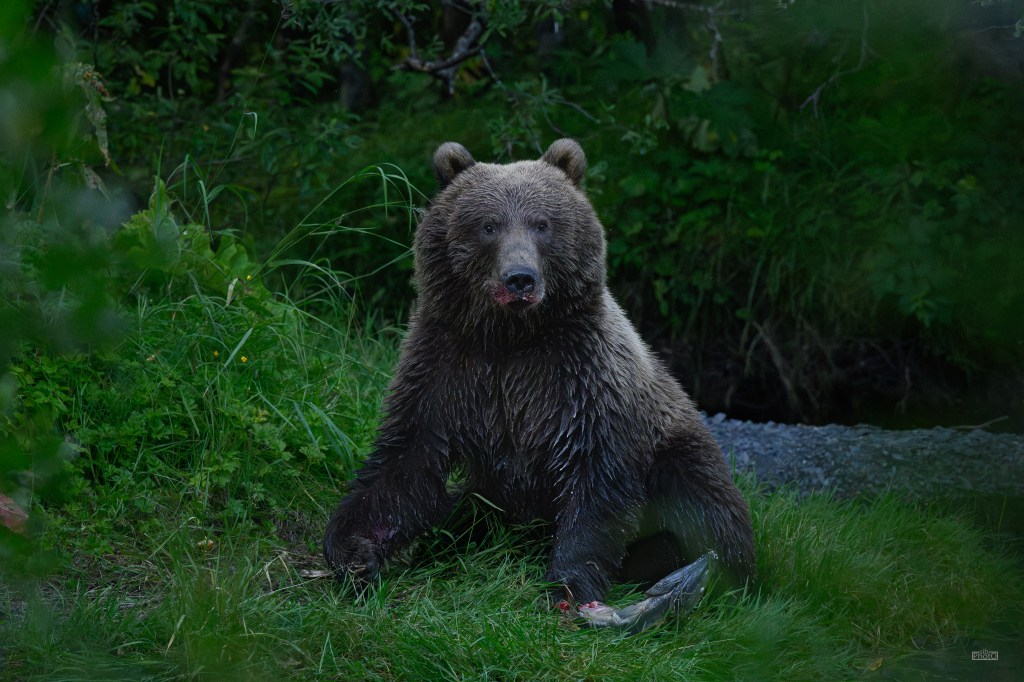
Later, a mother and two cubs worked their way upstream toward the place where we were sitting. One cub became curious and approached; the mother then ran in our direction. We followed the instructions we had been given: stand together, make ourselves look larger, raise our voices, and firmly tell the bears to move away. They did, and the encounter ended without contact.
That incident did not turn us into skilled bear trackers, despite what we had been saying earlier in the day. It confirmed the value of using licensed local guides, carrying bear spray when traveling independently, and knowing how to respond before a bear is close enough to require an answer.
Timing and photographic choices
The best time to visit depends on the photographs wanted. May and June offer a better chance of seeing females with young spring cubs. From mid-July into mid-August, salmon draw more large males to the streams and increase the amount of fishing behavior.
A long lens was useful even when bears came close because it allowed us to isolate behavior across the stream without moving toward the animal. Shutter speeds generally stayed between 1/800 and 1/1600 second, with apertures around f/7.1 or f/8 when enough light was available.
Photographing at stream level also meant accepting water, mud, dense vegetation, and long intervals with nothing happening in the best part of the frame. The bears did not arrange themselves for us. This was inconvenient and part of the adventure.
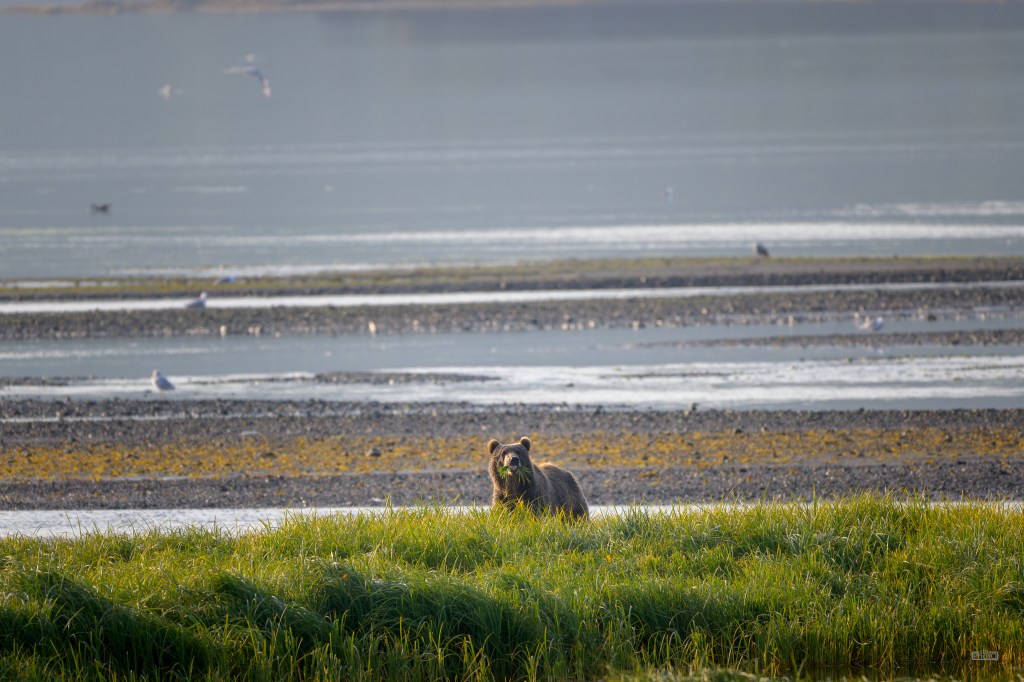

Visiting the bears in Kodiak & Katmai is an incredible experience; we look forward to go back again soon (and reconnecting with Jen & Willy!). It’s great that the bears have been protected and treated well enough to enable these special interactions. When you go, be sure to keep your eyes open and camera ready.


Leave a Reply