
Churchill sits on the western shore of Hudson Bay in northern Manitoba. There is no road into town: the practical choices from Winnipeg are a train journey of more than 36 hours or a flight of about two hours. We chose to fly in November for a week of photographing polar bears before the bay froze.
The timing was deliberate. Polar bears (Ursus maritimus) gather along the coast in autumn and wait for sea ice to form so they can return to hunting seals. When the ice remains open late in the season, the bears stay on land, which improves the odds of seeing them from the roads around Churchill.

Getting to Churchill
We flew from Los Angeles to Winnipeg through Vancouver and spent the night at the Grand Winnipeg Airport Hotel. Dinner at The Forks Market gave us one last evening of warm indoor choices before heading north. At breakfast the next morning, we met our friend Wesley, who had come from New York to join us.
The Calm Air turboprop was delayed, apparently a normal enough event due to weather on this route. The half-empty flight carried some of the last bear-watchers of the season. On the approach to Churchill, the view changed to flat tundra, snow, and Hudson Bay.
Flights and rooms fill early during bear season, so this is not a trip to arrange at the last minute. It also helps to allow room in the schedule for weather delays. A book is lighter than another telephoto lens and at times more useful.
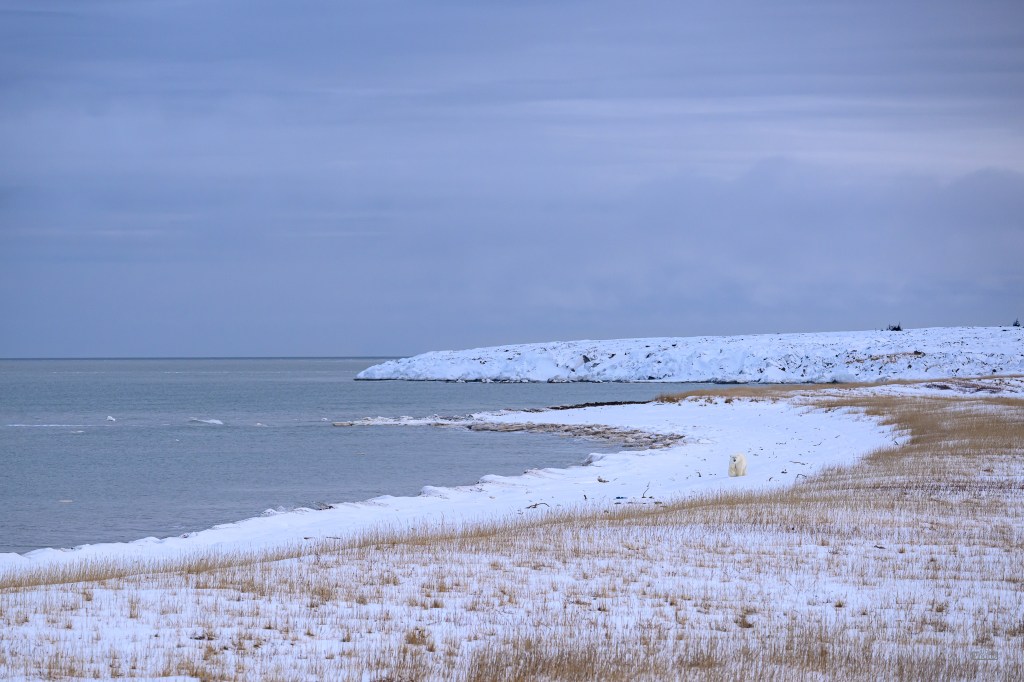
Churchill
At the time of our visit, Churchill had about 870 residents, more than half of them Indigenous. The port, the railway, and the military created and sustained the town; tourism is now the core of its economy. Polar-bear warning signs are common, for good reason.
The town operates a patrol to keep bears and residents apart. A bear that repeatedly approaches inhabited areas may be held in the building commonly called the polar-bear jail, then relocated when conditions allow. Solid doors and reliable vehicles are important here.
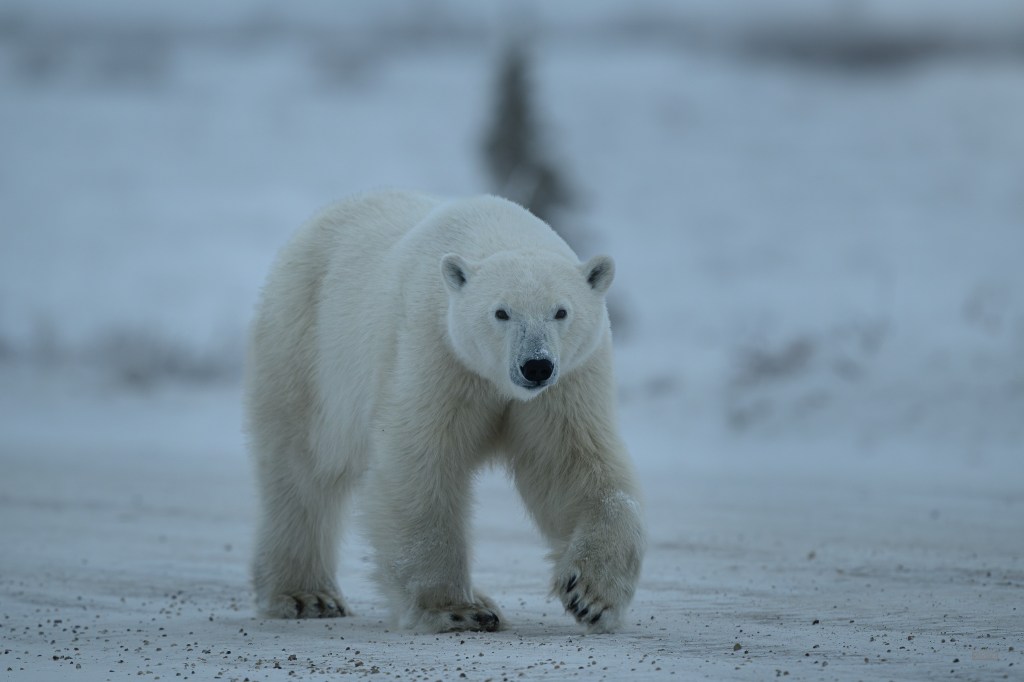
Churchill’s buildings are practical and weathered, with murals appearing on walls and industrial structures. North of town, the disused grain terminal and former employee housing remain prominent on the flat shoreline.
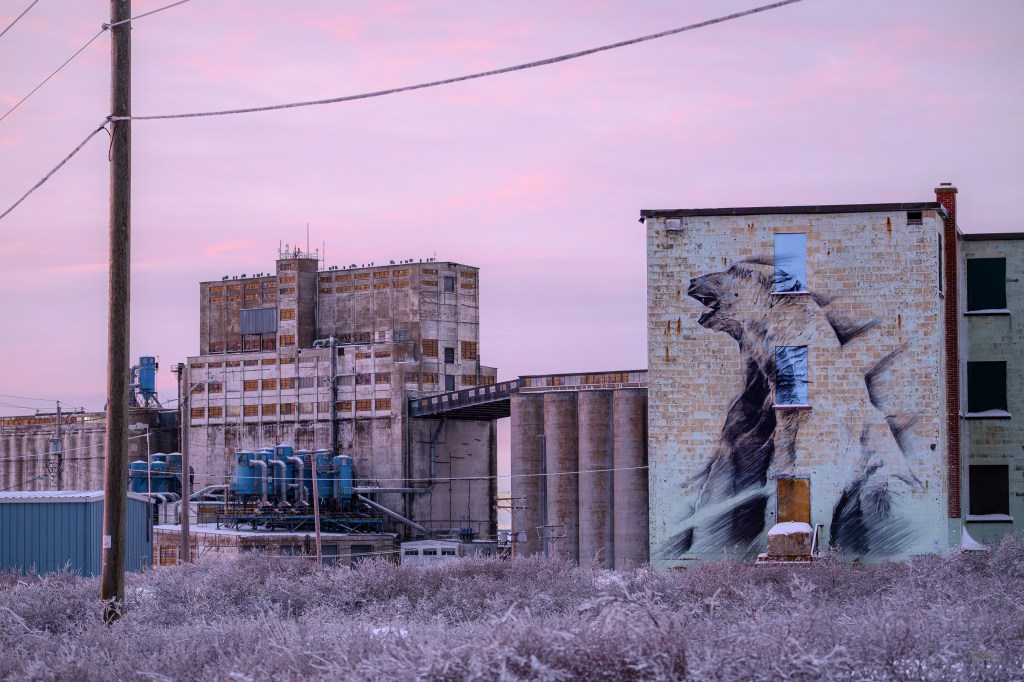
One local landmark is Miss Piggy, a Curtiss C-46 Commando that crash-landed in 1979. Everyone aboard survived. The wreck still rests outside town and has since acquired a mural, which is more interesting than its original paint scheme.
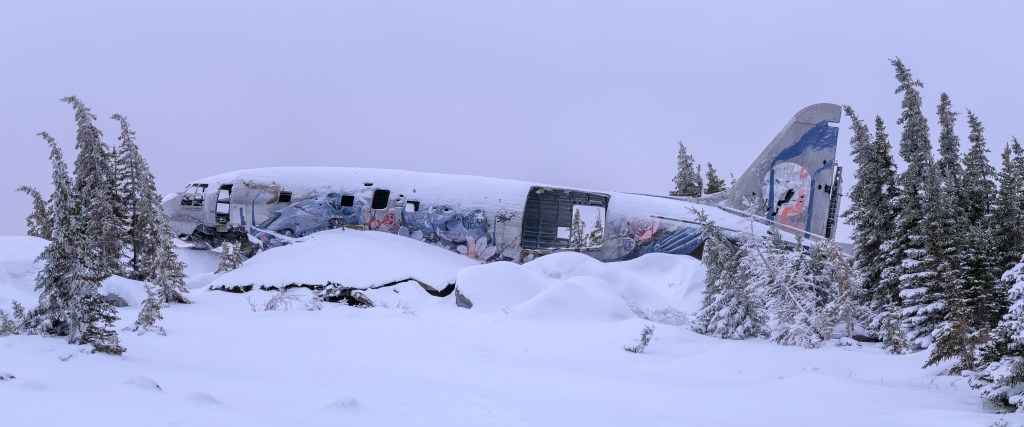
Polar Bears waiting for the ice
Each day we went out by van with guides from Nanuk Operations. Caleb guided us on two days and Jamie on five. We scanned the shoreline, frozen ponds, brush, and old roads for movement, often using the vehicle as both a viewing platform and an urgently appreciated heater.
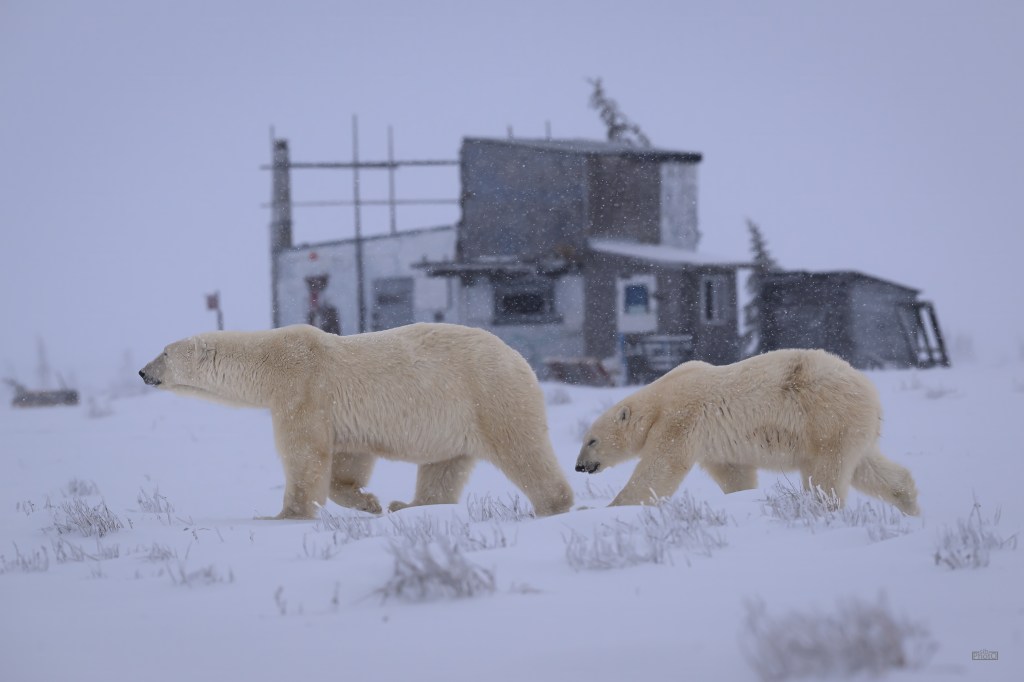
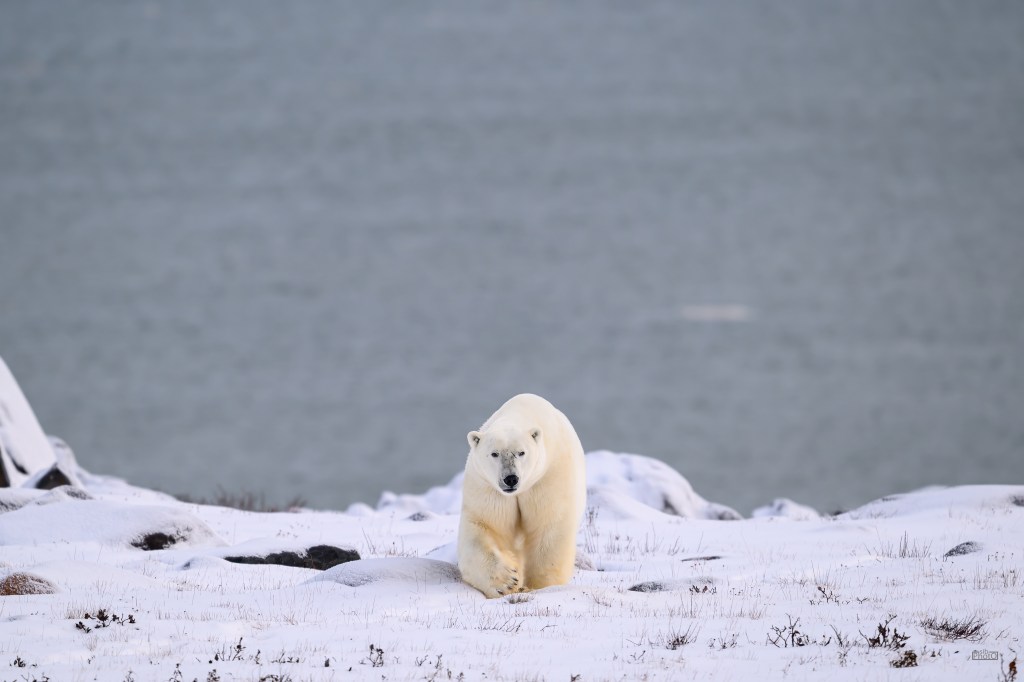
The bay had not yet frozen, so the bears were still ashore. Over the week we saw scores of them: adults walking the beach, males checking scents and one another, and mothers resting with cubs away from larger males.
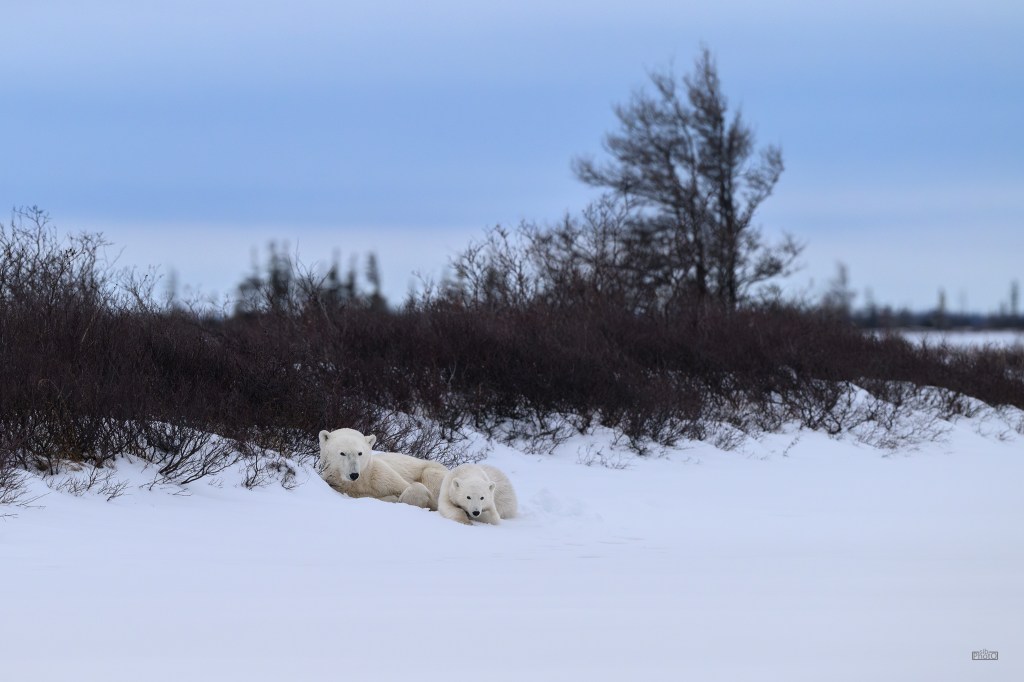
Adult males can weigh as much as 1,500 pounds (680 kilograms). At a distance, their steady pace can make them appear slow; the size of the tracks and the advice from the guides correct that impression. We used long lenses and stayed ready to return to the van (quickly!) when a bear changed direction.
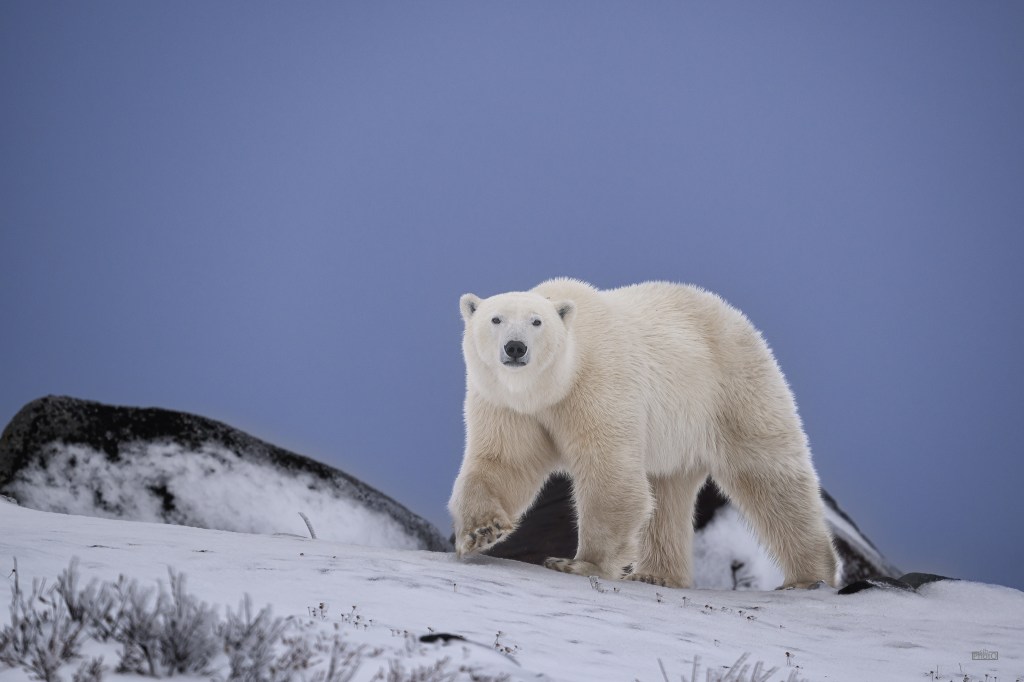
The photographs depended on separating white animals from snow, mist, and overcast sky without losing detail in the fur. Most were made at shutter speeds around 1/800 second or faster. The bears did not move constantly, but when they did, the useful moment was usually brief.

(560mm, f/4.5, 1/800 sec)
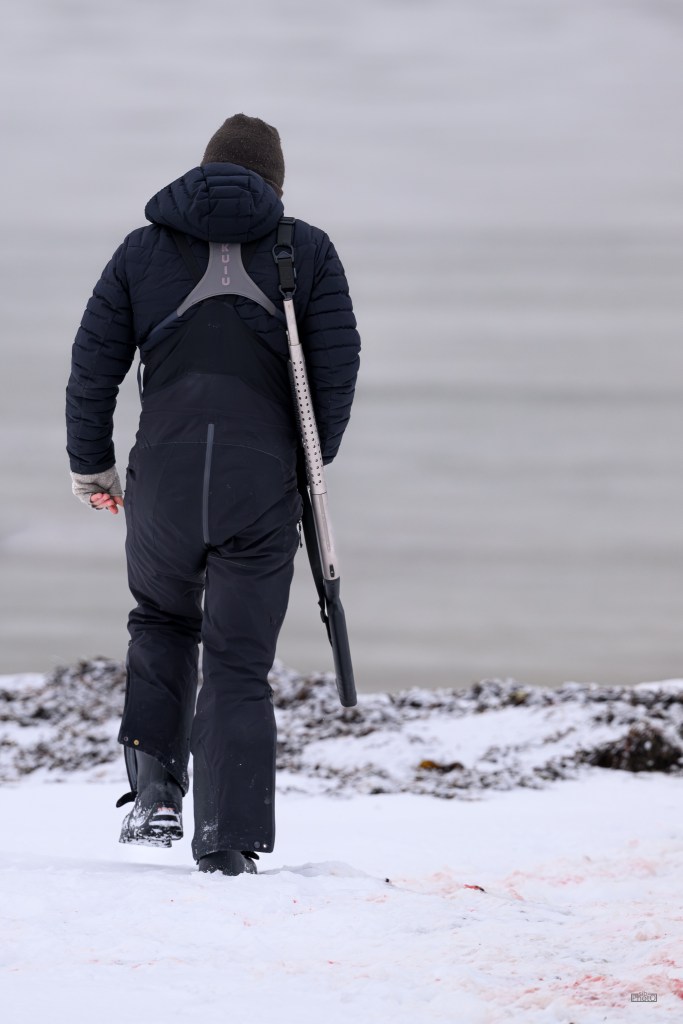
Not every clue led to a bear. Jamie once investigated bloody remains in the snow while we waited by the van and considered the various owners who might return for them.
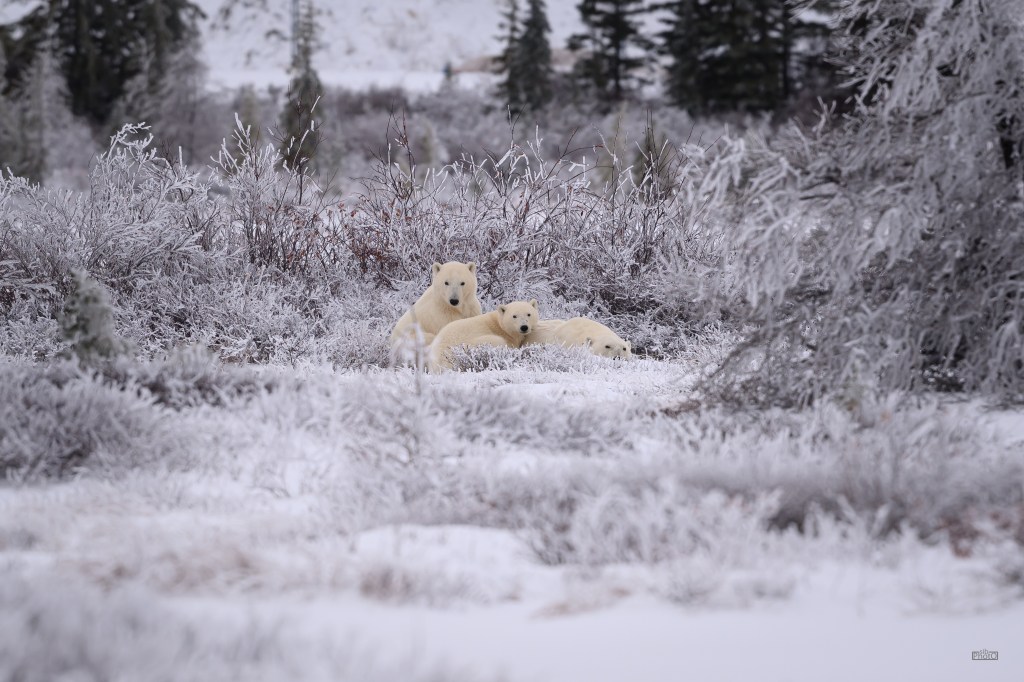
Mothers with cubs tended to rest in more sheltered places. One group settled beside an abandoned structure at a disused gun range; another stayed low in the snow and brush to get out of the wind.
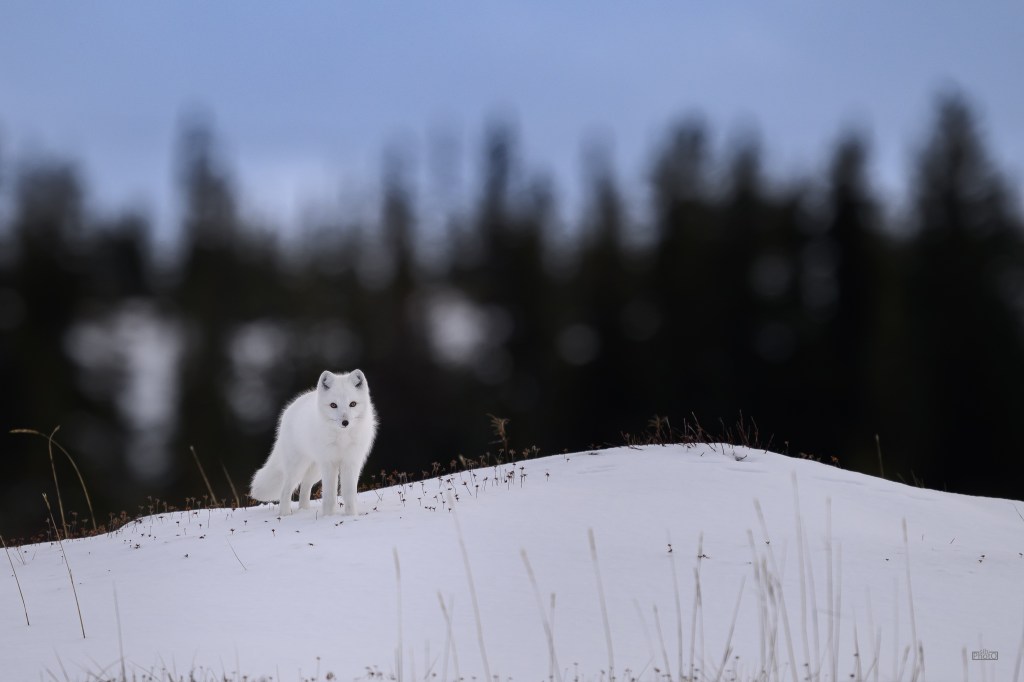
Foxes, ptarmigan, and tracks
The bears drew most of our attention, but the tundra supplied other subjects. We saw Arctic foxes in winter coats and red foxes, including the dark color form known as a cross fox. Their smaller size made them harder to spot and much harder to keep in the frame.
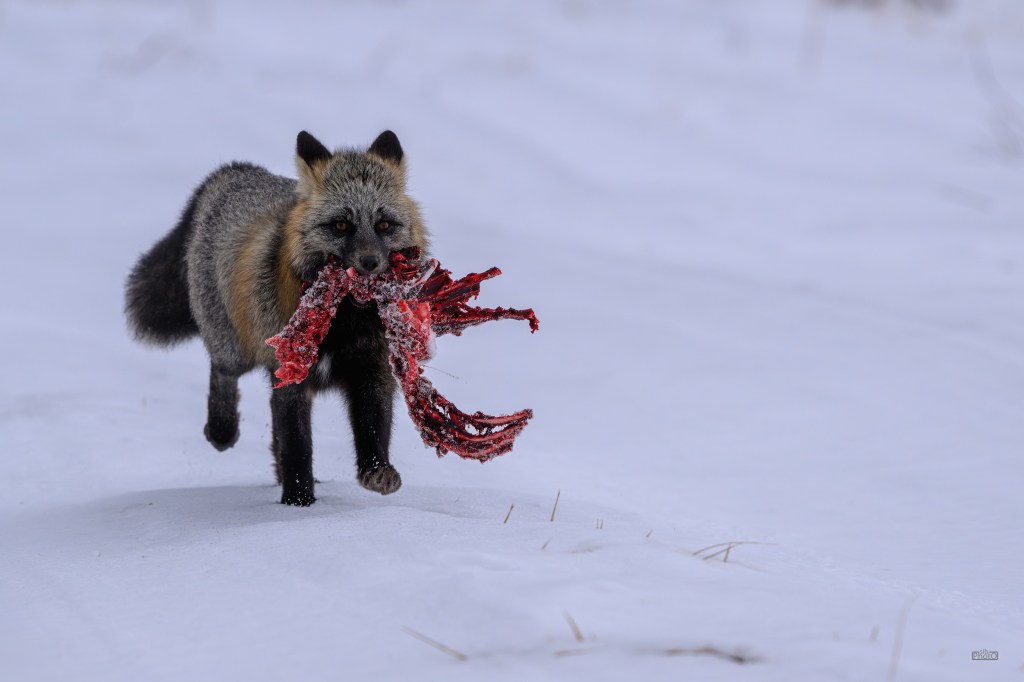
One cross fox found the spine and ribs of a seal after the bears had finished their meal. It carried the remains across the snow, an efficient reminder that very little edible material stays unclaimed for long.
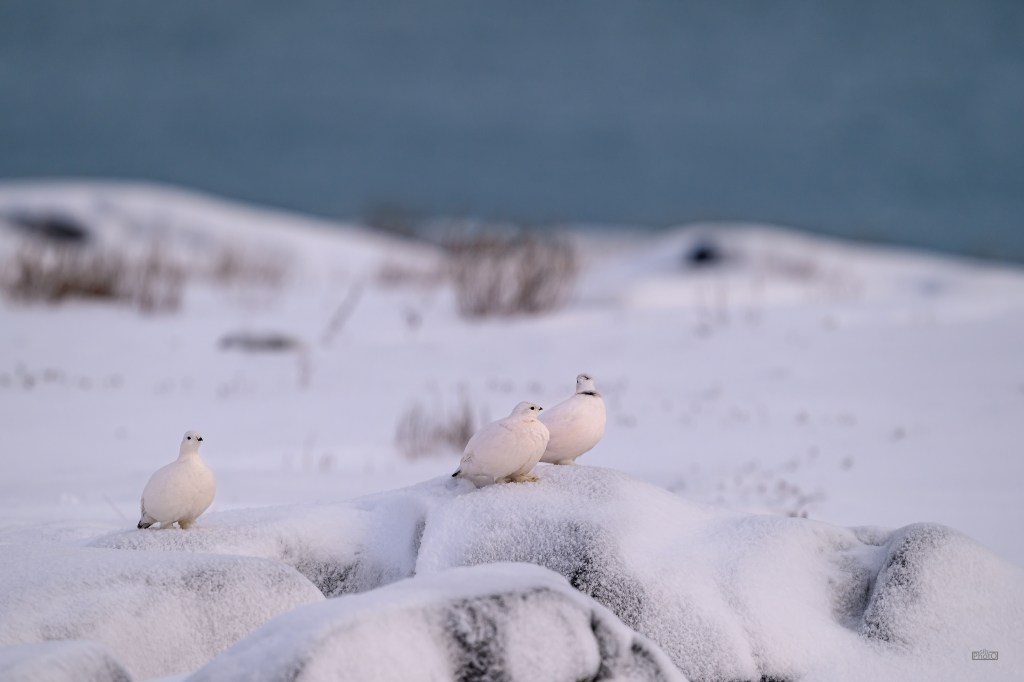
We also saw a snowy owl and several ptarmigan. The ptarmigans’ winter plumage nearly matched the ground, especially after the sun dropped and the contrast flattened. We found wolverine tracks but, sadly, not the wolverine, which was consistent with its reputation and less satisfactory for the camera.
Cold weather and warm meals
Late November in Churchill requires proper winter equipment. We spent about six hours outside each day, often in wind strong enough to find the gaps between layers. Windproof clothing, insulated boots, and gloves that still allow camera controls were more important than adding one more lens to the bag.
The van provided regular breaks, but fingers and batteries still lost efficiency in the cold. After sunset, even the bears sometimes adopted a posture that looked familiar.

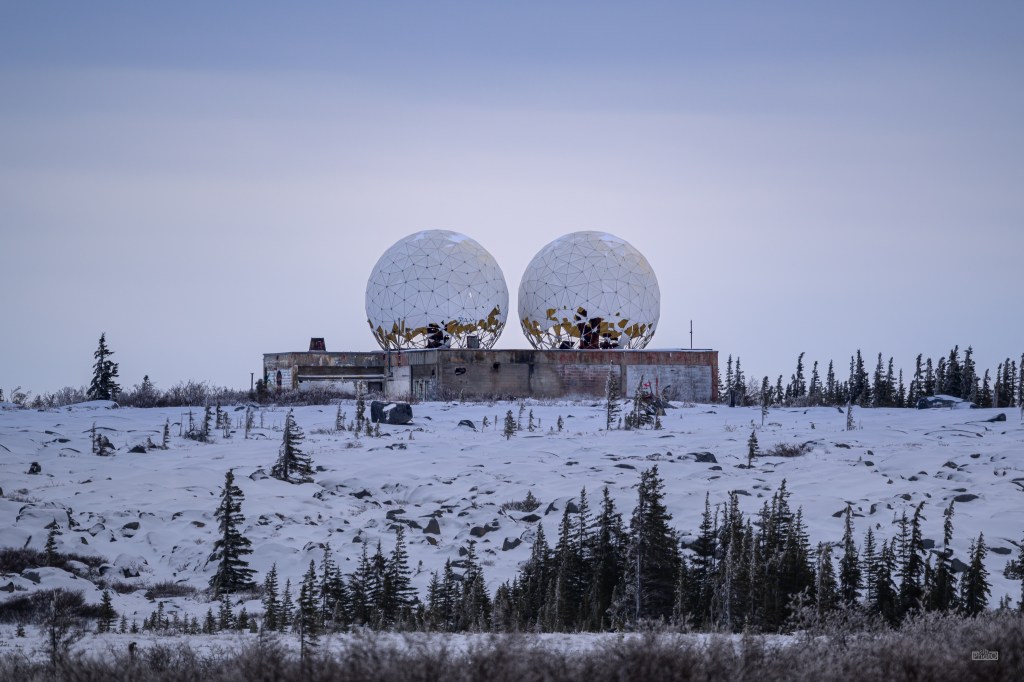
The area also contains remains from earlier periods of northern development, including an abandoned radar installation at the Churchill Rocket Research Centre. Snow and sparse trees left the structure exposed against the sky.
Churchill had more dinner options than we expected. We ate at the Tundra Pub on its last night of the season, tried the more modern menu at Ptarmigan, and ordered Chinese takeout more than once. Hot dumplings and spicy stir-fry after a day in the wind require no broader cultural interpretation.
Moving on
As our stay proceeded, the bears were still checking the bayshore for ice and food, then turning inland when neither appeared. Their schedule depended on the weather, not ours. On our very last day, the bay was frozen and the bears had nearly all disappeared overnight, beginning the yearly cycle again.
If you like polar bears and ever have the chance to visit Churchill, take it. Just make sure to book your travel early and bring your warmest clothes, a good telephoto lens, and a lot of memory cards.


Leave a Reply