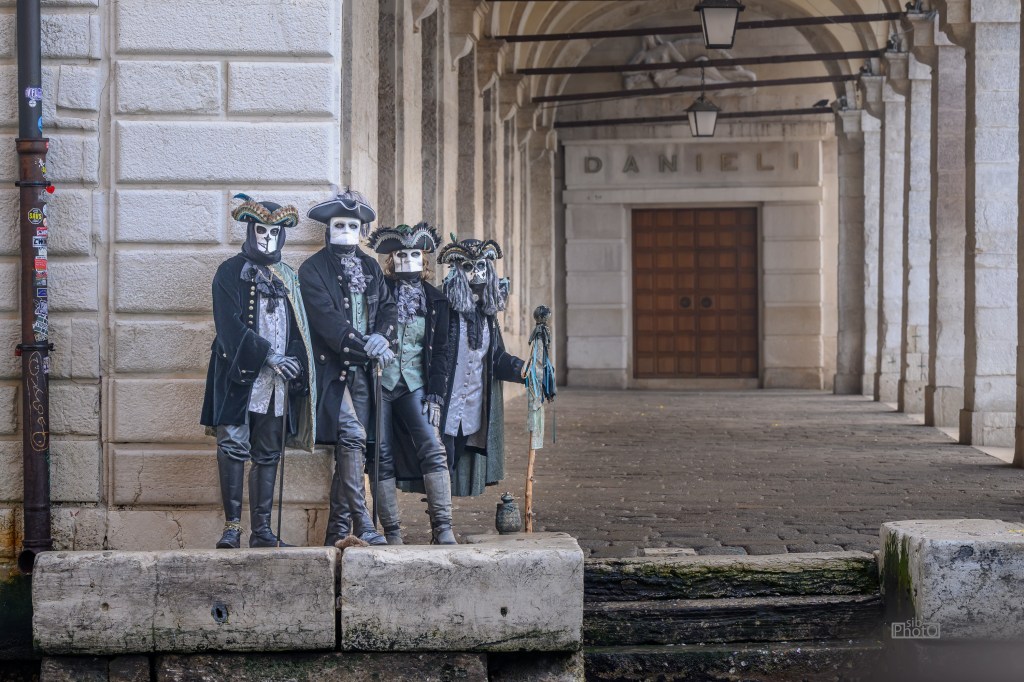
If you’re a photographer, the Carnival of Venice is one of those “bucket list” events. For the two weeks before Lent, Venice fills with costumed participants, photographers, scheduled events, and a great many tourists. We spent a week there with our cameras, working from the quiet before sunrise through the much less quiet middle of the day.
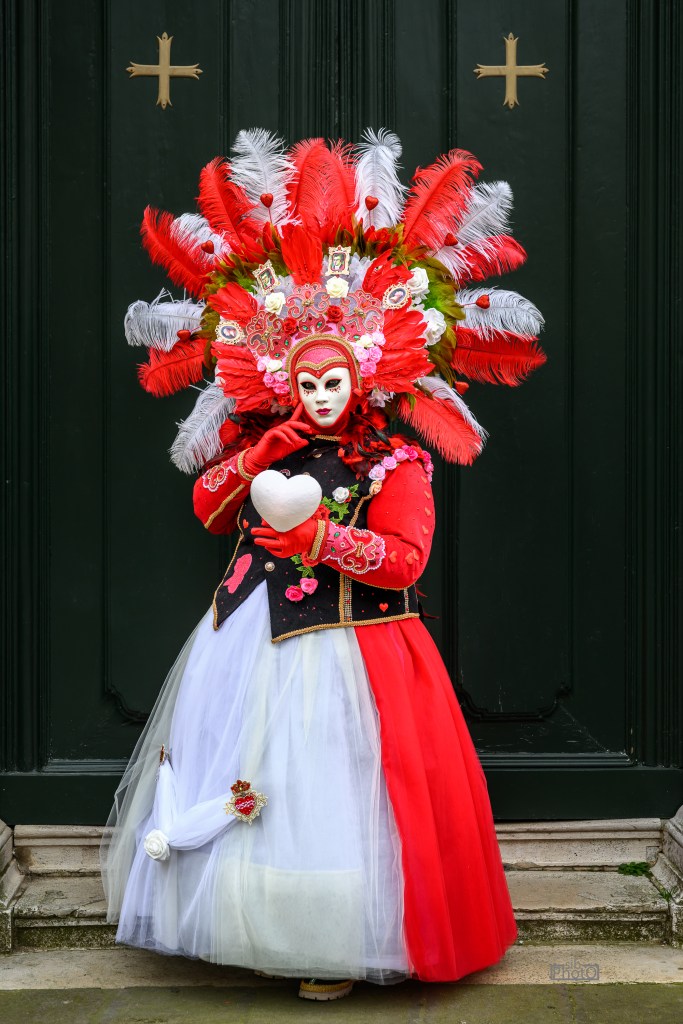
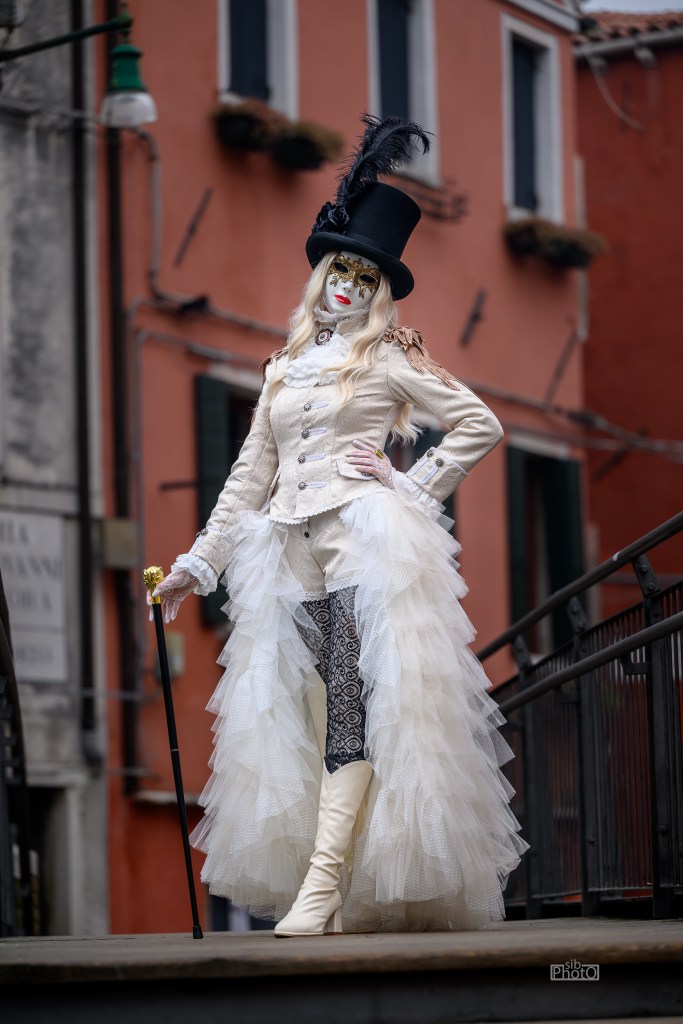

Our main subjects were the elaborate costumes and masks, but the setting mattered just as much: fog along the Grand Canal, narrow alleys, old interiors, and crowded squares that required quick decisions about framing.
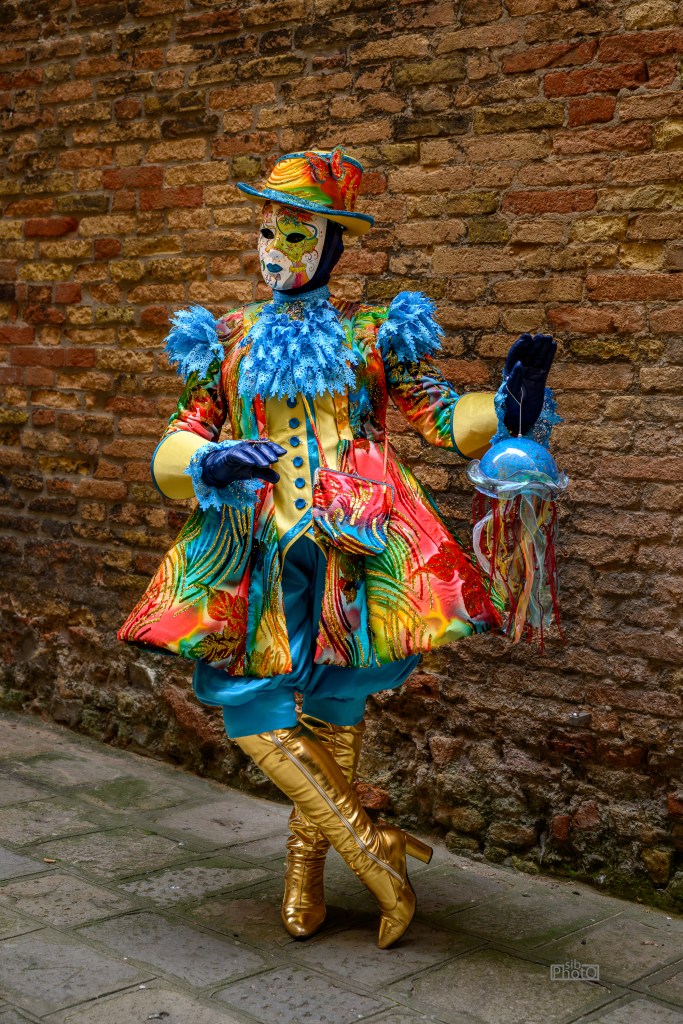
The Carnevale di Venezia has roots in the Middle Ages. Masks allowed people to move through Venice without the usual markers of class or identity. The custom ended under Austrian rule in 1797 and was revived in 1979. It now attracts costumed participants and photographers from many countries – plus plenty of people holding phones at arm’s length.
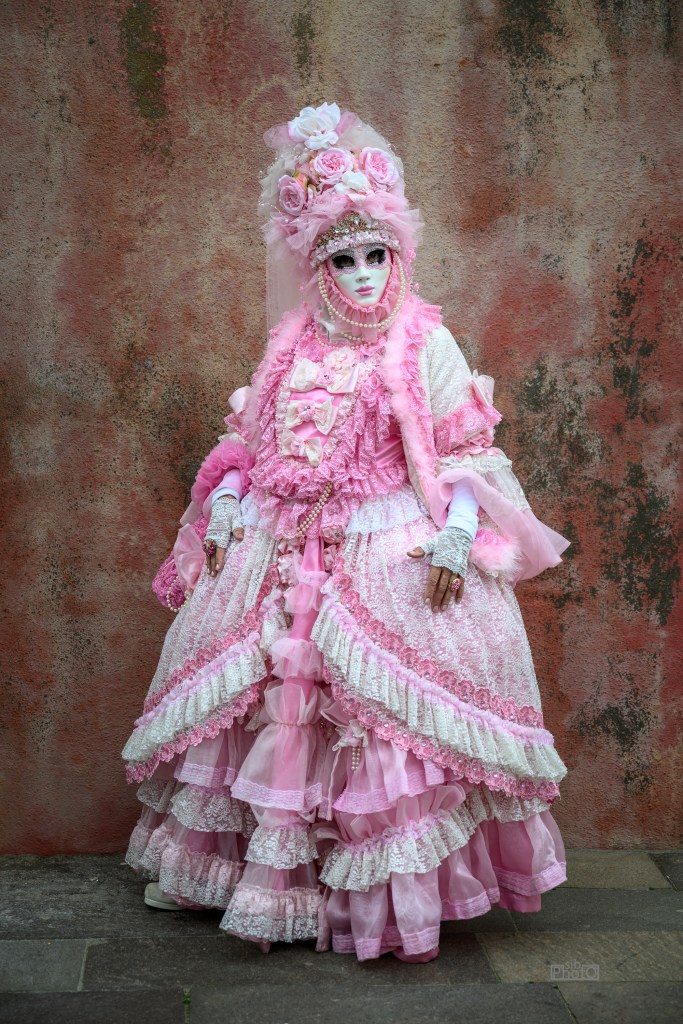
The “Masks”
The costumed participants are commonly called Masks, or maschere in Italian. Many spend months designing and making their outfits; some have returned to Carnival for decades. The more elaborate costumes can weigh 40 or 50 pounds, yet their wearers negotiate Venice’s alleys, steps, and small bridges in them, sometimes in heels.
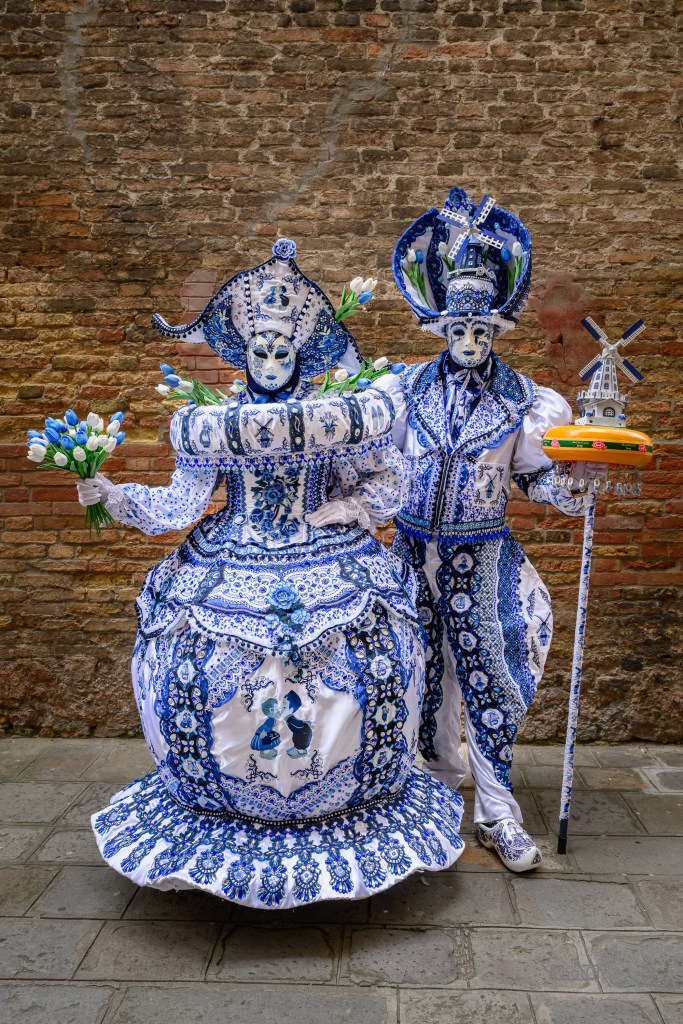
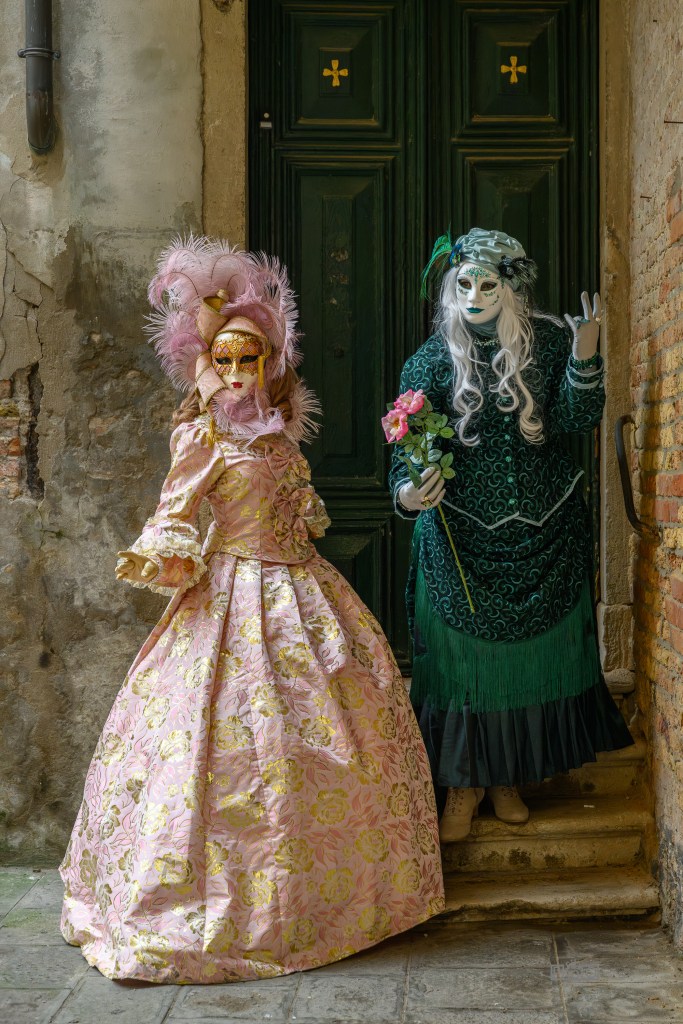

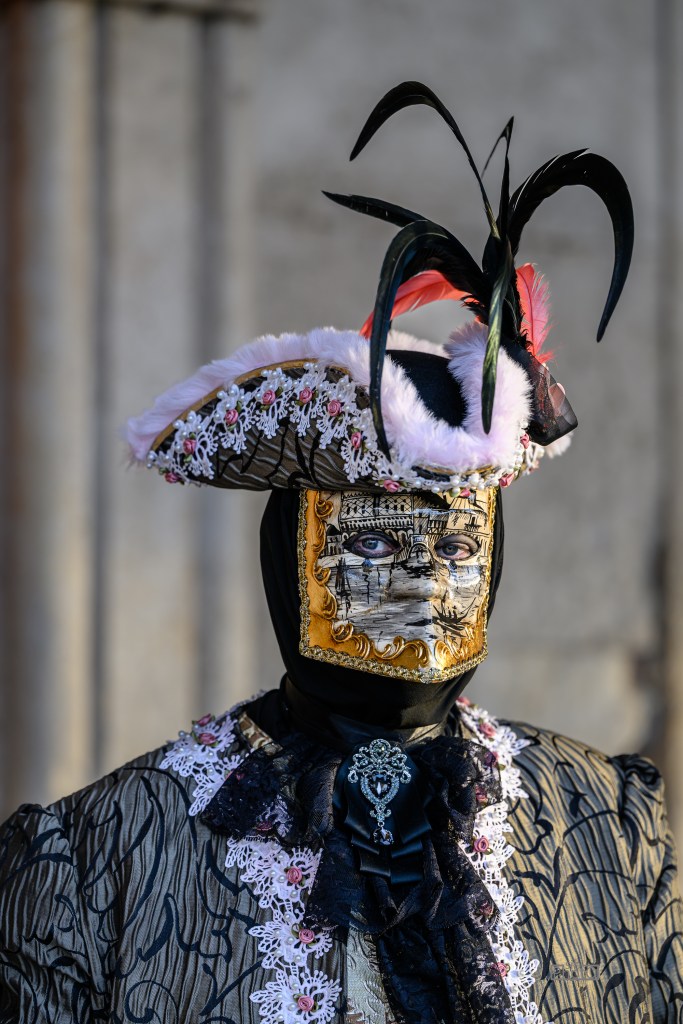
The detail rewards a close look. Fabric, beadwork, feathers, masks, and props are coordinated from head to toe, and the same costume can produce very different photographs as the light and background change.
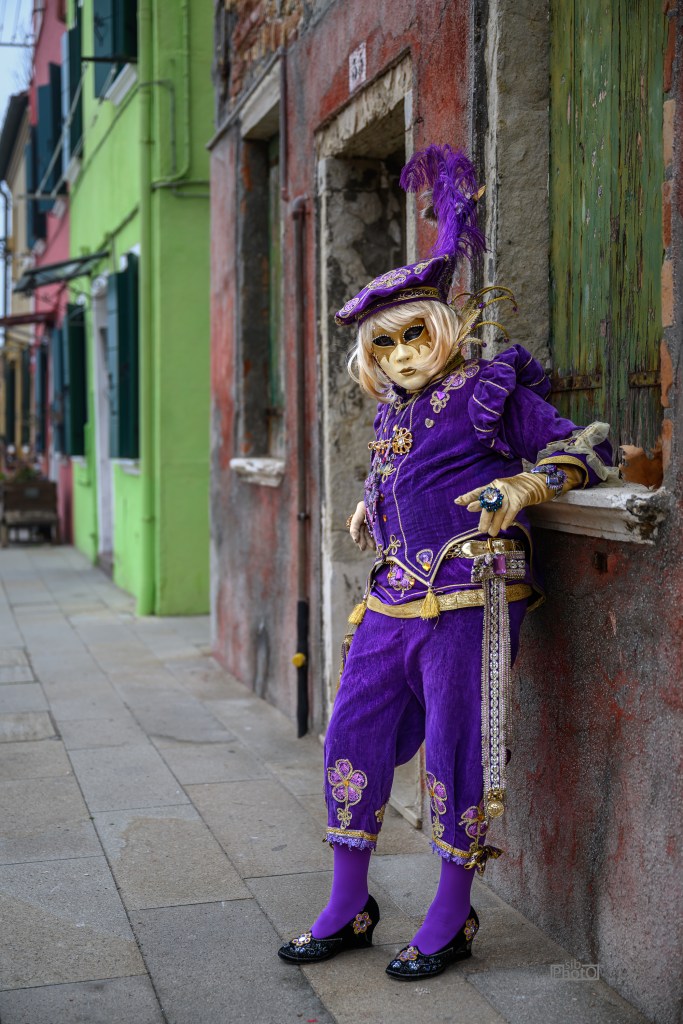

Approaching and Photographing the Masks
One useful discovery was that most Masks wanted to be photographed. They had not spent a year attaching feathers to silk in order to pass unnoticed.
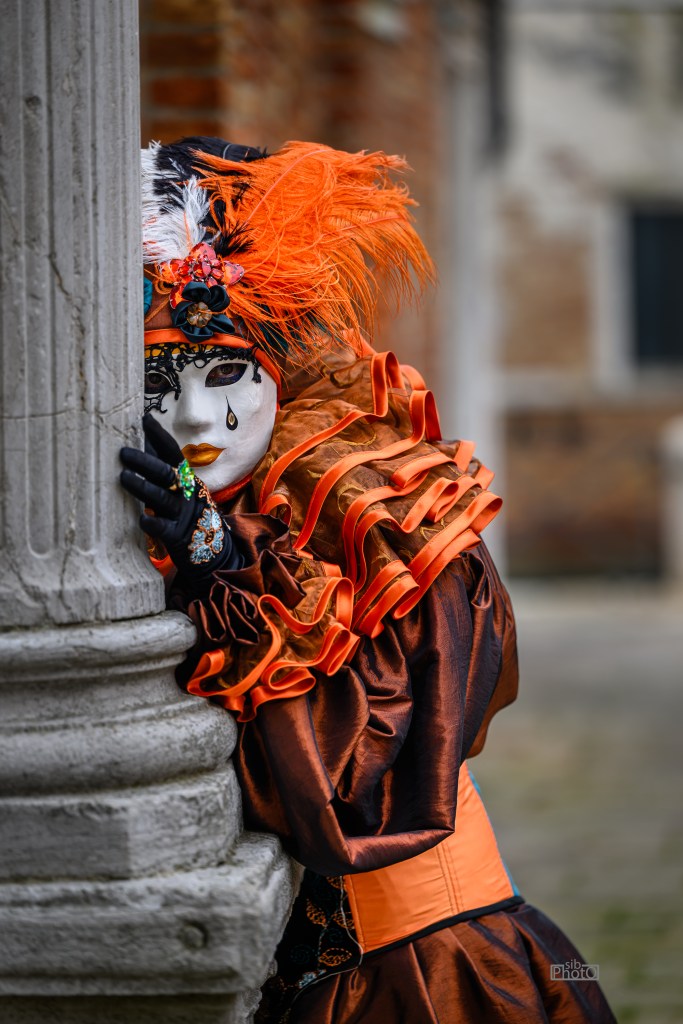
When approached politely, most were willing to pose for a few minutes. We could often use a few words or gestures to suggest a turn toward the light or a step toward a cleaner background. Our method was uncomplicated:
- Make eye contact;
- Smile;
- Gesture to the camera;
- Ask for a photo. “Posso?” worked, as did English or German in many cases.

IThe answer was almost always yes. Afterwards, some people gave us a card or social-media handle so that we could send photographs. Following up is part of the exchange, not an optional administrative chore to be forgotten once the memory cards are full.
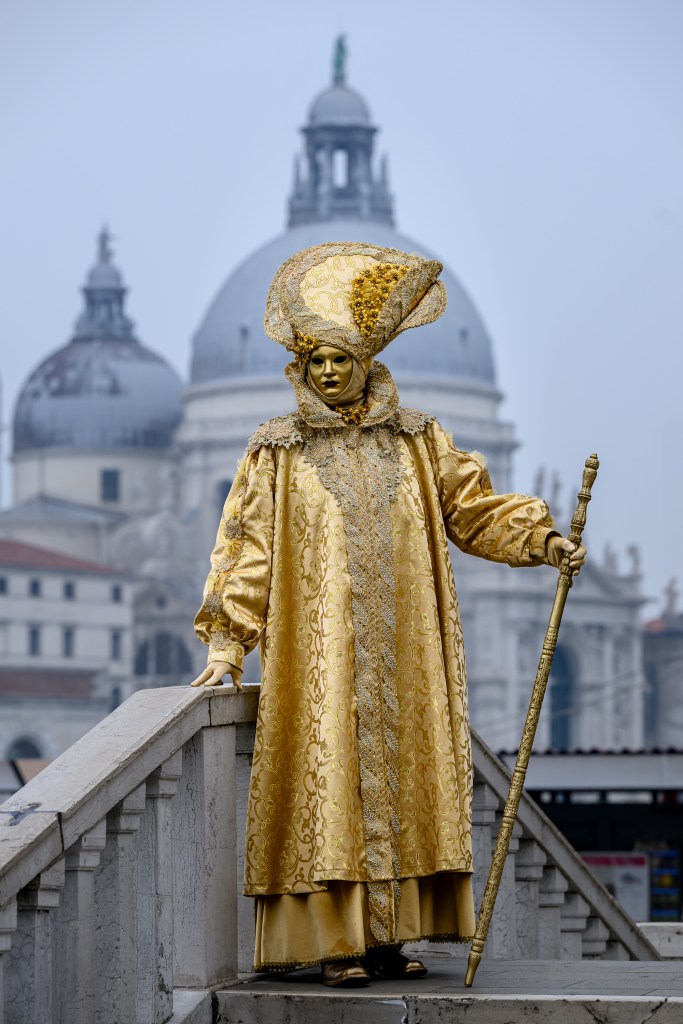
Arranging Private Shoots
Private sessions offer more control over light, position, and background. They also remove the rows of tourists in puffer jackets from the frame. We photographed in hotel interiors, quiet alleys, and on a gondola – settings that would have been difficult to manage during a public gathering.
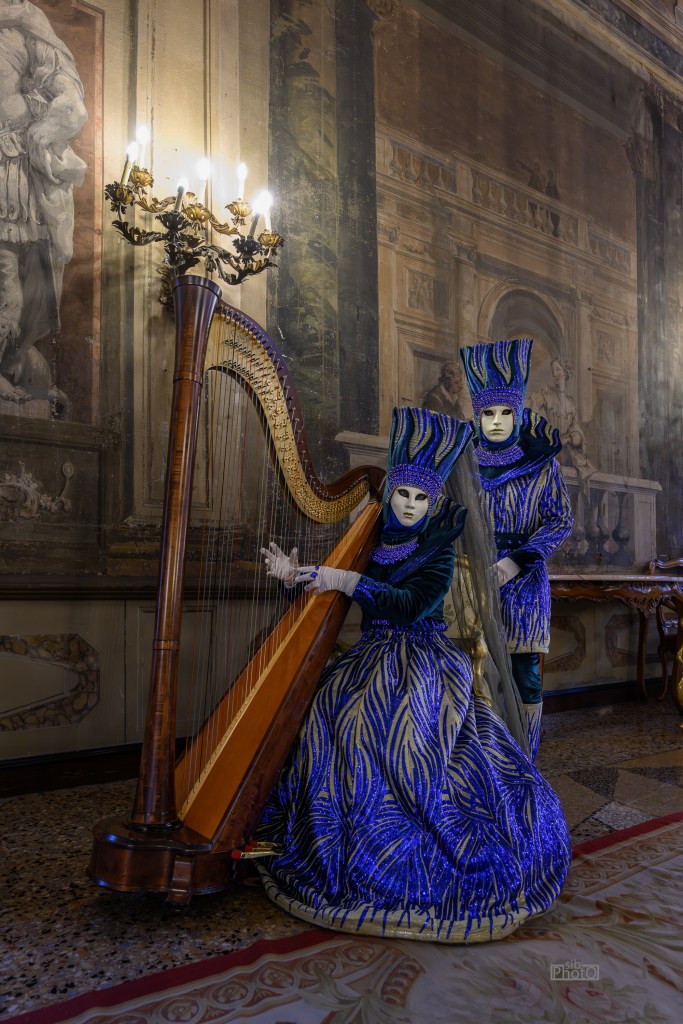
Carnival-focused Facebook groups are one place to make contact. Returning photographers can also approach Masks they have worked with in previous years. A relevant portfolio and a clear description of the proposed setting are more useful than a grand creative pitch. It helps if the session sounds enjoyable for everyone involved.

Where and When
Scheduled events provide some structure, but many of our photographs came from informal gatherings or chance encounters while walking between locations.

Before sunrise, Masks often gather along the Grand Canal near St. Mark’s Square. The group remains for an hour or two as the light changes. Fog is not guaranteed, of course, but when it appears it simplifies the background and catches the early blue light.
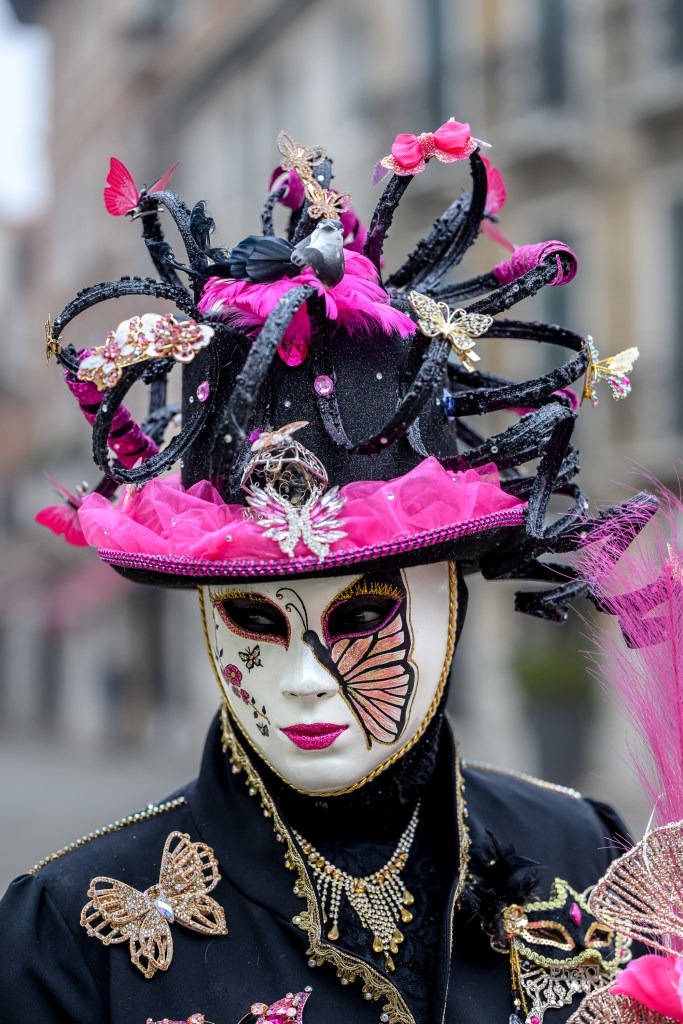
Later in the day, we found gatherings around Campo San Zaccaria, the Arsenale, Santa Maria della Salute, and Santa Maria Formosa. We also photographed on Burano, where the painted houses provide a very different background from central Venice.
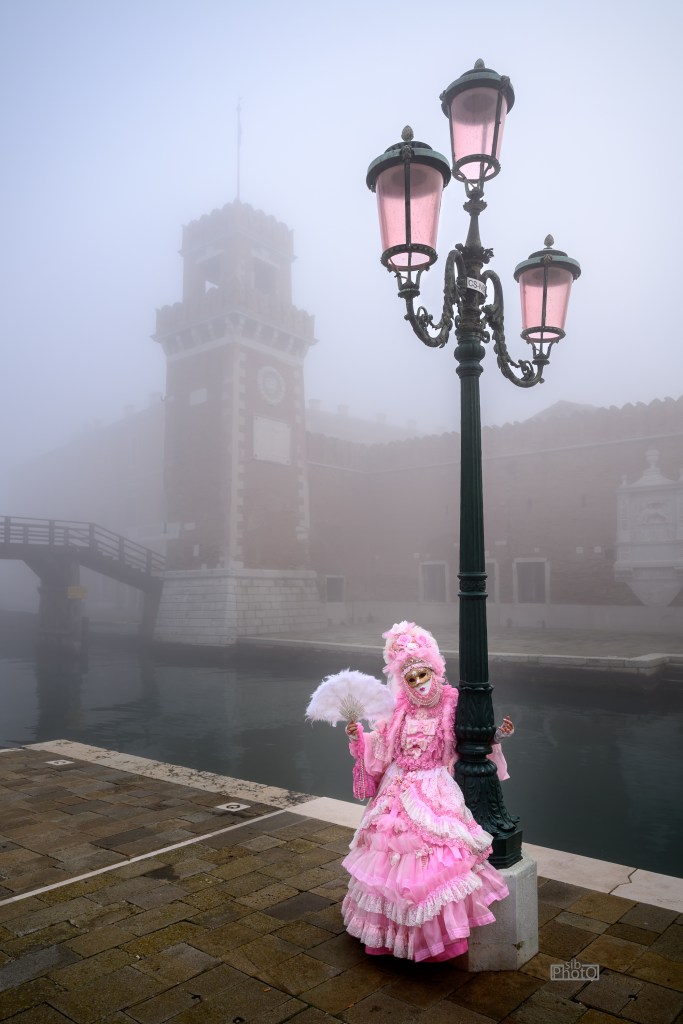
The festival publishes a schedule, but it is worth leaving time to wander through the calli and campi from morning into evening. Costumes tend to announce themselves. If in doubt, follow the feathers.
Gear Notes
Almost any focal length can be useful at Carnival. A wide lens works for groups and interiors, while a telephoto helps isolate a face or costume detail from a crowded background. Fast primes would be useful in the low light before sunrise and after dusk.
In practice, nearly 90 percent of my photographs were made with f/2.8 zooms: a 24–70mm and a 70–200mm. The remaining 10 percent were mostly made with a 14–24mm in tight interiors or for group photographs. About 80 percent of the images were not taken at maximum aperture. The zooms made it easier to reframe quickly when a crowd shifted or a shooting position was limited.
I generally worked without flash, although plenty of other photographers used one successfully. The more important choice was often where to stand – and making that decision quickly before someone in a bright jacket occupied the background.


Leave a Reply