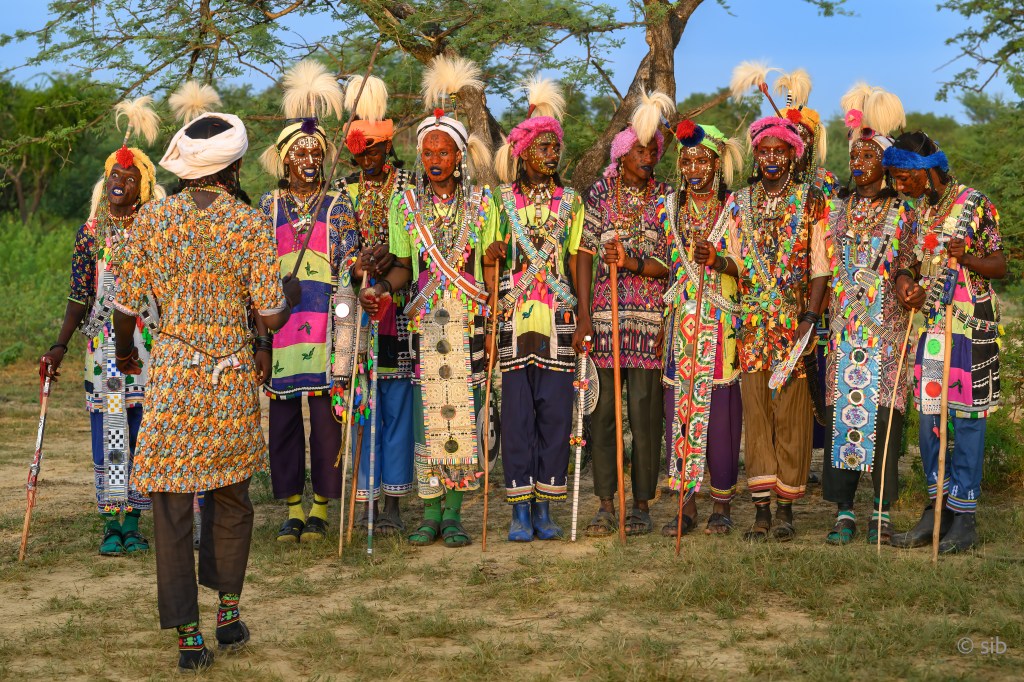
The Wodaabe are nomadic cattle herders who live across the Sahel, including parts of Niger, Nigeria, Cameroon, Chad, the Central African Republic, and the Democratic Republic of Congo. Estimates put the remaining nomadic population at perhaps 30,000. We traveled to Chad’s Chari-Baguirmi region at the end of the rainy season to attend a Gerewol held by the Djapto Shibo group.
The Gerewol is an annual gathering timed to the weeks before families leave for their dry-season pastures. Its best-known event is the Yaake, in which young men dress, sing, and dance while young women watch and choose among them. Rock paintings more than 5,000 years old have been interpreted as showing a similar ceremony.

Getting There
From Los Angeles, we flew to Paris en route to N’Djamena. The Paris connection allowed less than two hours for a train, a bus, immigration, security, and a change of terminal. We made the flight, although with… limited time to admire Charles de Gaulle Airport.
The flight from Paris to N’Djamena took almost seven hours because the route detoured west around Niger for political reasons. After a day in the capital, we met our Chadian guides and headed into the Chari-Baguirmi region to find the festival site.
Late rains had left the ground saturated. Vehicles in our convoy repeatedly sank into the mud, and a rising river cut across our route. We camped in a meadow about three-quarters of the way there and reached the Gerewol late the next morning.
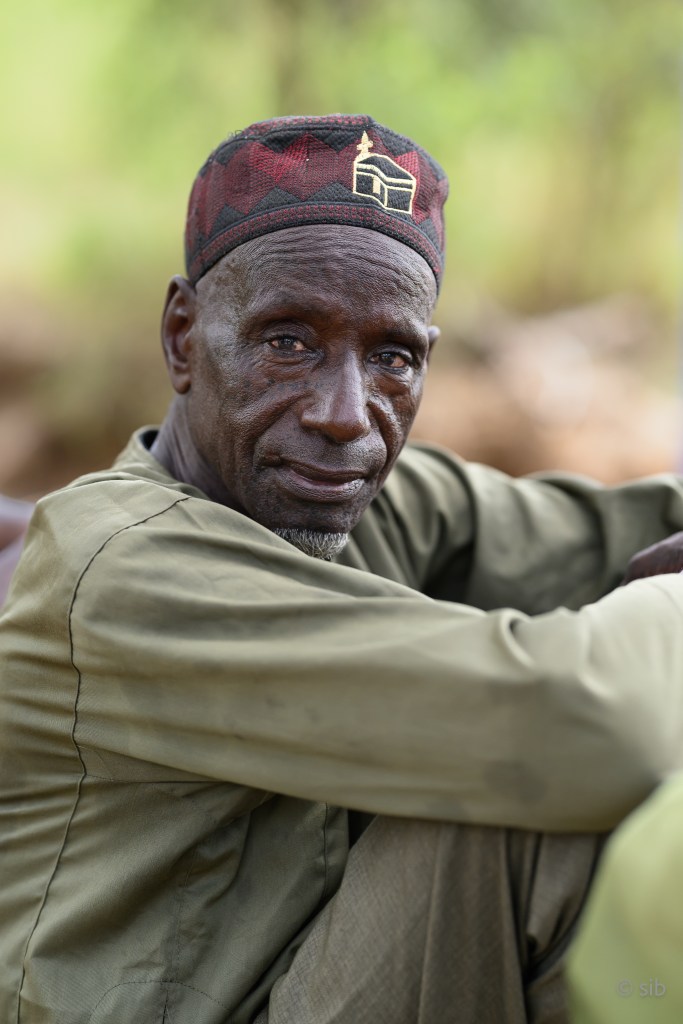
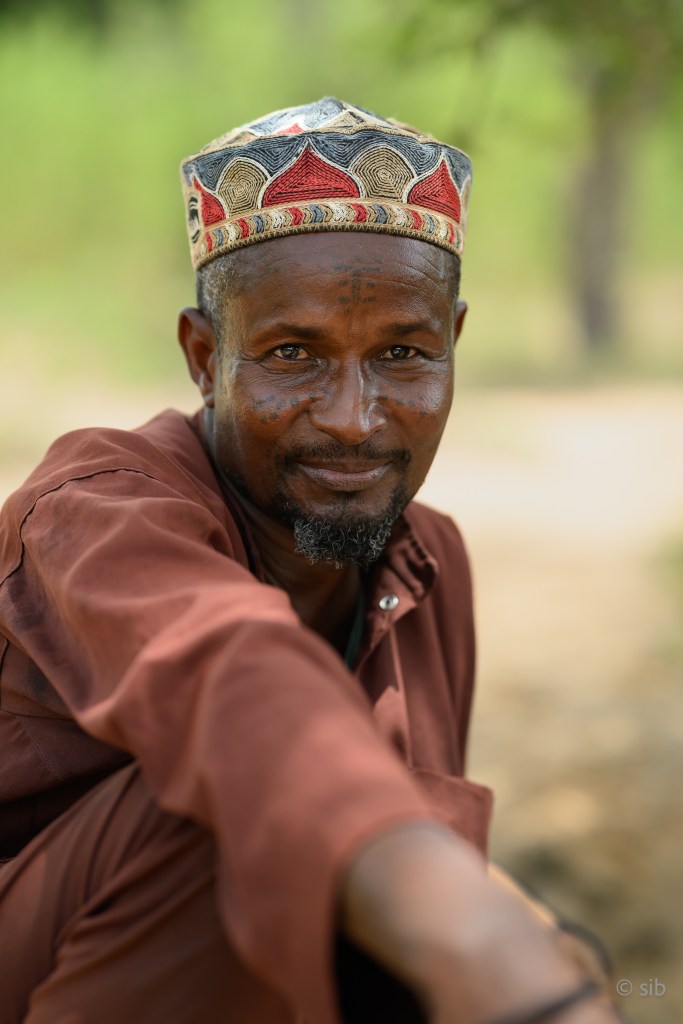
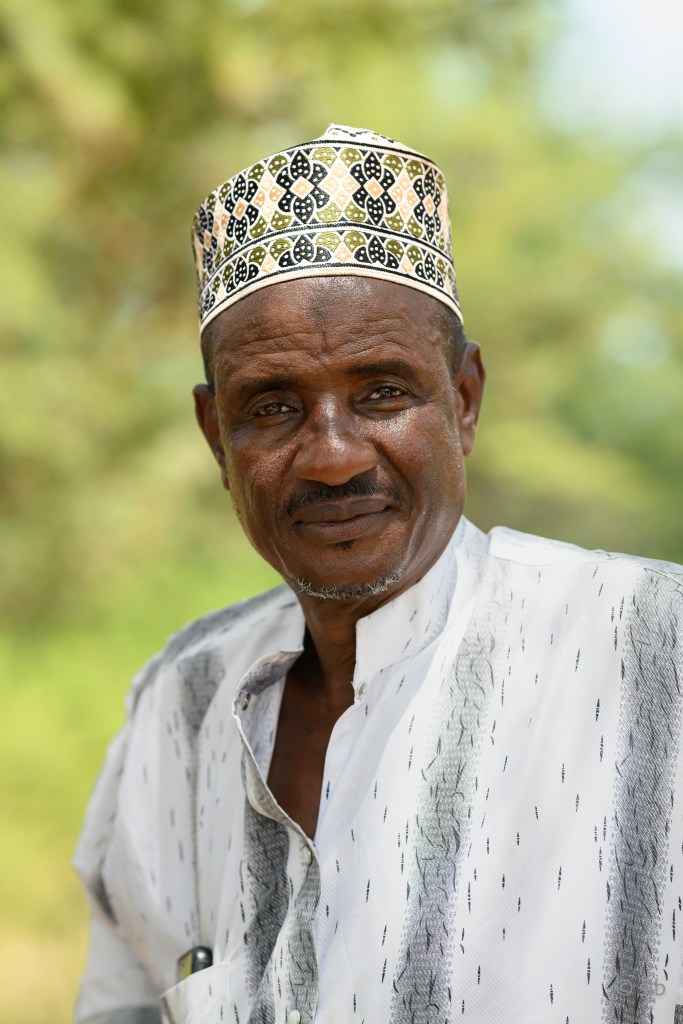
The head man and elders welcomed us as the only outside visitors. That gave us unusual freedom to observe the gathering, provided we worked around the dancing, the heat, and the ordinary business of camp.
Wodaabe Camp Life
The name Wodaabe is often translated from Fula as “people of the taboo.” The term refers to the group’s separation from the broader Fulani population and its adherence to older pastoral practices. Some settled Fulani regard this nomadic way of life with a mixture of respect and condescension.
Each Wodaabe family’s main possession is a large wooden bed called a suudu. At camp, screens enclose the bed and the family’s calabashes are arranged on it. The decorated bowls are status objects among the women as well as practical household items.

Meals are based largely on milk, ground millet, yogurt, and sweet tea, with goat or sheep eaten occasionally. Cattle determine much of the rhythm of daily life and the seasonal movement between grazing areas.
Wodaabe social conduct places value on reserve (semteende), patience (munyal), forethought (hakkilo), and loyalty (amana). At the Gerewol, those expectations coexist with a conspicuous display of clothes, makeup, posture, and male beauty.
The Yaake Dances
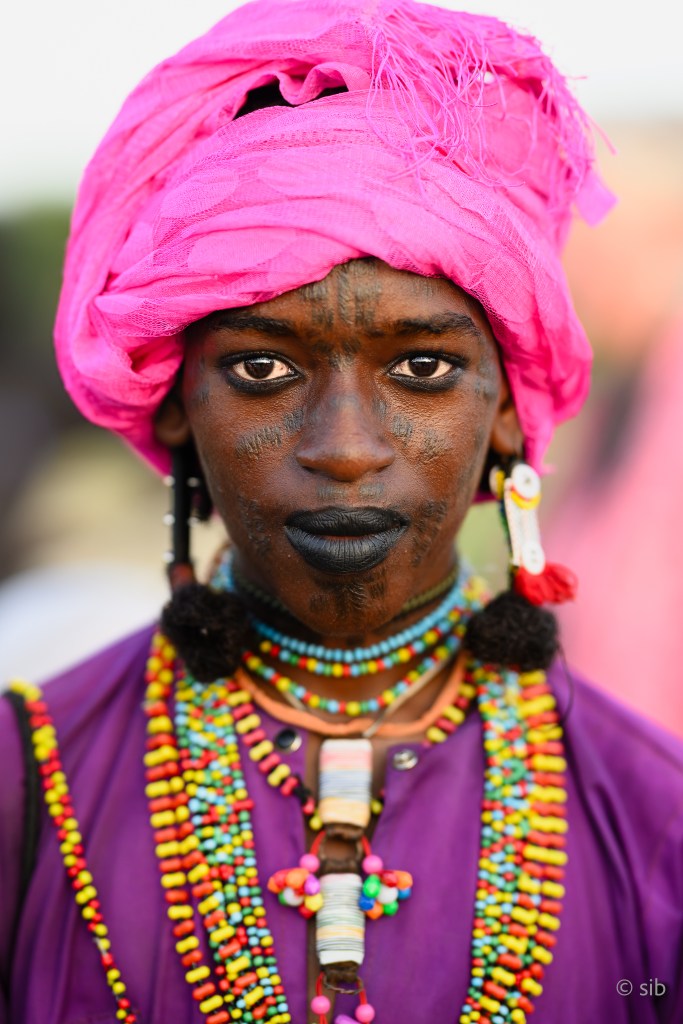
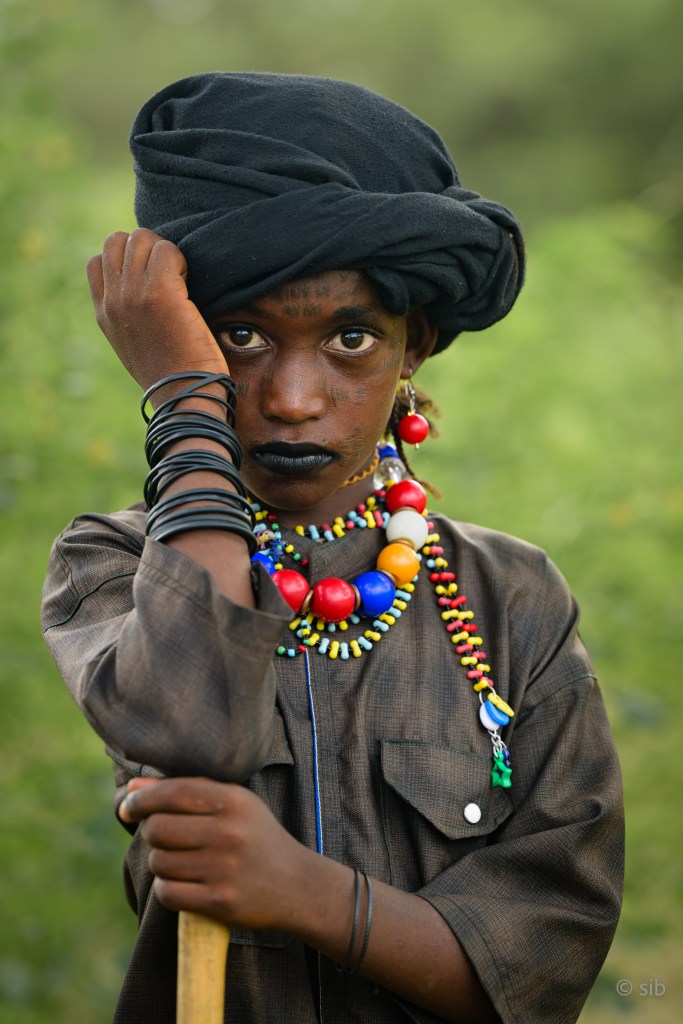
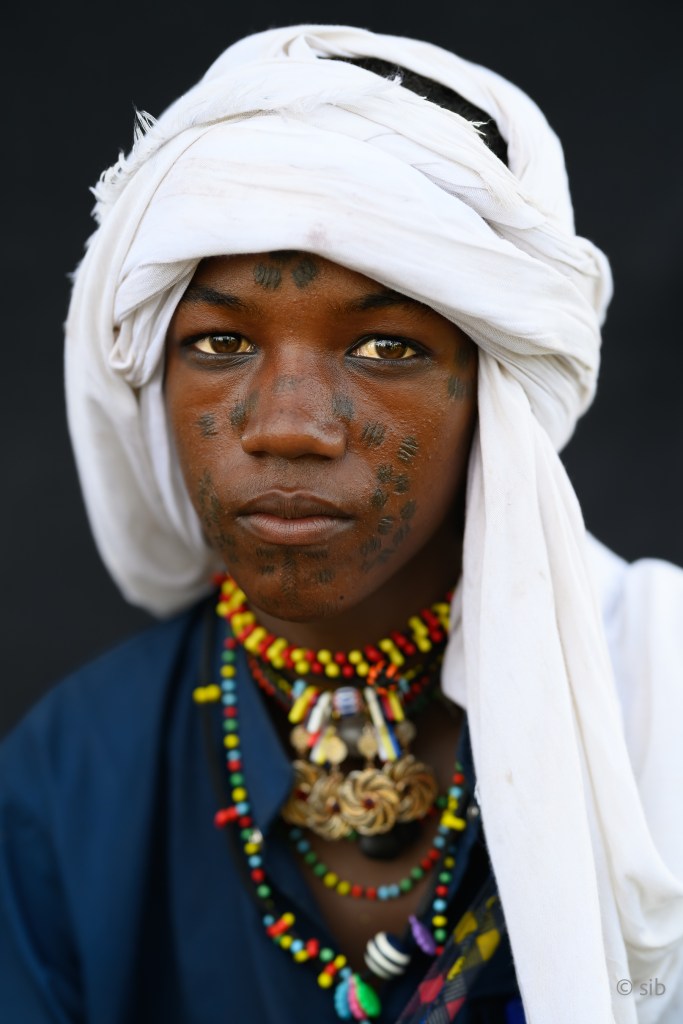
The festival lasts about a week. Young men prepare with colored makeup, feathers, jewelry, and carefully chosen clothes, then form lines for the Yaake songs and dances. Height, white eyes, and white teeth are admired, so the dancers stretch upright, widen and roll their eyes, and bare their teeth in time with the singing.
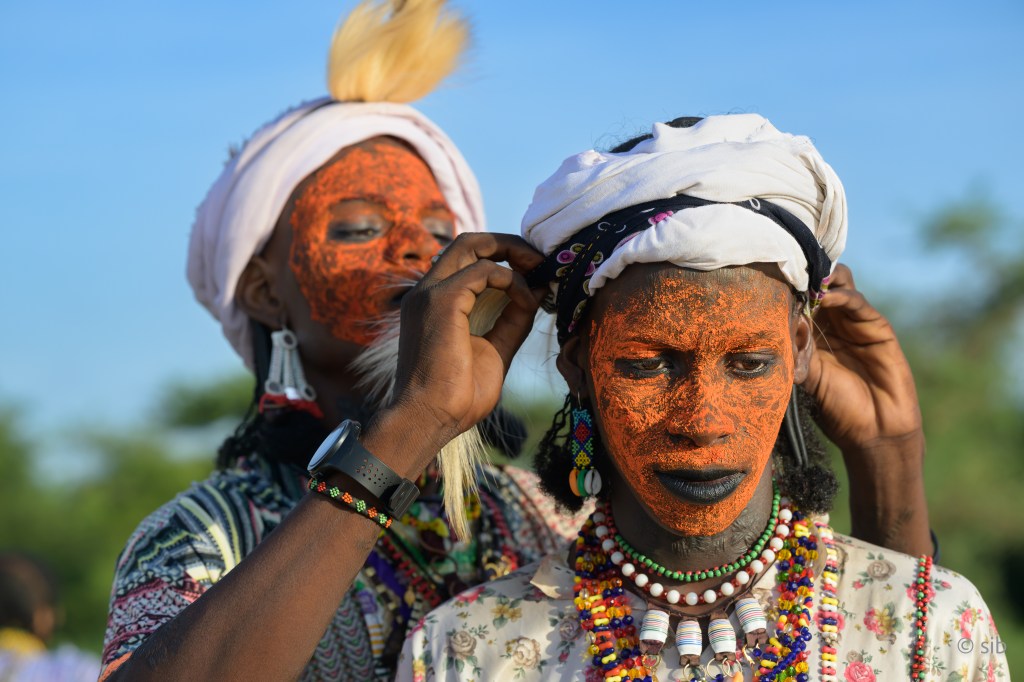
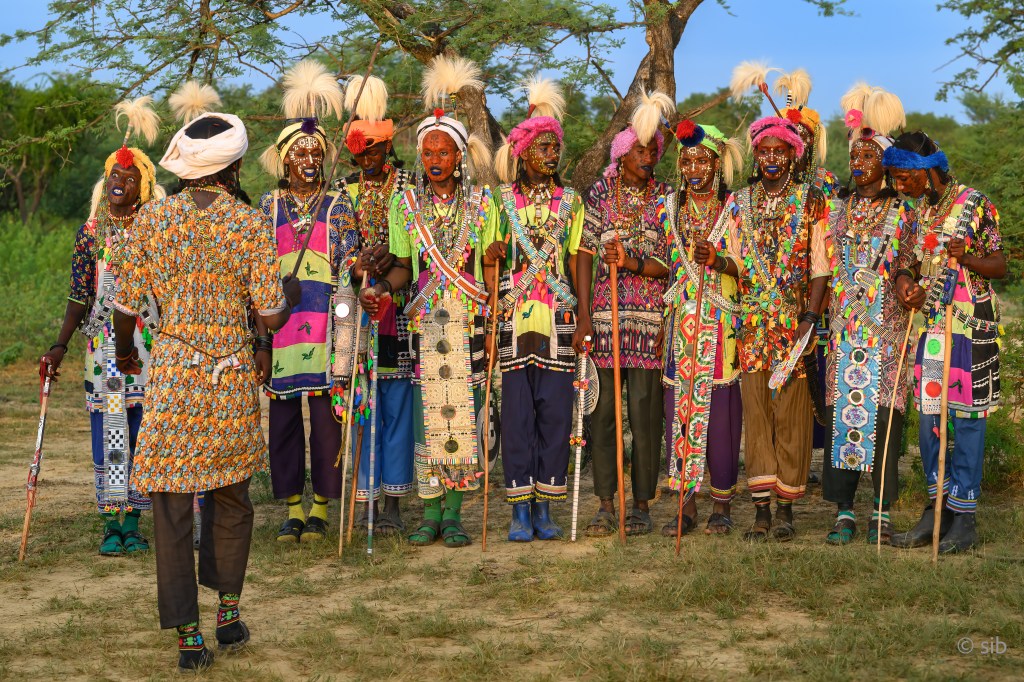
The dancing continued through much of the day and night. Activity slowed during the hottest afternoon hours, when people rested, visited relatives and friends, changed clothes, and prepared for the next session. At sunrise, some of the men were still dancing after being on their feet through the night.
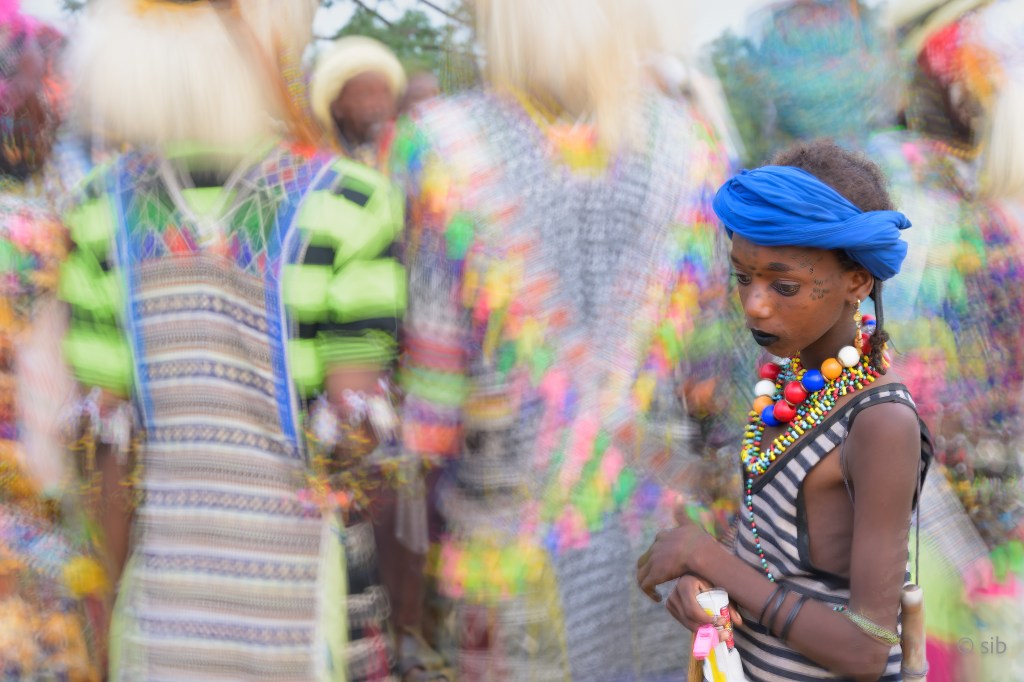
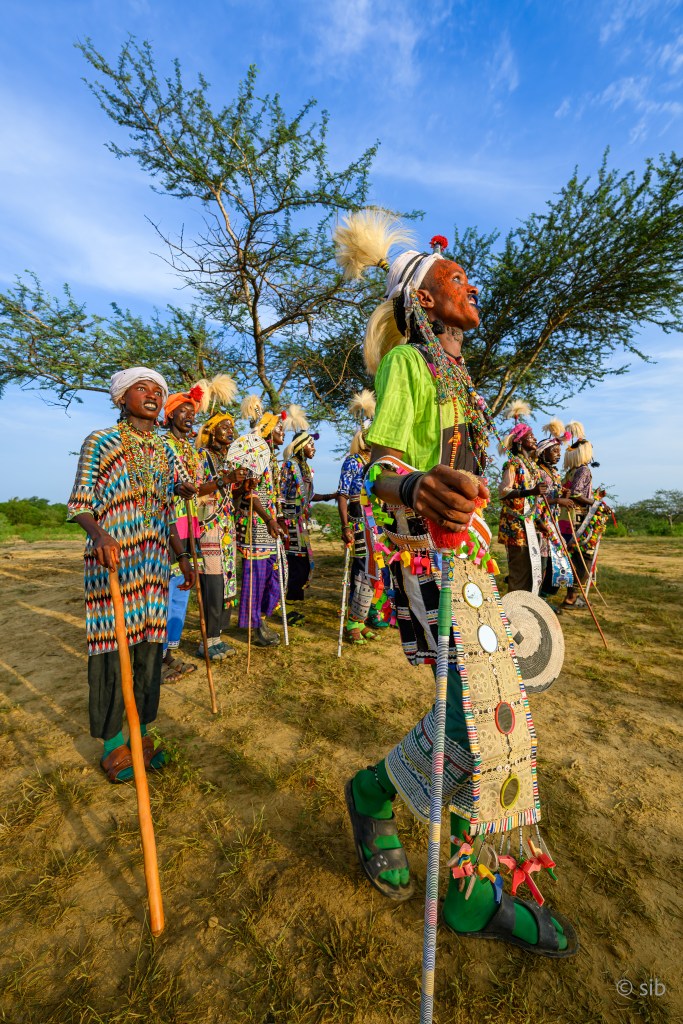
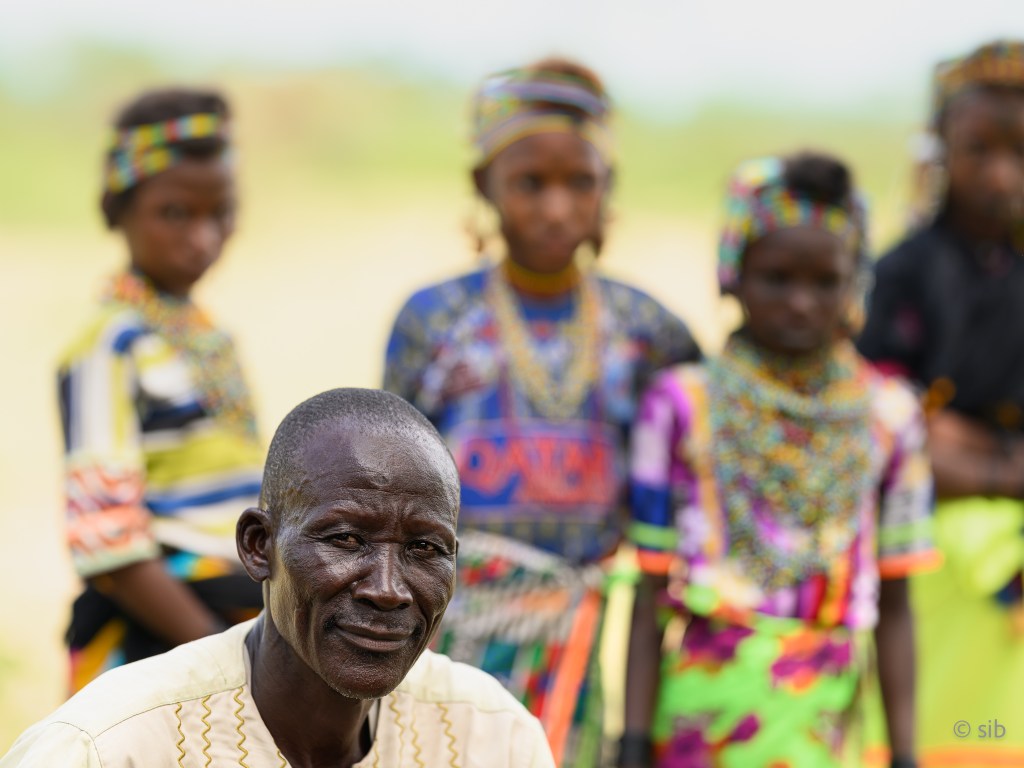
The preparations were as interesting to photograph as the formal performance. The young men adjusted one another’s clothing, checked makeup, offered advice, and joked while they waited. Boys who were too young to participate watched closely from the edge of the group; their turn will come soon enough.
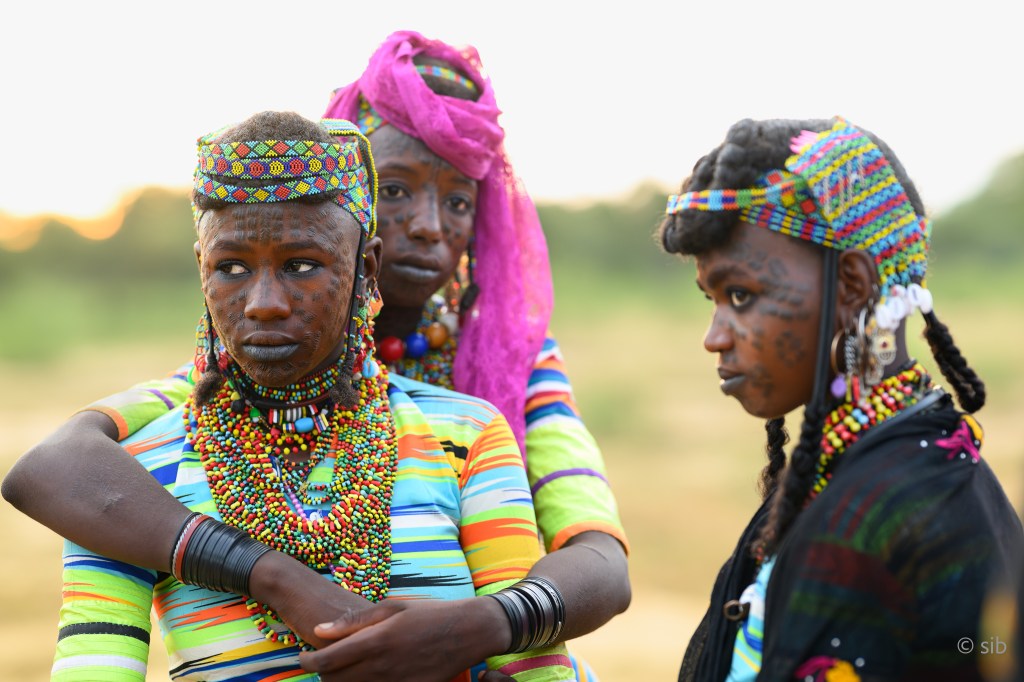
The Gerewol also brings families together after months of separation. People exchange news, renew friendships, and meet possible partners. During the dance, eligible young women chosen by the elders approach the line and touch the chest of the man they select. The choice may lead to marriage or to a shorter relationship within Wodaabe polygamous traditions.
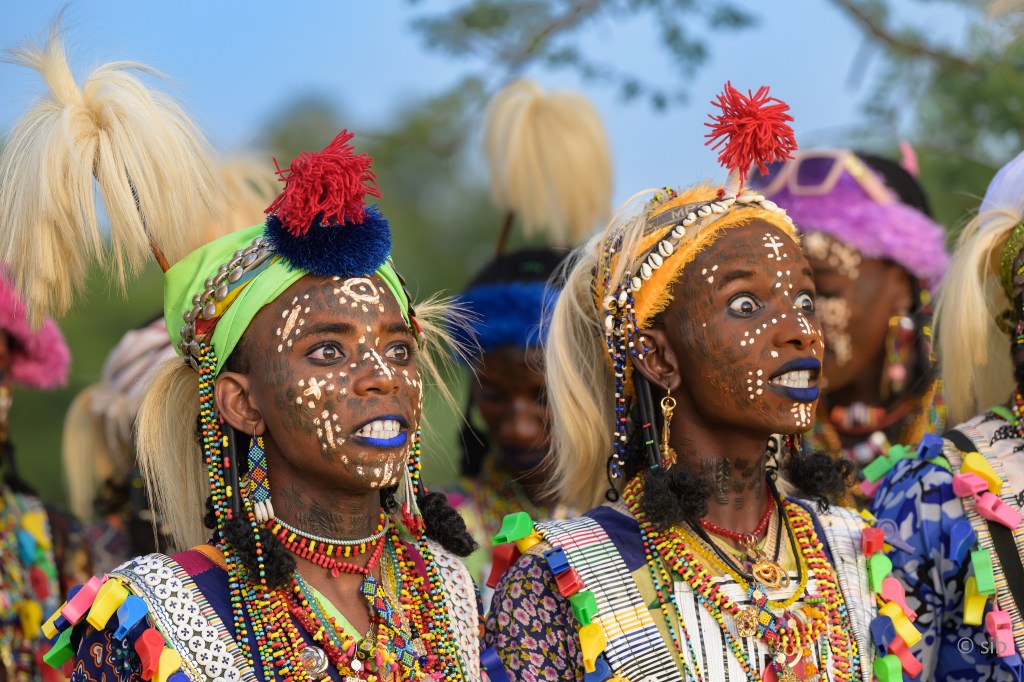
Photographing the People
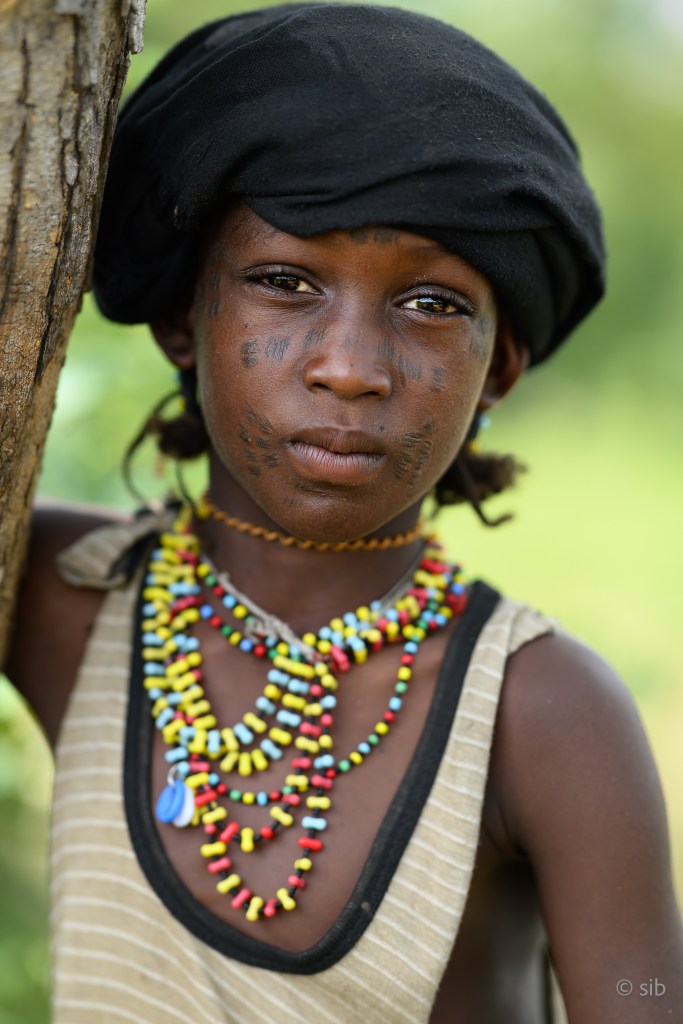
Many of the young people volunteered for portraits. Some stepped forward eagerly and then became shy as soon as the camera was raised, which made the sessions feel less like formal sittings and more like a negotiation conducted through gestures and laughter.
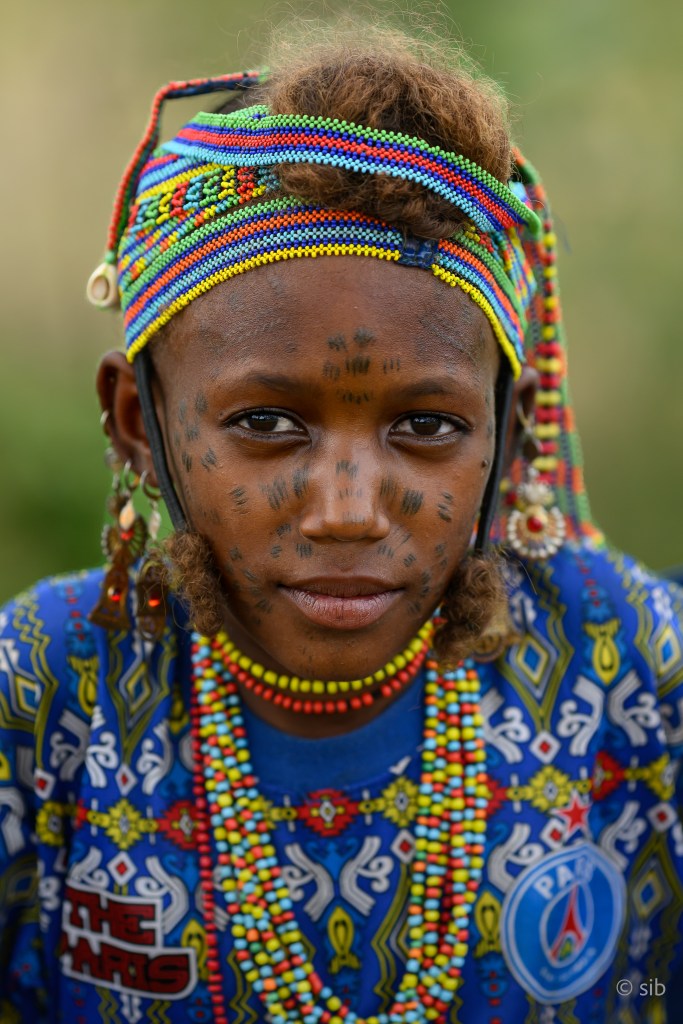
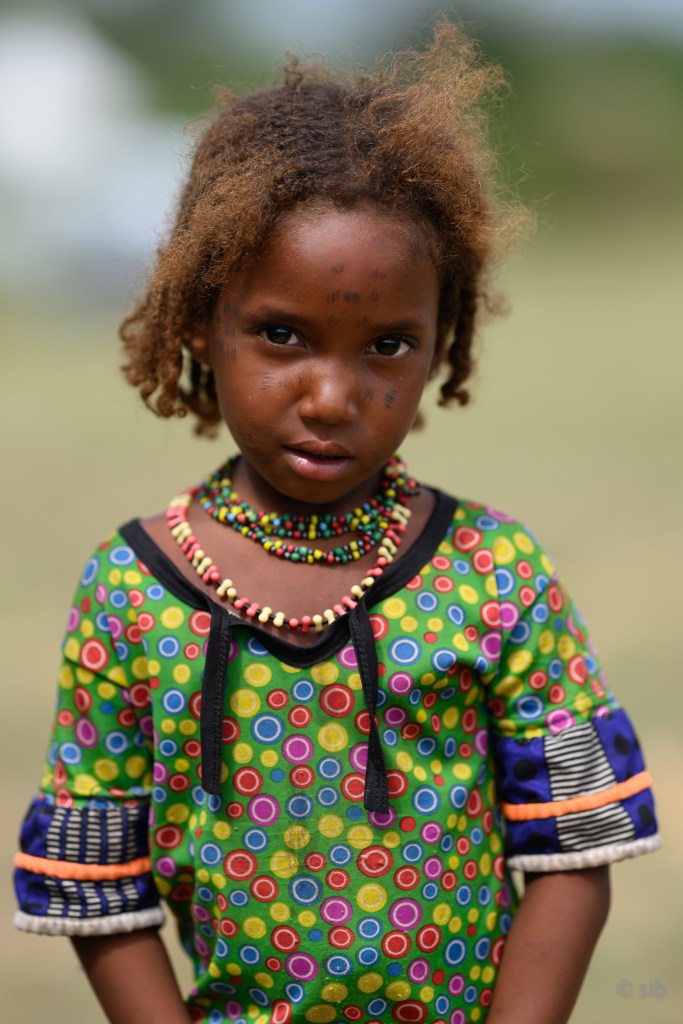

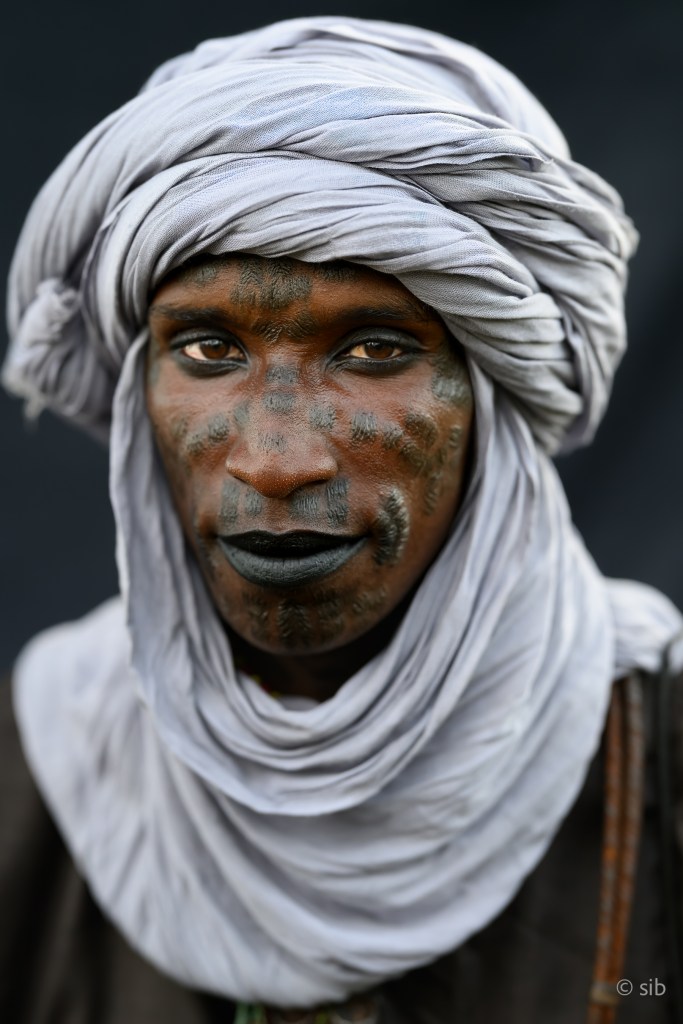

People from other nomadic groups occasionally passed through and stopped to watch us photograph the festival. I had the impression that our interest mattered: outsiders had traveled a long way to see a ceremony that some neighboring communities dismiss as old-fashioned. At one point, a group of Arab nomads stood watching us watch the Gerewol. The arrangement was fairly symmetrical.
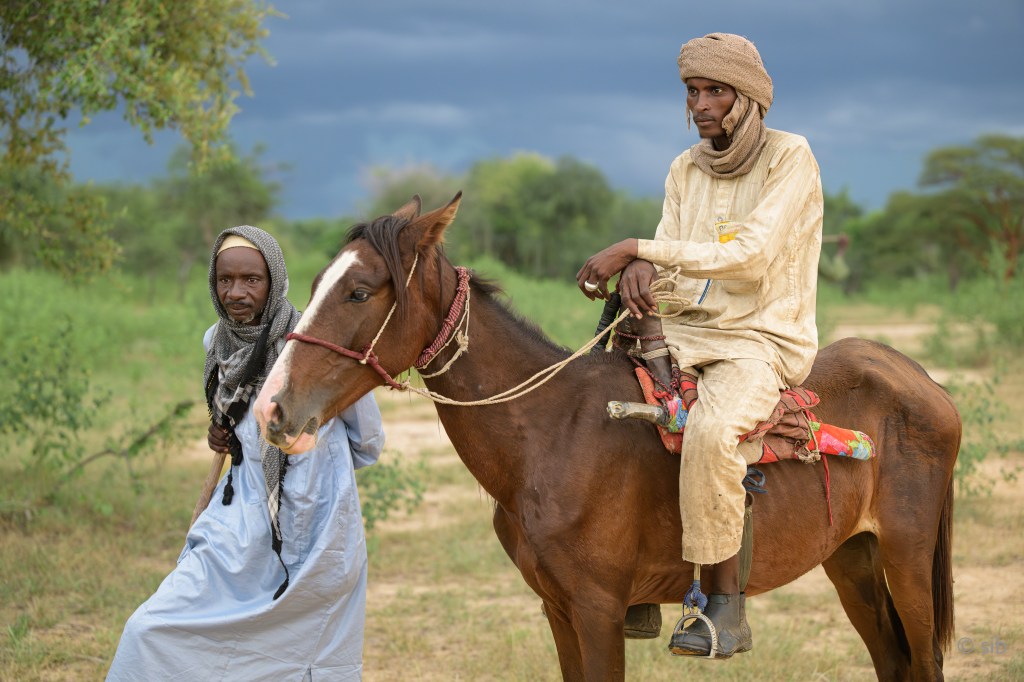
Our guides made the experience possible. They introduced us, translated, managed the camp, cooked, and kept the vehicles moving. Edward, one of the local guides, was known for being able to lift a full 200-liter water barrel onto the roof of a Land Cruiser by himself. He had also been barred from martial-arts competition after nearly killing an opponent with one punch. I did not ask for a demonstration of either skill.
Back to N’Djamena
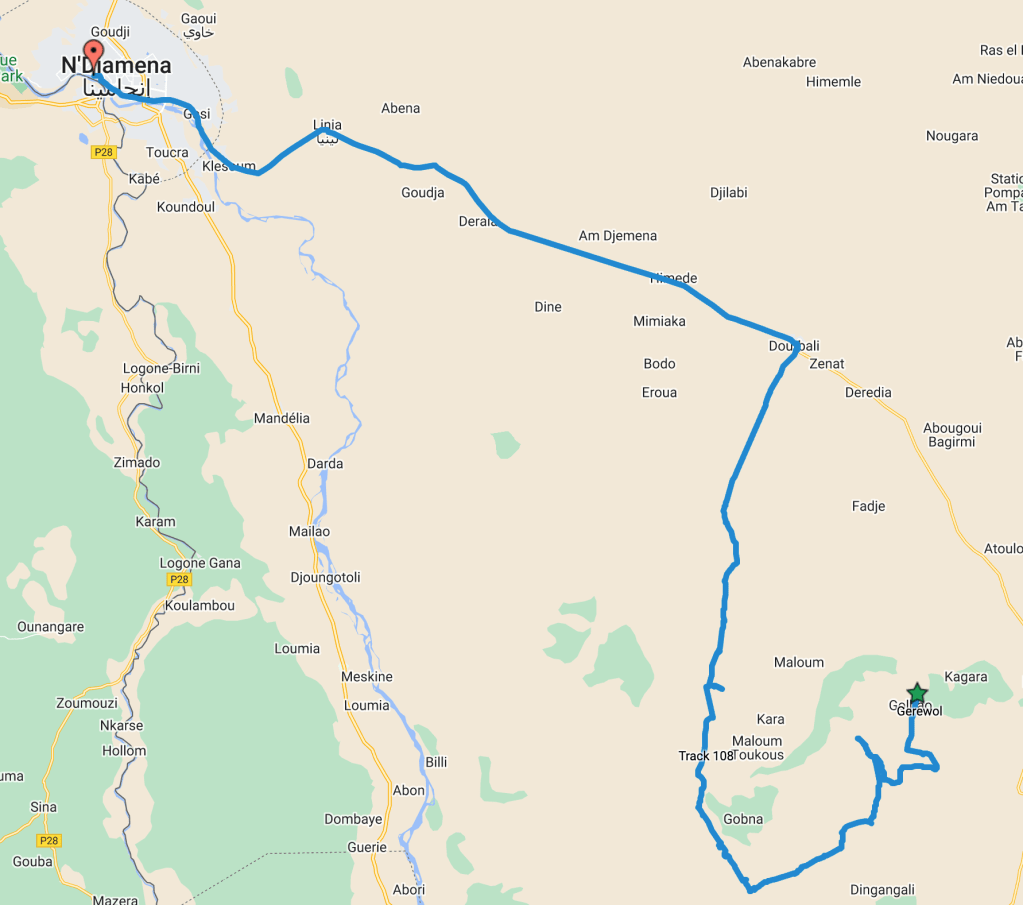
The direct distance back to N’Djamena was less than 120 kilometers. Distance turned out to be a poor way to estimate the trip.
A supercell thunderstorm arrived as we were leaving, and a river had shifted its course across the direct route. We drove southwest, then circled toward Dourbali, roughly 40 kilometers north of the festival, to reach one of Chad’s few mostly-paved roads outside the capital.
The return took two and a half days. On each of the first two days, we covered about 40 kilometers in 14 hours. The Land Cruisers became stuck more than 40 times, and some recoveries took two or three hours of digging.
By the time we reached N’Djamena, the festival’s formal dances were already being replaced in memory by smaller scenes: friends fastening one another’s clothes, children watching from the sidelines, and dancers still singing as the sun came up. The photographs preserve those details better than any grand conclusion could.


Leave a Reply