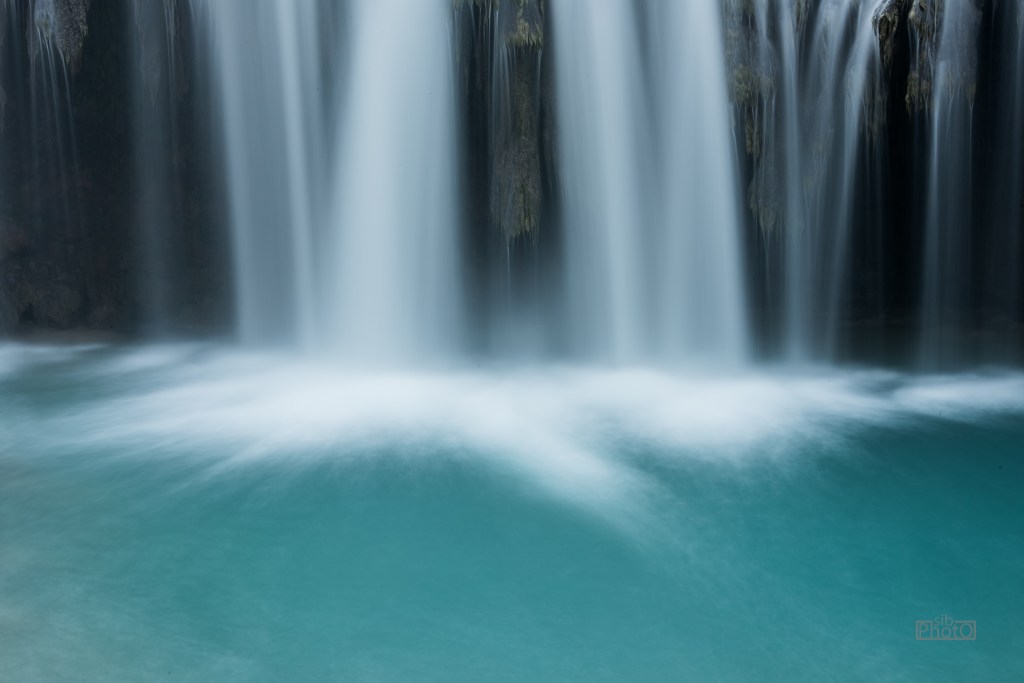
Supai is a Native American community in northwestern Arizona, adjacent to the Grand Canyon. By some measurement, it is the most remote community in the lower 48 (contiguous) United States. It is only reachable by foot, by pack animal, and by helicopter. The people who live there are members of the Havasupai Tribe – a word that translates as “people of the blue-green water” – and have lived in this region for at least 800 years.
The primary attraction that brought us to Supai is the bright-blue Havasu Creek and the incredible waterfalls that it has created as it’s carved through the rock and dissolved a high concentration of calcium carbonate (responsible for the water’s color). To see the waterfalls, follow the path along the river from the north end of town and just keep walking. You’ll wade across the river multiple times en route to the various large and small cascades; don’t worry – even in November, when we went, the water was not cold.

A short way down the trail you will see Lower Navajo Falls, which was created as a result of the 2008 river flood. While this is not a very large waterfall, at only about 30 feet tall, depending on the flow and the light, it can be quite beautiful and unusual.
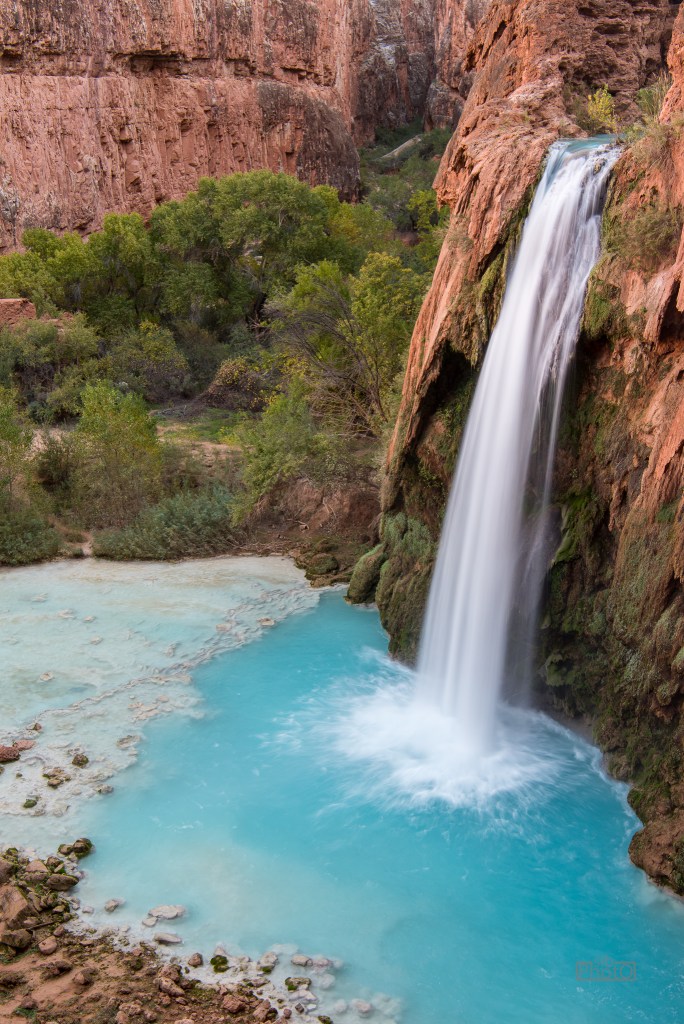
Less than a mile past Lower Navajo is Havasu Falls, the most famous of the waterfalls along the creek. At the base, in the left of the image, you can see the pools created by the travertine deposits from the water in the creek.
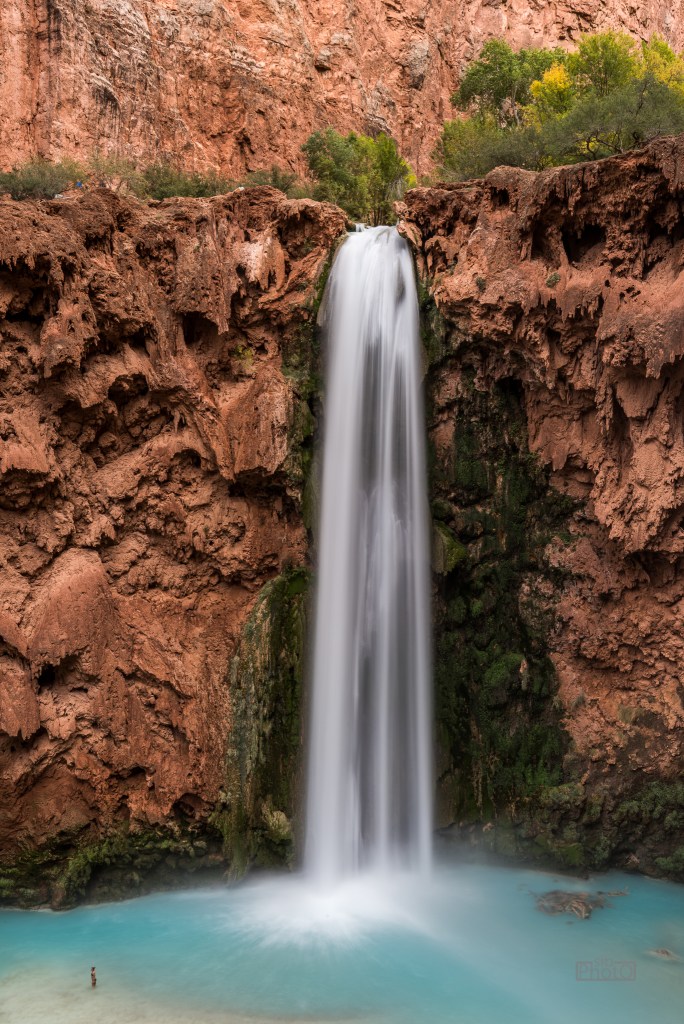
The tallest of the falls, at about 200 feet (higher than Niagara Falls) is Mooney Falls. To get to the bottom, you must climb down narrow, wet ladders that run through tight tunnels in the cliff face. While dangerous if you are not careful, the trip and the view from the bottom is worth it.

 Fernweh
Leave a comment