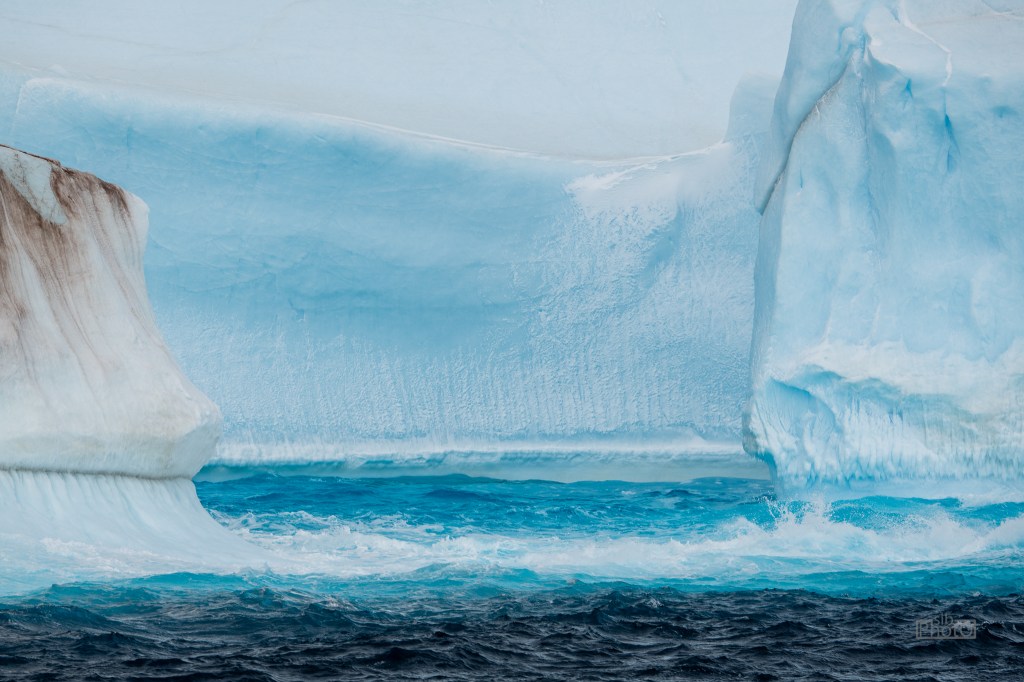
Antarctica is a place like no other: a land of majestic mountains, unpredictable weather, untold miles of ice in all its forms, and, of course, penguins. We were lucky enough to travel there with a group of photographers on the MV Ushuaia, a moderately-sized ice-capable ship originally built for NOAA. The friendly crew and expert expedition guides helped us make the best of our time there, dealing with the ever-changing weather to find opportunities for landings whenever possible.
Our trip departed from Ushuaia, Argentina, the southernmost city in the world and the Capital of Tierra del Fuego. The ship crossed the Drake Passage, which was relatively smooth on the way out, but quite rough as we threaded the needle between two large storms on the return trip. In between, we spent our time sailing up and down the Antarctic Peninsula, landing on various islands and the Peninsula itself via Zodiac boat.
Penguins
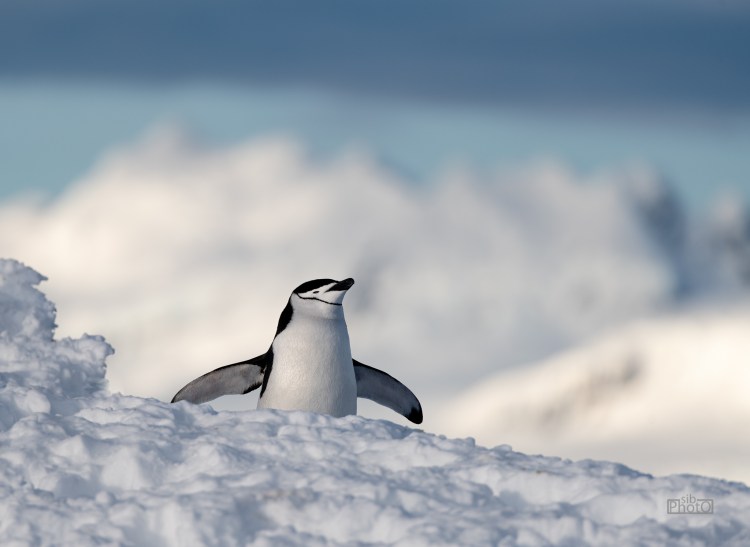
There are approximately 18 species of penguins globally, ranging around the southern hemisphere. Five of them are found on Antarctica. The Chinstrap penguins are medium-sized birds, reaching about 27-30 in (70-75 cm) tall. They build nests out of rocks and lay a pair of eggs. The adults swim out to sea regularly, as far as 50 miles, to hunt for fish, krill, and shrimp.
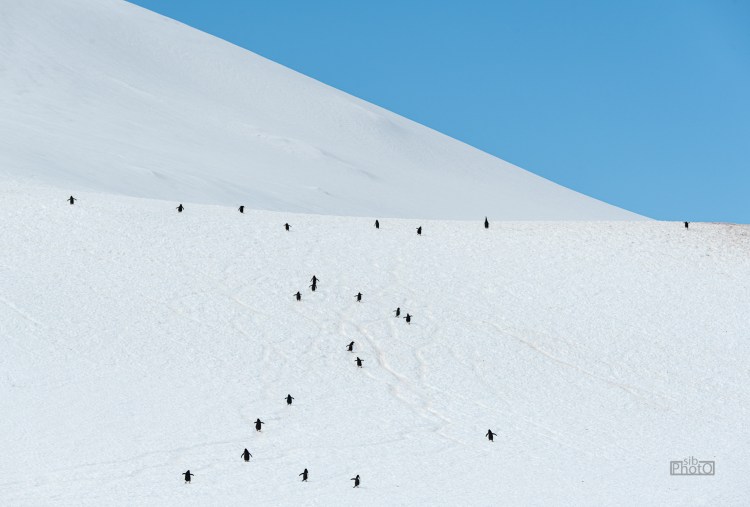
Another common sight is the Gentoo penguin: at up to 35 inches, the third-largest of the penguins after the Emperor and King. They nest high up on hills. Apparently, the higher up the hill, the sooner the snow melts and the more likely the chicks are to survive, so the birds make quite long treks up to get the prime spots. They create characteristic pathways where the snow gets compressed by the many birds who travel up and down each day to go fishing.
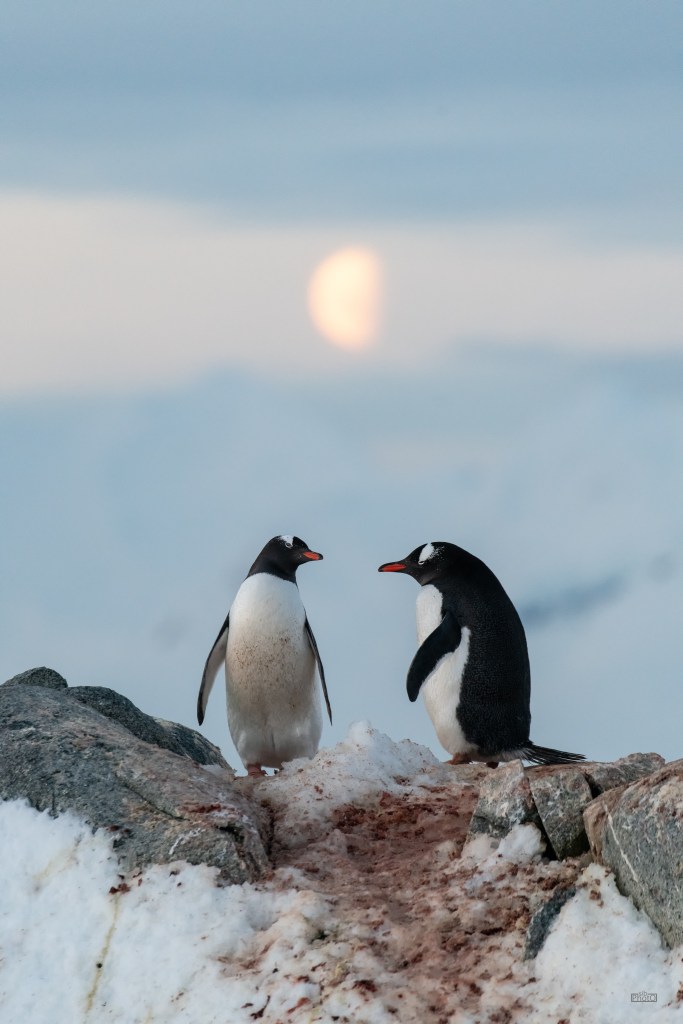
Male & female Gentoo penguins work together during incubation (about 35 days) and nesting (about 30) – collaborating to get krill for food and to make something of a mess around themselves.
While the Adelie penguin is widespread on the Antarctic continent, supposedly more than 3.5 million of them, we saw very few. They are midsized and feed on krill and silverfish. We were lucky enough to catch this one wandering down a long slope on Rongé Island just at sunset.

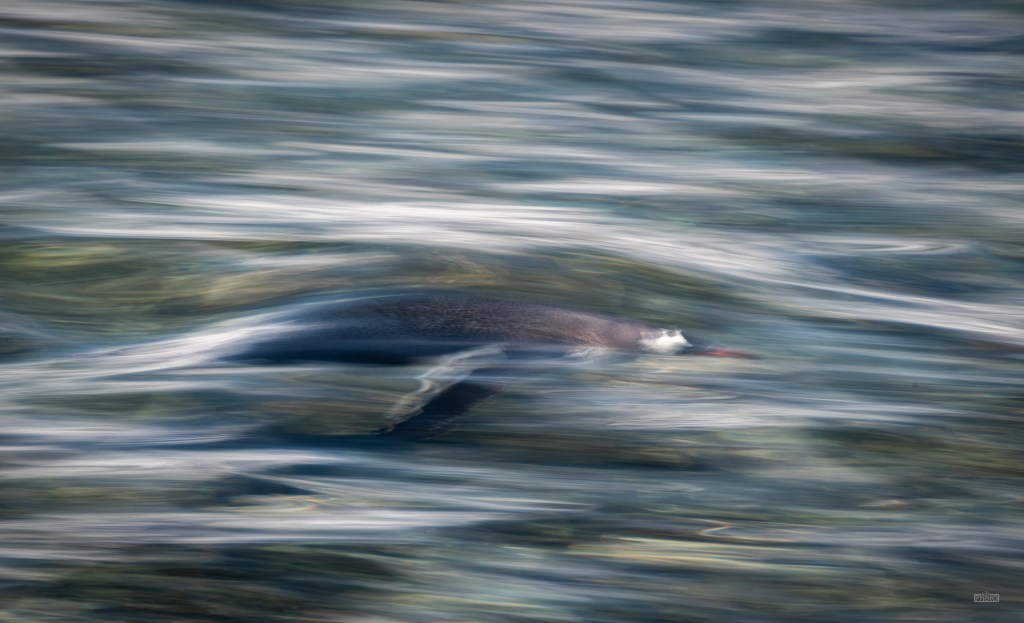
While penguins are cute and a bit awkward on land, in the water they turn into graceful and fast-moving hunters, evading predators and searching for food. Here a Gentoo “flies” through the water just off Danco Island.
Port Lockroy
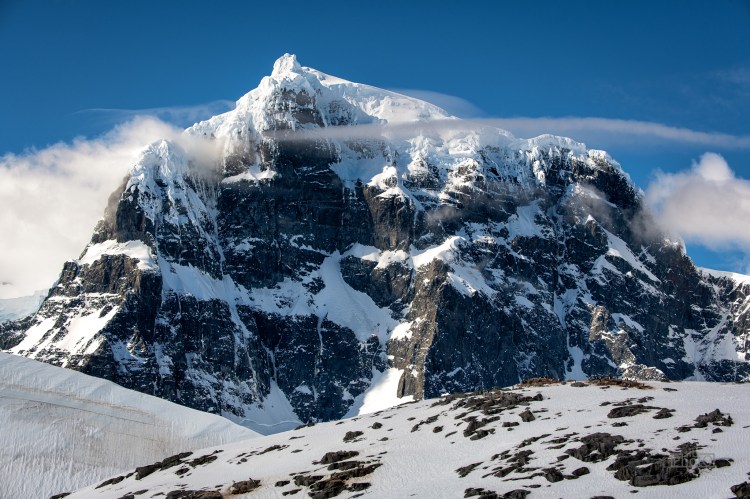
One thing that is a bit surprising about Antarctica is how epic and majestic the landscape is. Port Lockroy is a former whaling station and British base, now reincarnated as the continent’s only post office (only open about 5 months per year). Surrounding the couple of restored buildings is amazing scenery – and, of course, more penguins. Here, in the foreground, you can see some of the 1,500 or so Gentoo Penguins who’ve created a small colony overlooking the station.
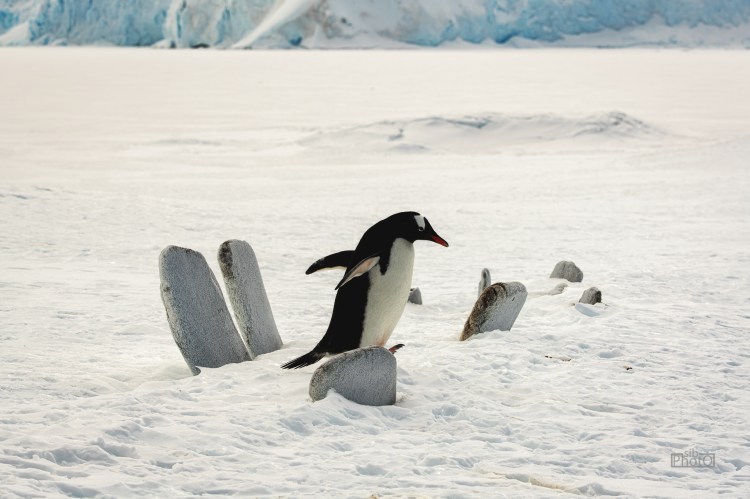
Here and there are remnants of Port Lockroy’s history as a whaling center. The penguins don’t seem to pay much attention to the giant bones that have been weathering in the harsh climate for many decades.
Icebergs
While it’s not the only place on Earth to see icebergs, Antarctica certainly has its share. And like everything in Antarctica, they tend to be large and dramatic.
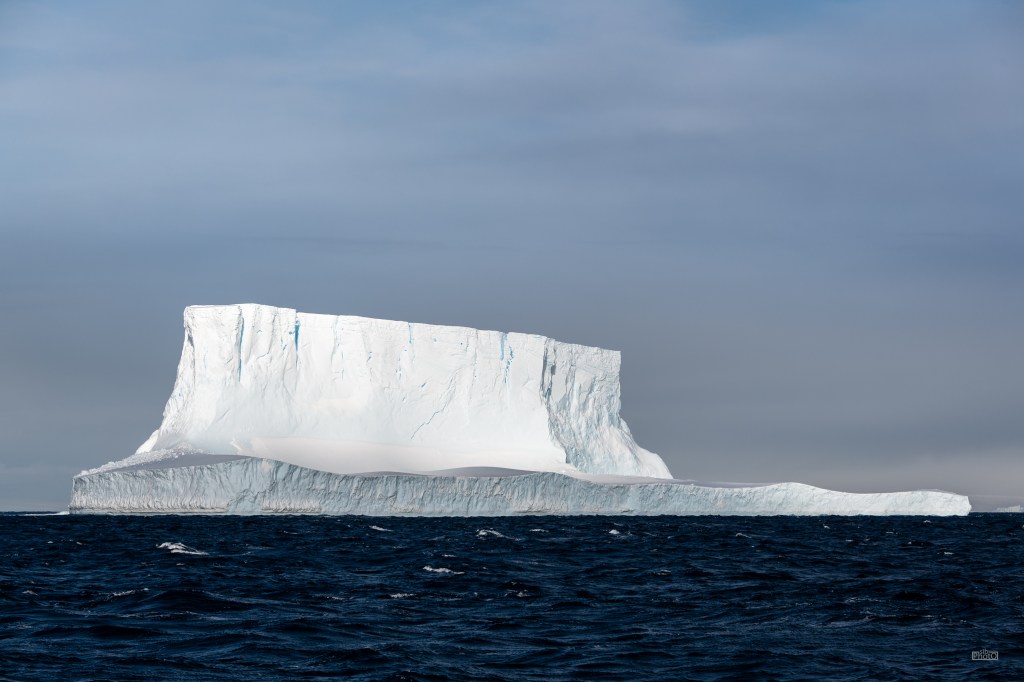
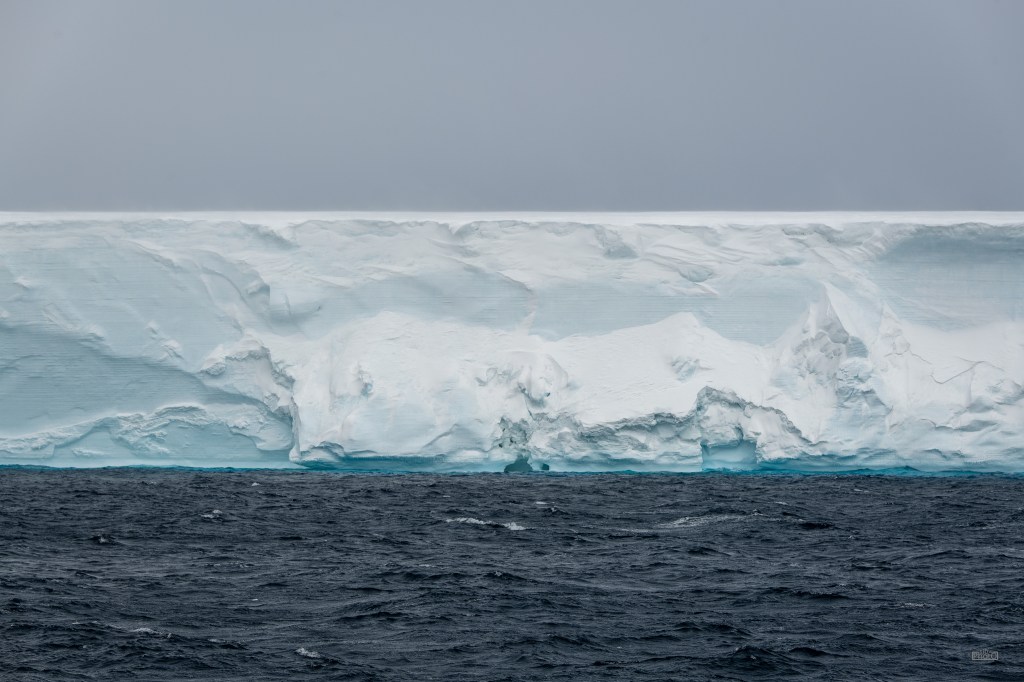
Somewhat distinct from northern polar regions are the unbelievably large tabular — flat, table-shaped — icebergs. Our crew measured this one at 13 miles (21 km) long, about the size of Manhattan; it took us a couple of hours to sail past it.
Of course, sometimes you get lucky enough to see a group of penguins sailing an iceberg off into the sunset, which seems like a great way to end this post.




 Fernweh
Leave a comment