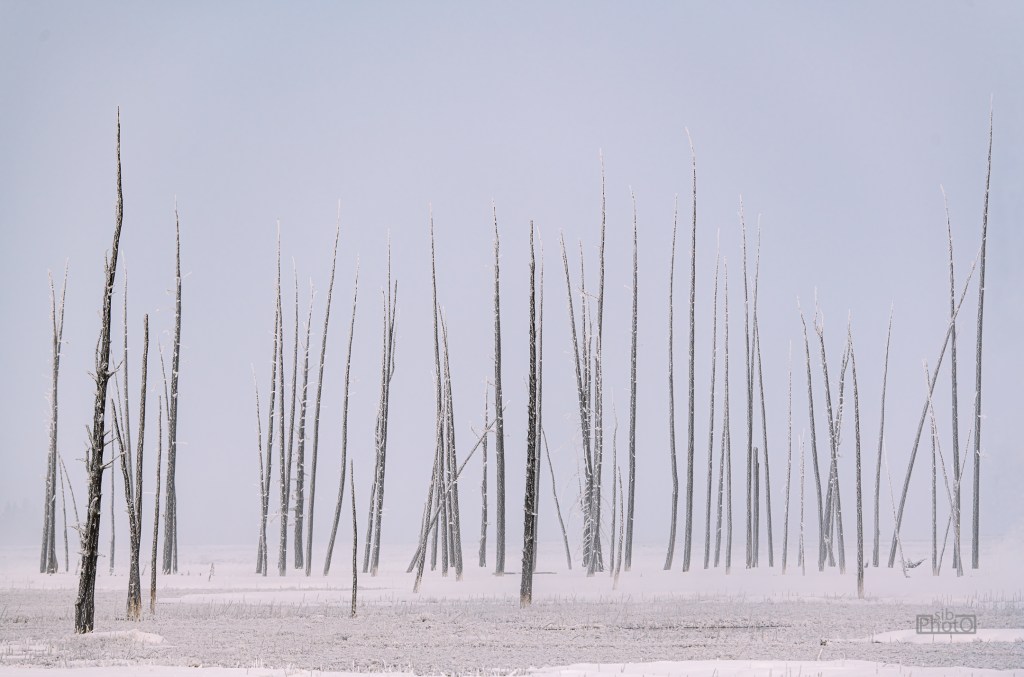
Yellowstone National Park, located primarily in the northwest corner of Wyoming, is famous for geysers, including Old Faithful, hot springs, waterfalls, and wildlife – hundreds of species. It sits on top of the enormous Yellowstone Caldera, the largest supervolcano in North America. At almost 3,500 square miles (~9,000 km^2), it is a vast space, but key attractions can often be crowded during the summer season, with almost 4 million people a year visiting the park.
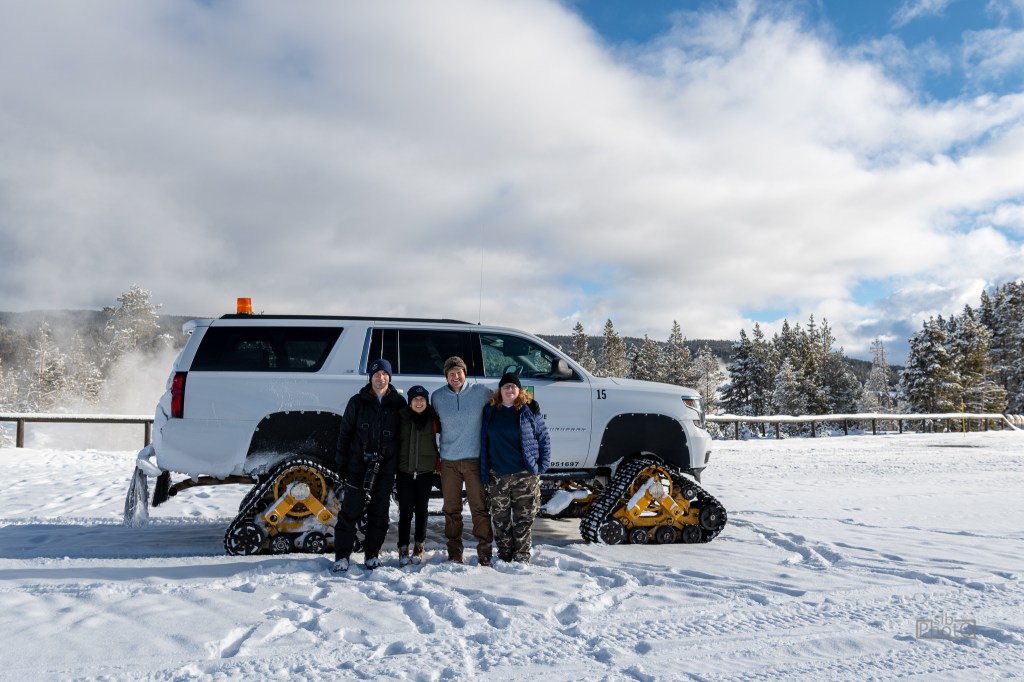
A trip to Yellowstone in the winter is a very different experience; most of the park is inaccessible, private vehicles were not allowed, so we toured via Snow Coach. The park is both lightly-visited and extremely cold. At times, we were shooting in temperatures below -15′ Fahrenheit (-25 Celsius) and we got to see Old Faithful erupt all by ourselves.
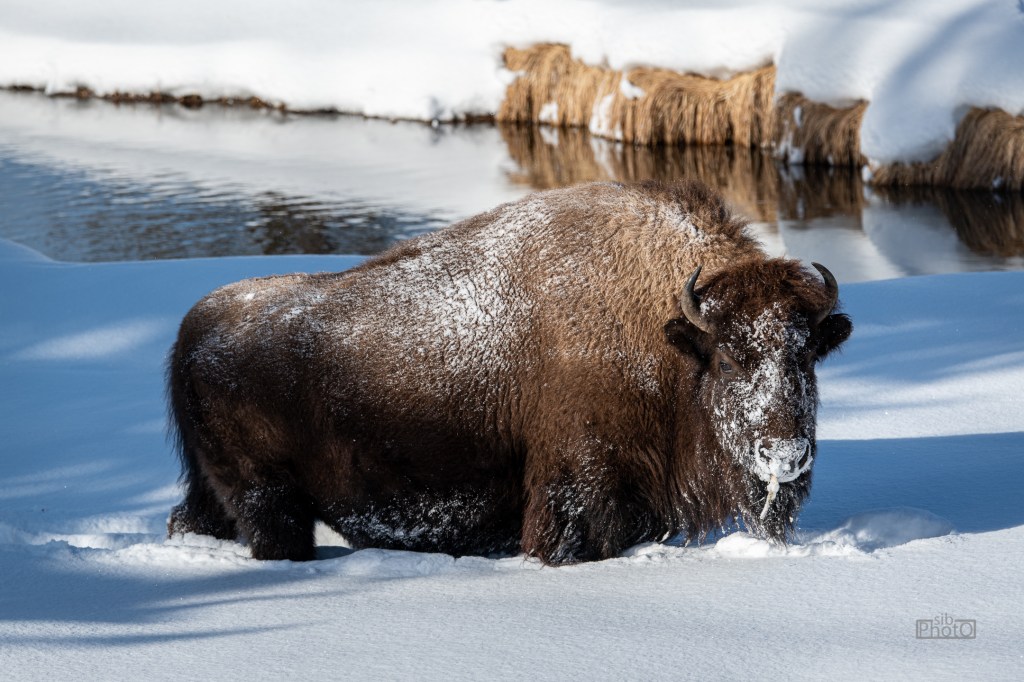
Perhaps the most iconic of Yellowstone animals is the Bison (often called the Buffalo). Historically there were 10’s of millions of Bison across the American Plains, but they were hunted almost to extinction in the 1800’s. The small number – fewer than 100 – that remained hidden in Yellowstone are likely the ancestors of all the animals that live there today; about 5,000 are in Yellowstone and perhaps 10,000 in total across various US public lands.
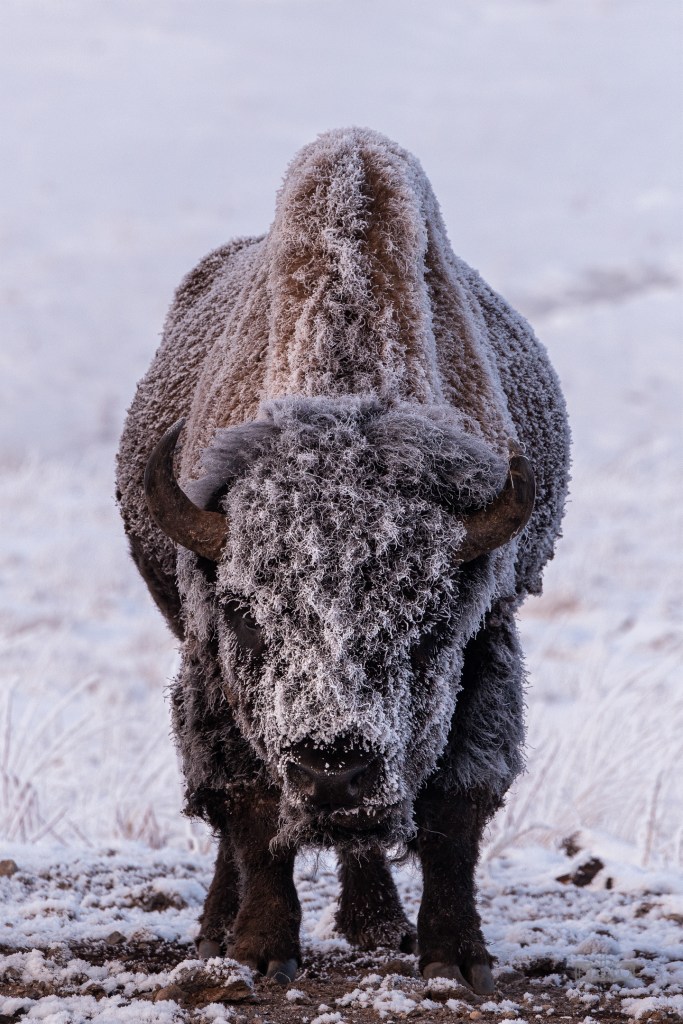
Bison are the largest mammals in North America, with males reaching 2,000 lbs (900 kg) and 6 feet (1.83 m) high. They are not bothered by cold temperatures ranging down past -40 degrees. When a bull is staring at you from 20 or 25 yards away, the fact the they are herbivores isn’t so comforting!
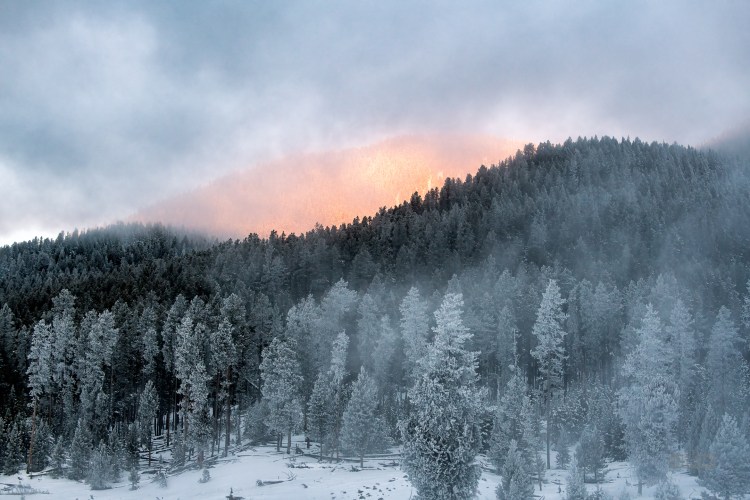
One nice thing about landscape photography in the winter is that you don’t have to wake up quite so early to shoot sunrise 😉 Since we had to stay in West Yellowstone, and it was an hour’s drive to where we wanted to shoot, we left our hotel about 90 minutes before sunrise to capture the first light hitting the mountaintops and the mist and clouds cleared above Terrace Spring.
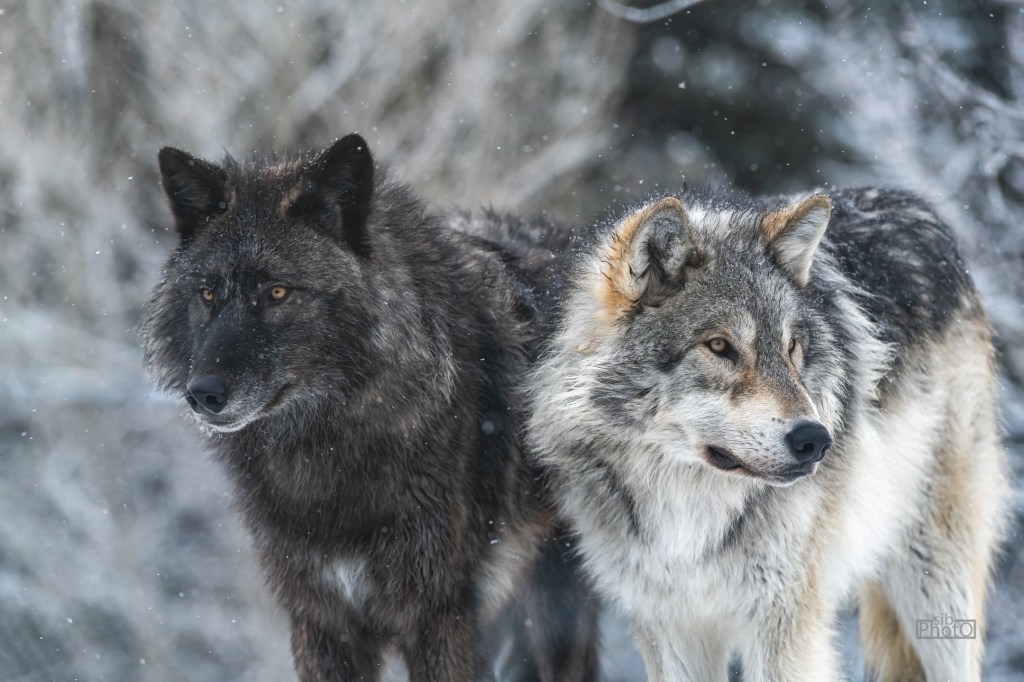
Yellowstone is also home to about 90-100 gray wolves, descendants of those first returned to the park by the US Fish & Wildlife Service in 1995. In the winter, the wolves primarily eat elk – often, ravens, coyotes, and bears also benefit from the wolves’ kills.


 Fernweh
Leave a comment