Imagine a place where the rugged beauty of Alaska meets the majesty of brown bears, and you have Kodiak Island and Katmai National Park. Our recent adventure to these iconic locations was a journey into the heart of wilderness photography, filled with breathtaking landscapes, incredible wildlife, and unforgettable experiences.
Kodiak Island and Katmai National Park
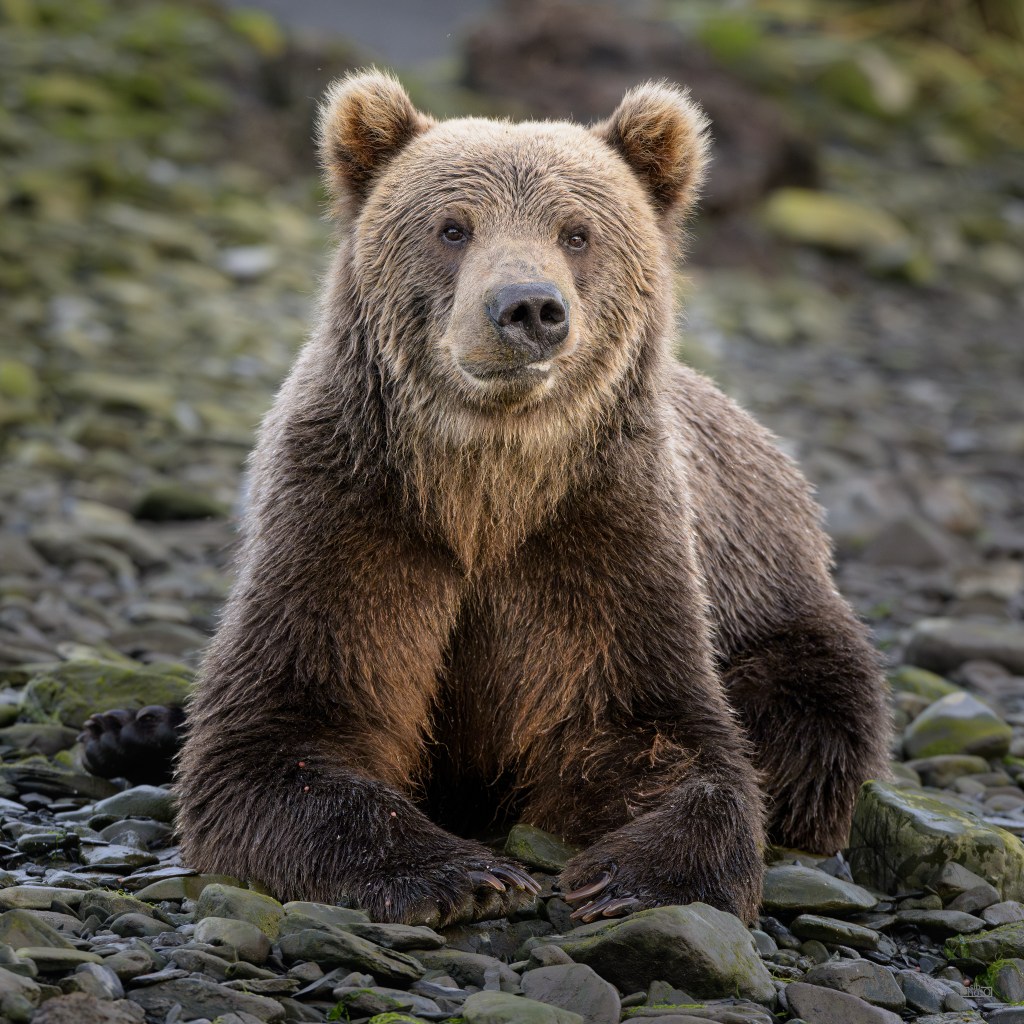
Kodiak Island, the second largest island in the United States, is a vast expanse of protected wilderness, boasting an area of about 3,600 square miles. This island is home to approximately 3,500 Kodiak brown bears, a subspecies of the brown bear that is significantly larger than their mainland counterparts due to the abundant food and lack of other predators. These giants can weigh up to 1,500 pounds in the wild, making them comparable in size to polar bears and among the largest land predators on Earth.

Katmai National Park, located across the Shelikof Strait from Kodiak, was established as a national monument in 1918, and is a demonstration of nature’s raw power. The park was created to protect the area around Novarupta and the Valley of Ten Thousand Smokes, which was devastated by the massive volcanic eruption of 1912. This eruption, the largest of the twentieth century (approximately 30 times the size of the 1980 Mt. Saint Helens eruption), lasted three days and created the Katmai caldera, leaving behind a landscape still marked by ash deposits today.
Getting There: The Journey Begins
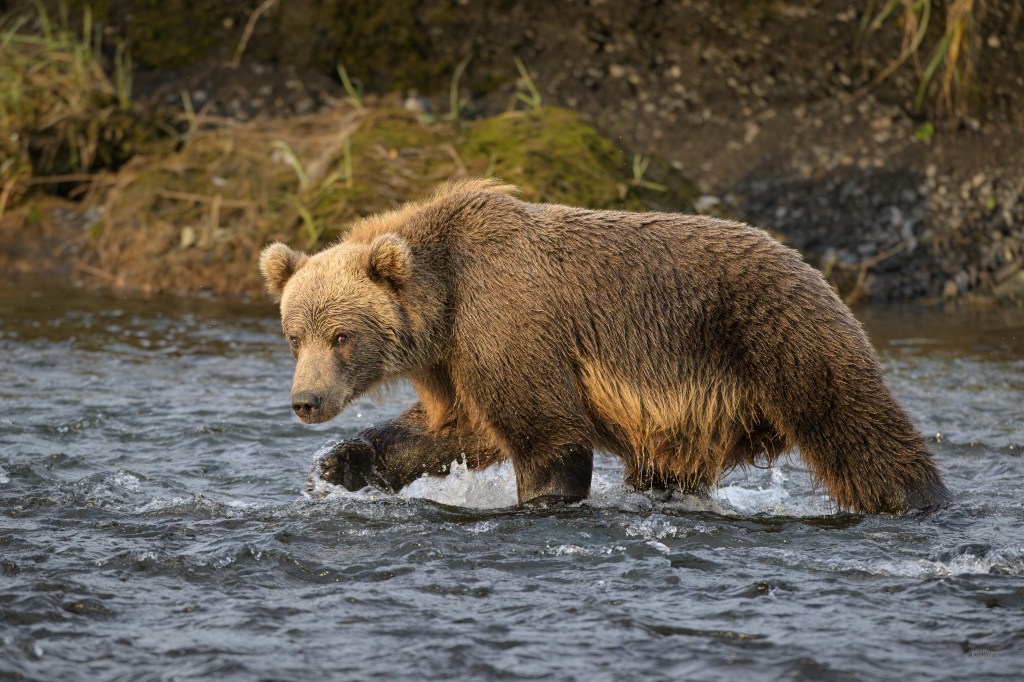
Our journey started with a flight from Los Angeles to Anchorage, Alaska, followed by a quick hop to Kodiak Island with our friends Wes and Ben. After checking into our cozy bed & breakfast, we met a local guide who took us on a tour of the area, highlighting points of interest and potential bear sighting spots. Near sunset, we were thrilled to catch our first glimpse of Kodiak bears fishing near the mouth of the Buskin River, just west of town and adjacent to the airport. This initial encounter set the tone for an exciting and memorable trip.
The Bear Viewing Experience
The next day, we met Willy, our pilot, and Jen, our guide and naturalist, from Kodiak Island Expeditions. They flew us on their floatplane to Katmai National Park, where we landed in Geographic Harbor and hiked upstream to wait for bears to arrive and fish for salmon. Over the course of about six hours, we saw a diverse array of bears, including adult males and females, subadults, yearlings, and the adorable cubs of the year (COYs).
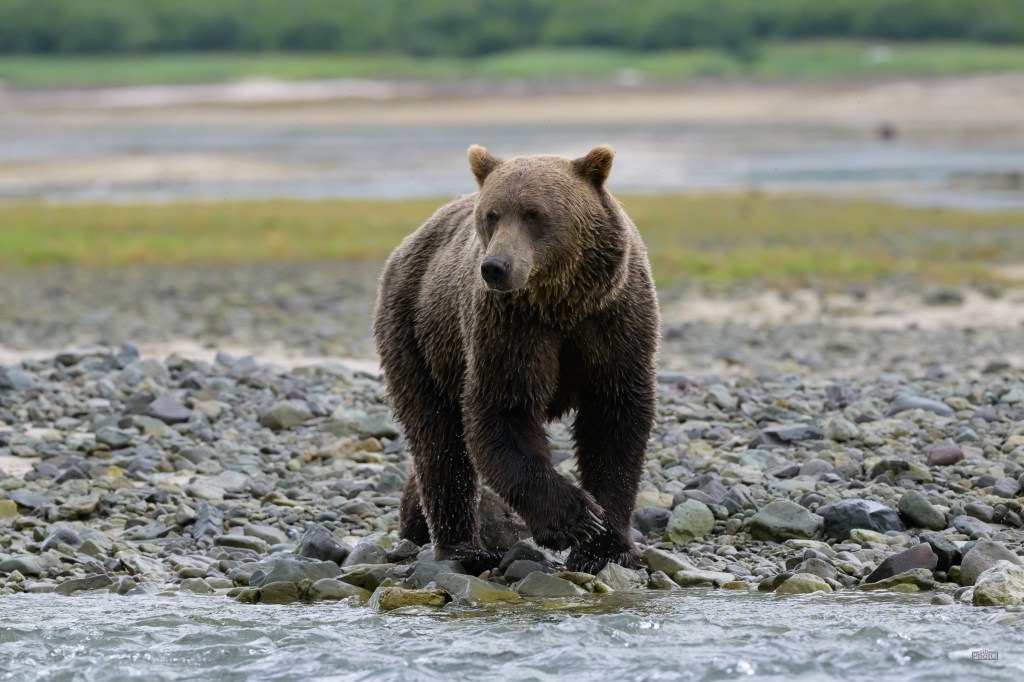
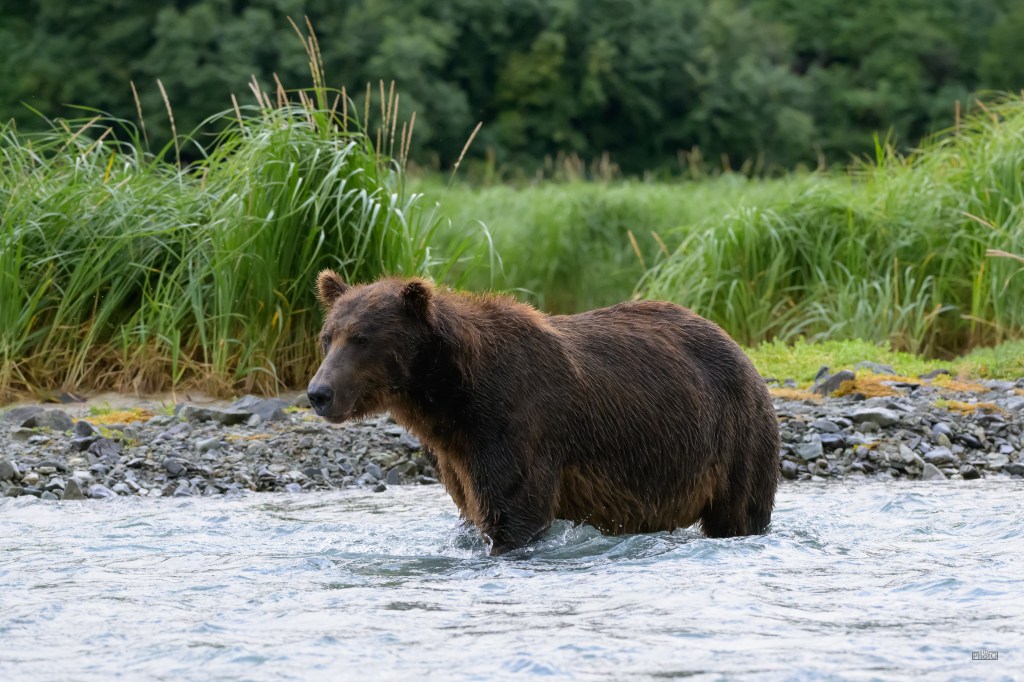
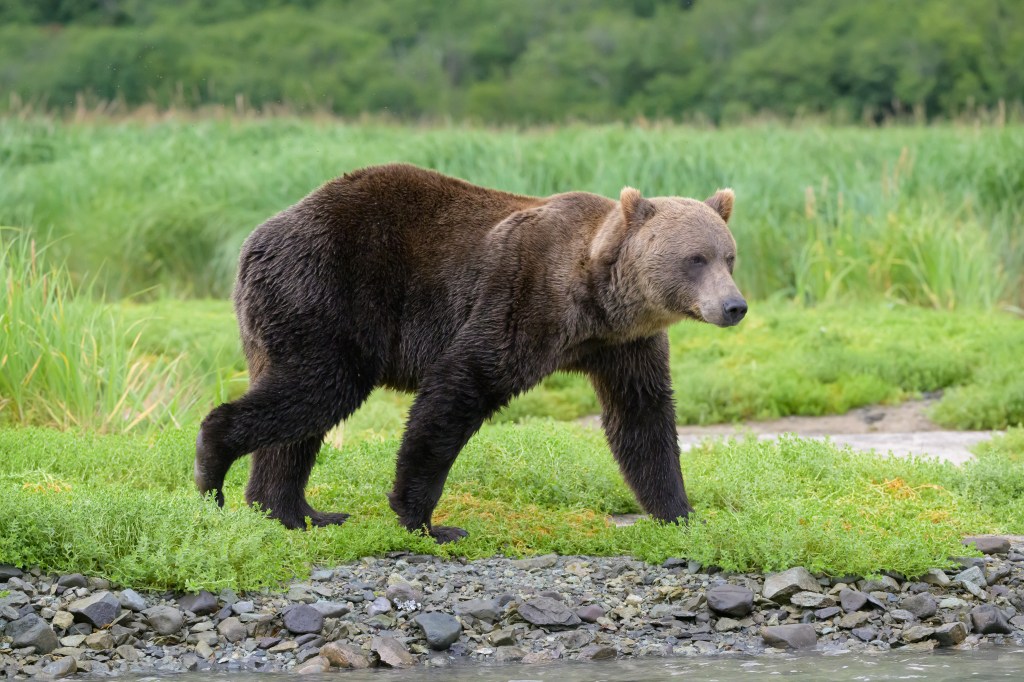
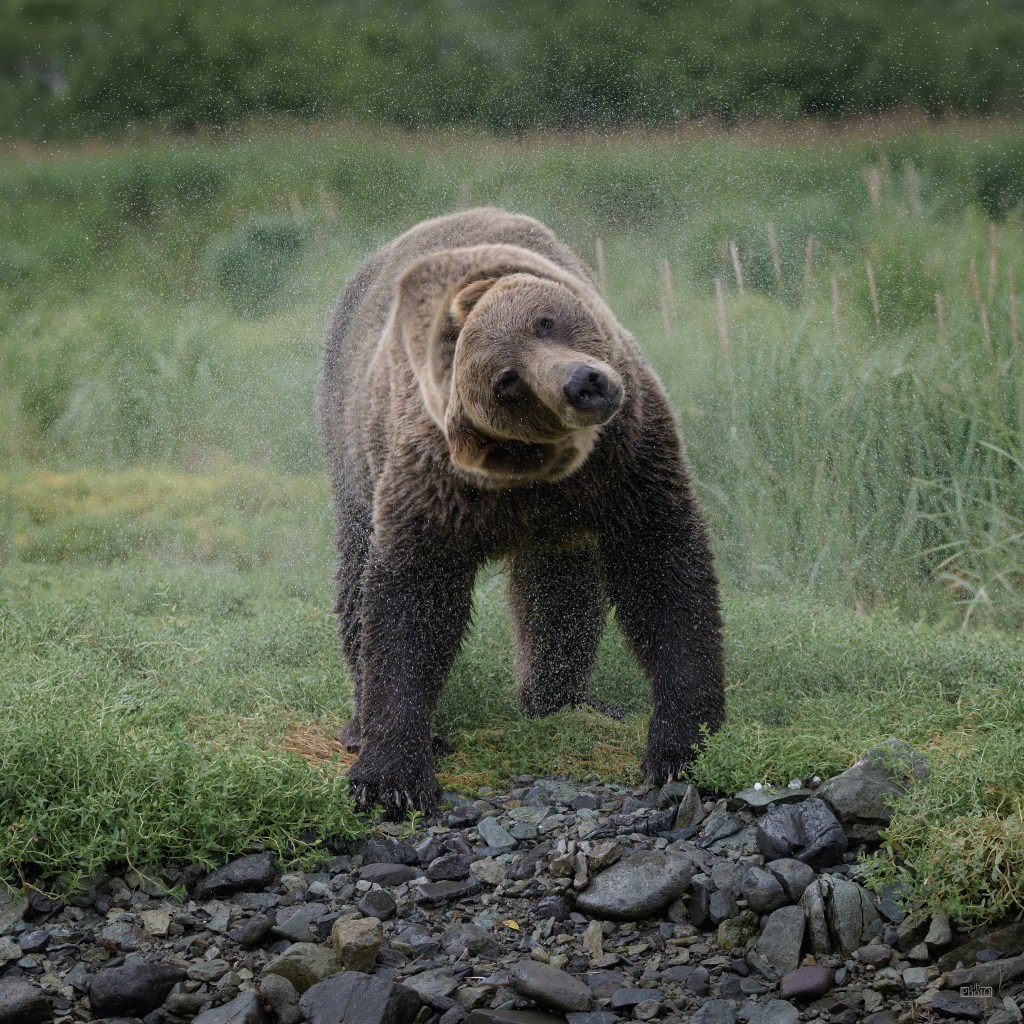
Katmai bears, while also brown bears, are slightly smaller than their Kodiak cousins but no less impressive. One of the highlights of our trip was the opportunity to observe these bears up close without the usual barriers. During the salmon run, bears are so focused on catching fish that they often ignore human presence, allowing for some of the most intimate and exhilarating wildlife photography experiences. At times you just have to shake your head that there’s an enormous bear just 5-10 feet away.
Exploring Kodiak and Marine Wildlife
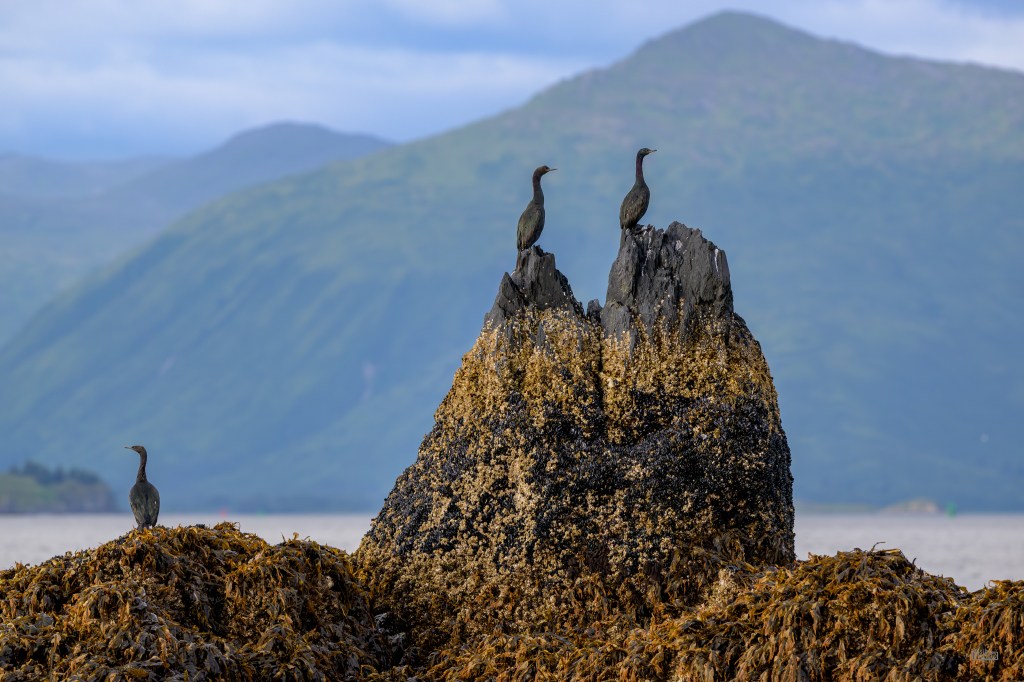
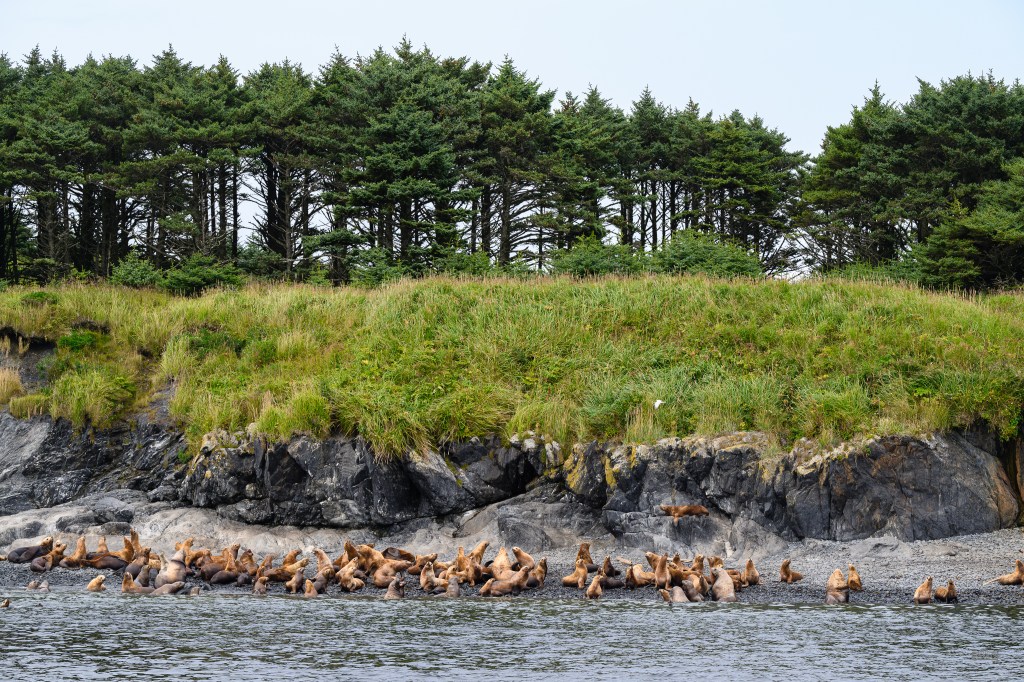
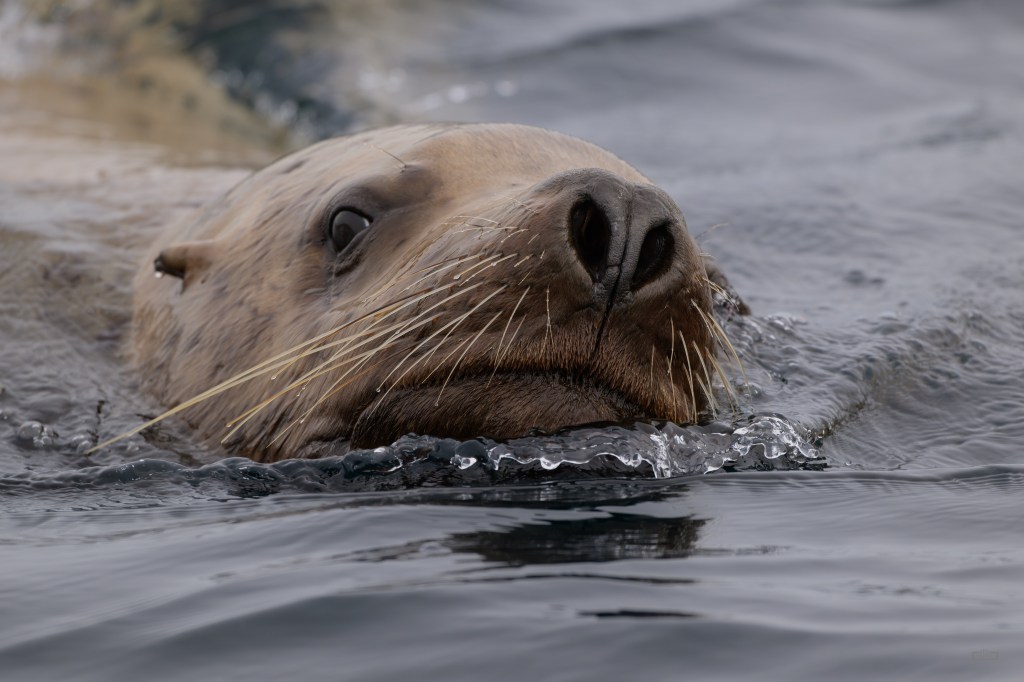
After our initial bear viewing adventures, we spent a couple of days exploring Kodiak Island. A boat tour with Lee Robbins took us through the waters of the Kodiak Archipelago, where we spotted sea otters, sea lions, various sea birds, and even whales. The local cuisine and coffee shops were great, with recommendations including Kodiak Hana, the Olds River Inn, Harborside Coffee, and Bean & Bloom. A visit to Big Ray’s, a local outfitter where we replaced some forgotten gear, is also a must for any outdoor enthusiast.
Return to Katmai: A Different Perspective
We took a second flight with Willy and Jen to another part of Katmai National Park, landing in Kinak Bay. Here, we hiked a few miles up and down (and up and down!) a stream to find more bears.
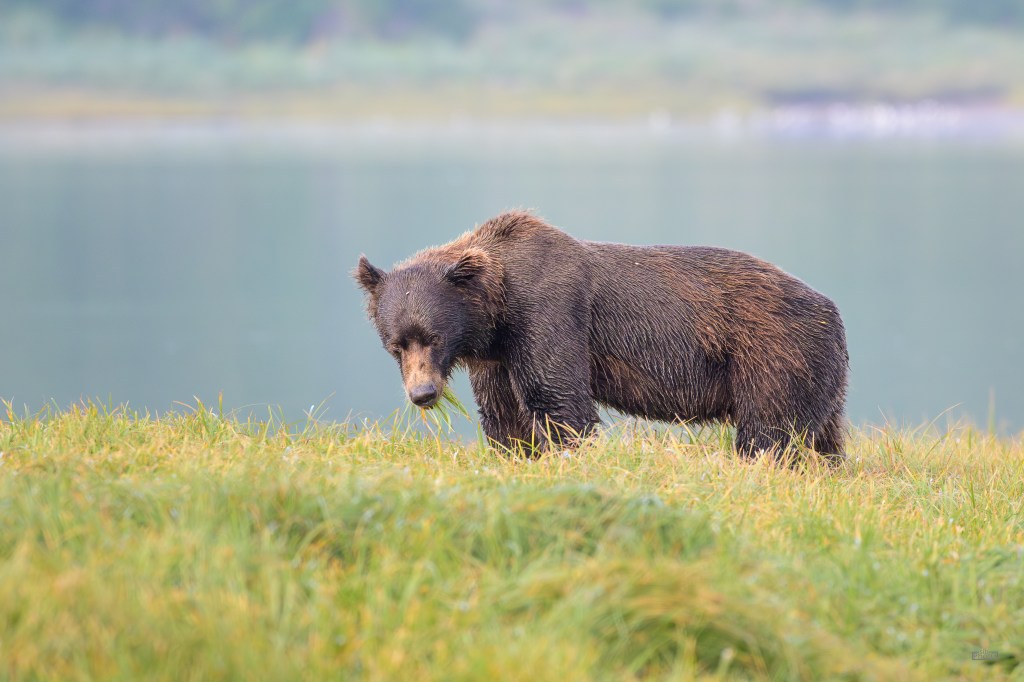
Since this was our second visit, we were able to relax a little and enjoy the experience, without feeling that we had to catch every movement of each bear bear that we saw. Although there were fewer bears than our first day at Katmai, the experience was just as captivating.
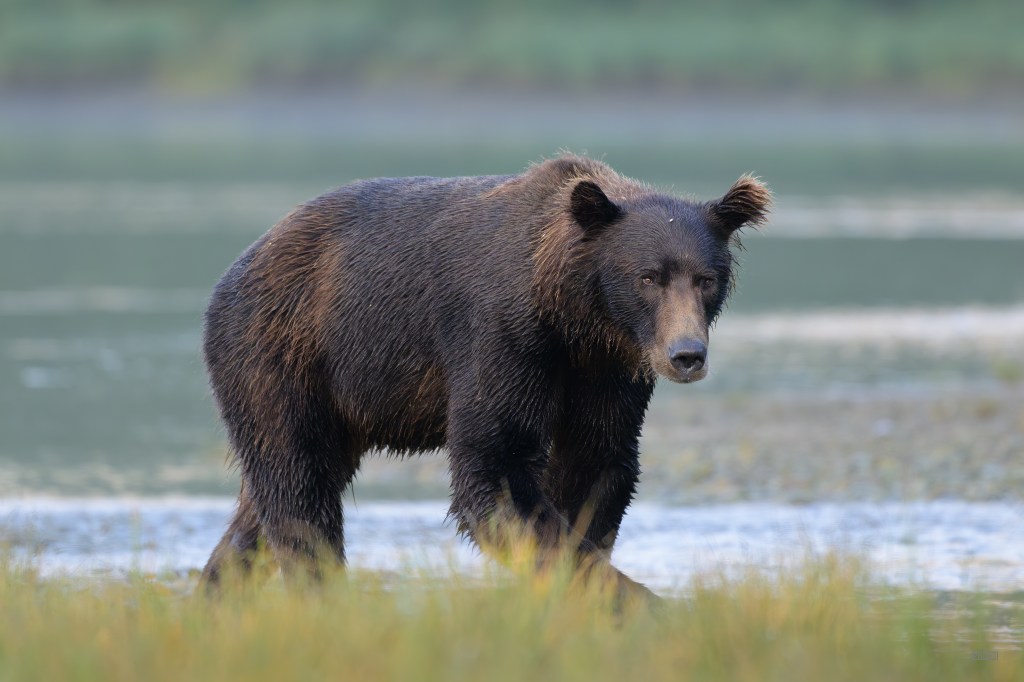
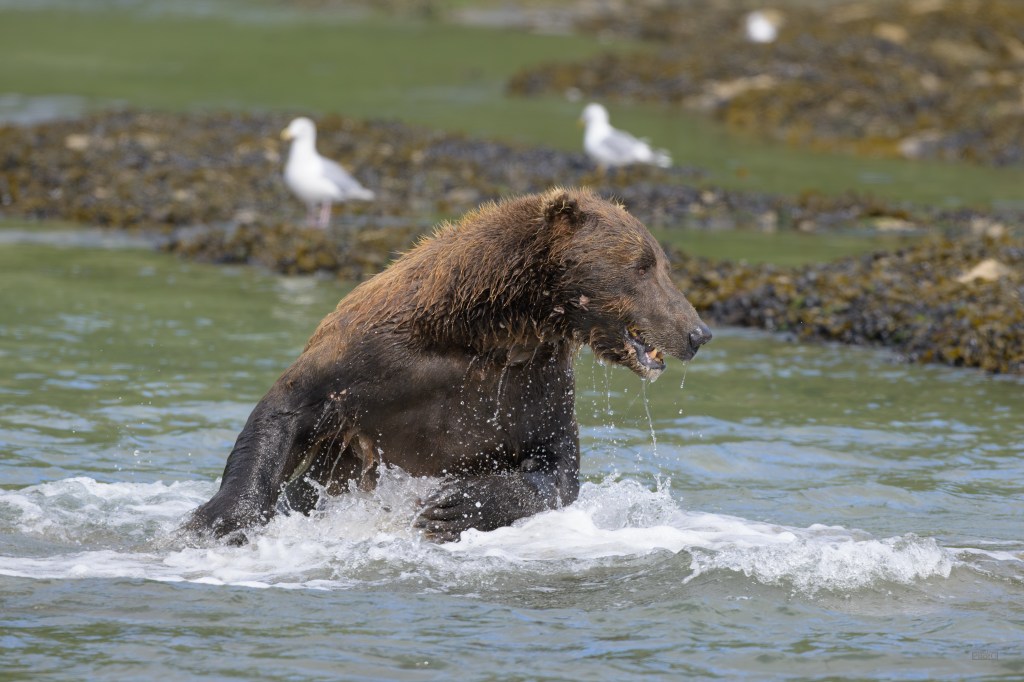
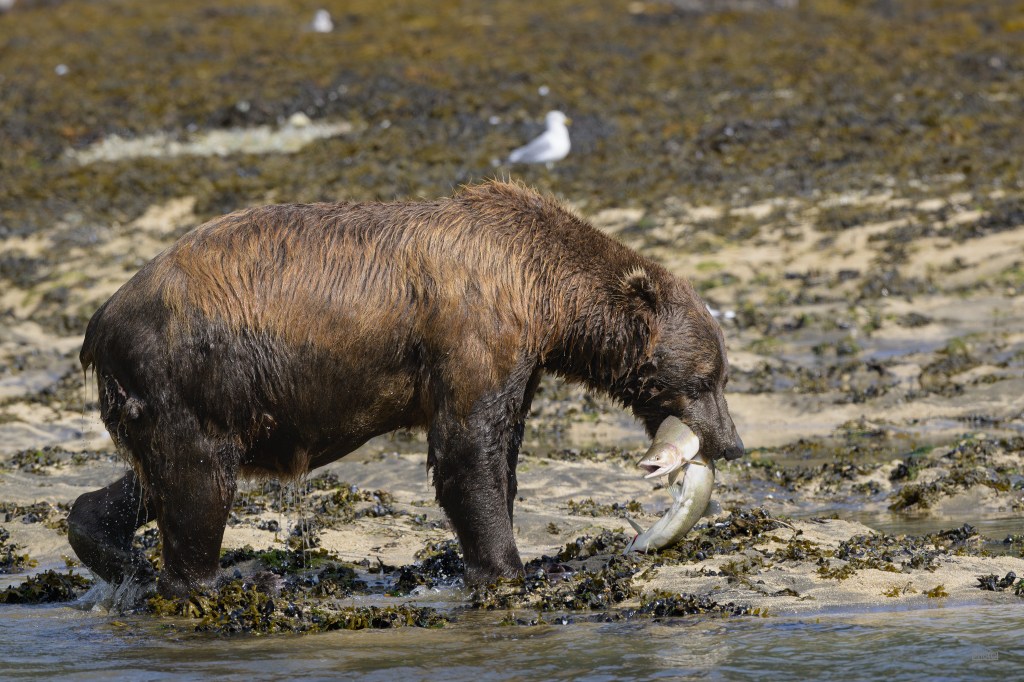
While we tried to be still and minimize our distraction, the bears always knew we were there. Salmon fishing is not easy for these incredible animals and they work hard to gain the hundreds of pounds of weight that will carry them through the winter.

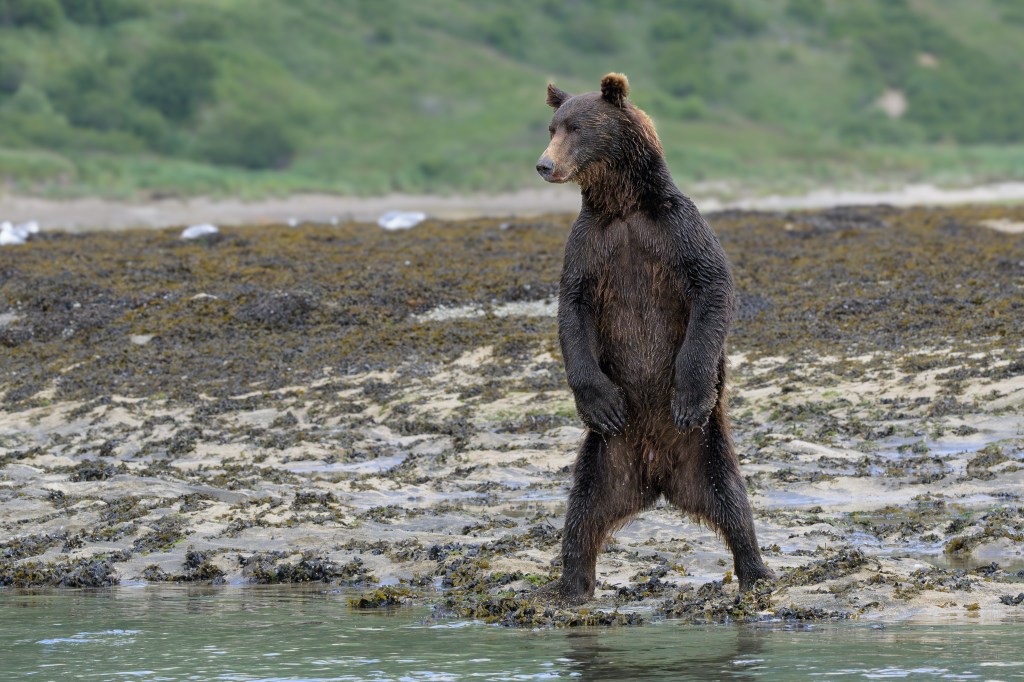
The bears were very active and close, and we witnessed one bear catch two salmon at the same time—a truly impressive feat.
The Final Day: Self-Guided Adventure
On our last day, strong winds prevented us from returning to Katmai, so we decided to search for bears on our own around Kodiak Island. As now-skilled bear-trackers (ha!), we were able to find a few fishing successfully in local streams.
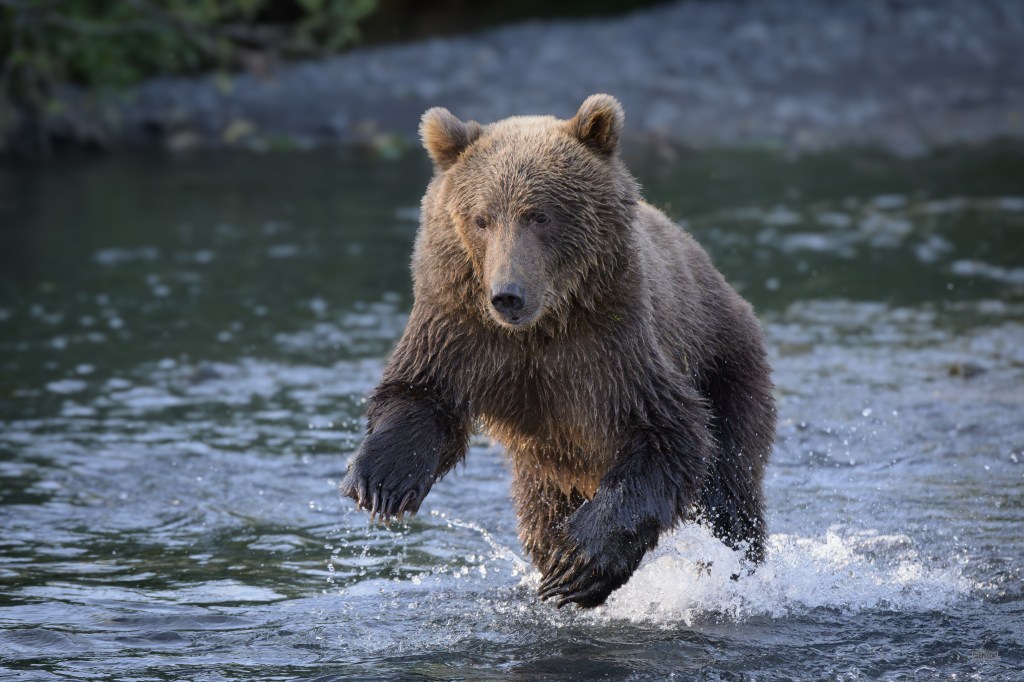
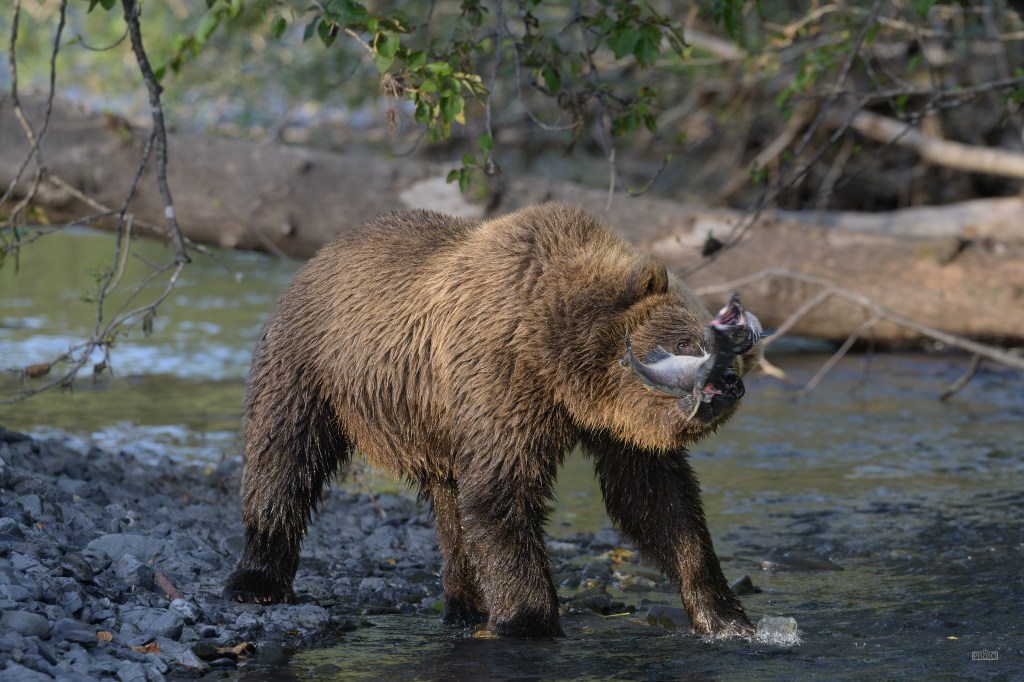
This self-guided adventure also taught us the importance of vigilance; we found bears sitting in trees or quietly eating salmon as we hiked by.
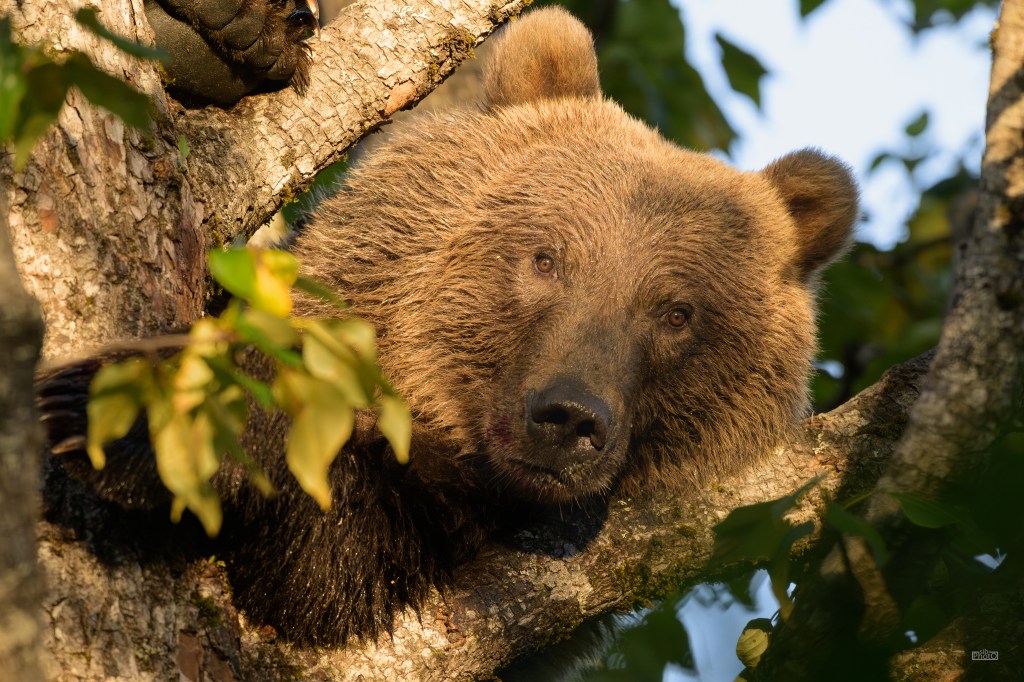
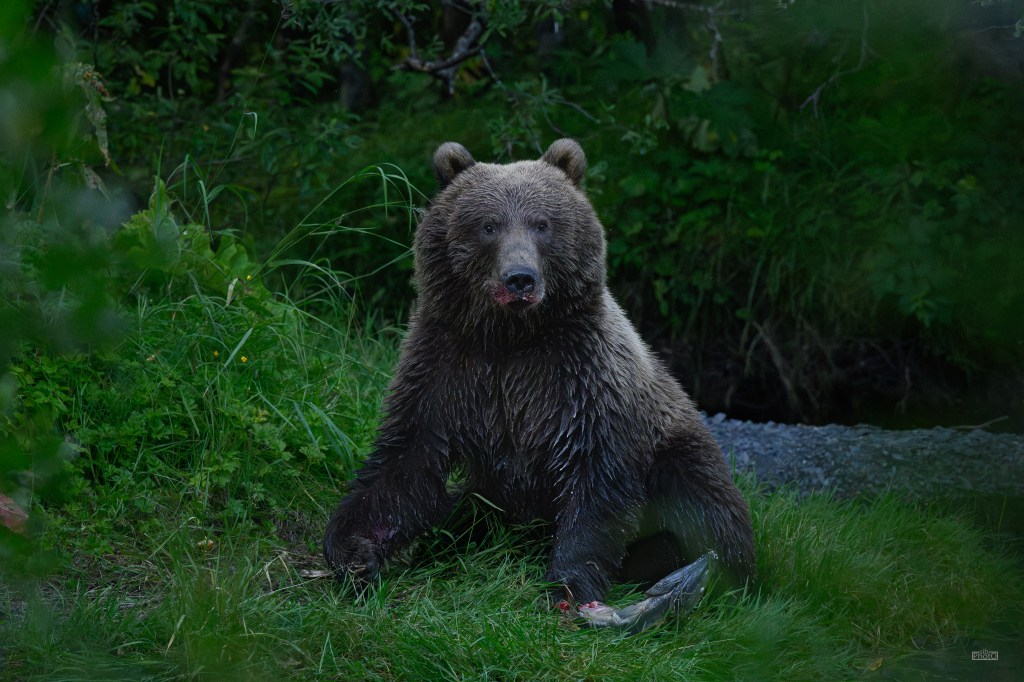
We even had a heart-pounding encounter with a mother and her two cubs who fished their way up the stream we were sitting by. One curious cub got a little too interested in us, prompting the mother to run towards us. Following the instructions we had been given—to stand up, make ourselves as large and loud as possible, and firmly tell the bears to go away—we successfully deterred the bears without incident.

Photography Tips and Experiences
Photographing bears in their natural habitat is both thrilling and challenging. Here are a few tips from our experience:
- Timing is Everything: The best time to see bears in Katmai and Kodiak depends on what you want to capture. For female bears and spring cubs, May and June are ideal. For large male bears fighting over salmon, mid-July to mid-August is the peak season.
- Stay Focused: Keep your eyes scanning the surroundings at all times. Bears can appear unexpectedly, and being prepared is key.
- Respect and Safety: Always choose a properly licensed and ethical local guide. They will ensure your safety and the bears’ comfort, allowing for up-close observations without disturbing the animals. If you wander on your own, always carry bear spray.
Conclusion: A Journey to Remember
Our trip to Kodiak Island and Katmai National Park was an adventure filled with wonder, excitement, and a deep appreciation for the natural world. The Kodiak brown bears, with their imposing size and (mostly) non-aggressive nature, left an indelible mark on our hearts. If you are a wildlife enthusiast or photographer, this destination is a must-visit. The combination of stunning landscapes, abundant wildlife, and the unique opportunity to observe bears in their natural habitat makes this journey unforgettable.
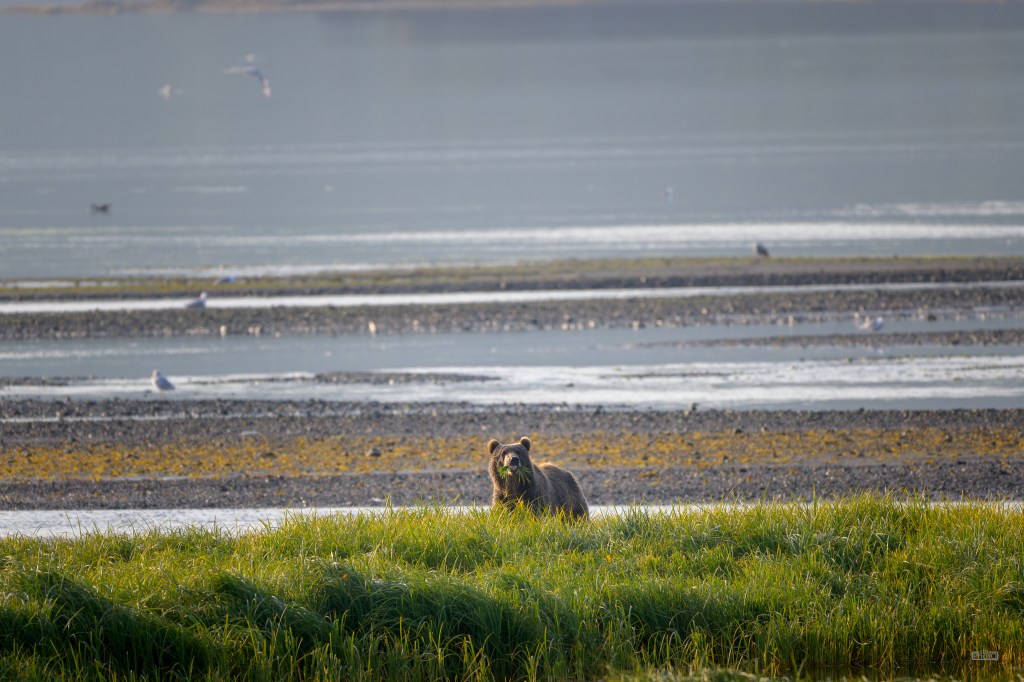
As we reflect on our time in Alaska, we are reminded of the importance of preserving these wild spaces and the incredible creatures that inhabit them. Until next time, when we venture back into the wilderness with our cameras and a sense of awe, we hope this story has inspired you to explore the wonders of Kodiak and Katmai.

 Fernweh
Leave a comment