
Churchill, Manitoba. The name alone conjures images of vast tundra, icy winds, and, most importantly, the kings of the Arctic—polar bears. This tiny, remote town on the western shore of Canada’s Hudson Bay might be the best place in the world to see and photograph these magnificent animals. We spent a week there in November, cameras in hand, and came away with unforgettable images, frozen fingers, and a deep respect for life on the edge of the wild.

Getting to Churchill: An Adventure in Itself
Churchill is remote. So remote, in fact, that you can’t drive there. Your choices are a 36-plus-hour train ride from Winnipeg or a two-hour flight. We opted for the latter, flying from Los Angeles to Winnipeg via Vancouver and spending the night at the very convenient Grand Winnipeg Airport Hotel. Before heading north, we wandered downtown to The Forks Market for dinner. It was the perfect sendoff—warm food and bustling indoor market vibes. The next morning at breakfast, we met up with our friend Wesley, who was joining us from NY for the bear adventure.
After breakfast, we boarded our small Calm Air turboprop to Churchill. The flight was delayed (par for the course apparently), but we eventually took off, with a half-empty plane loaded with the last wave of bear-watchers for the season. As we descended over the frozen tundra, it felt like landing on another planet—flat, vast, and white, with the Hudson Bay stretching endlessly into the horizon.
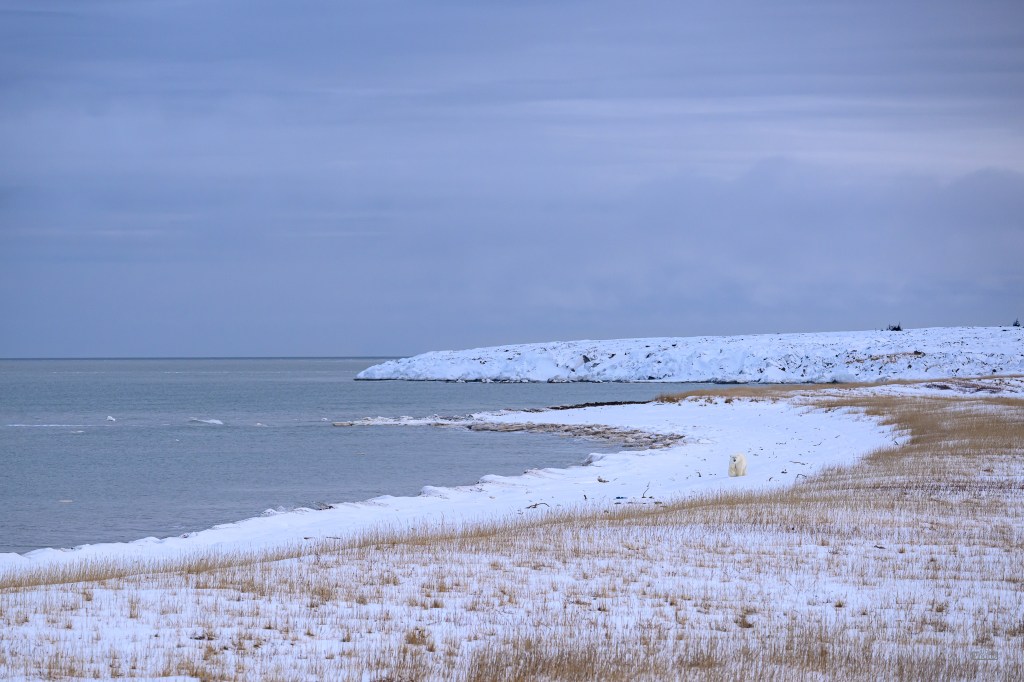
Churchill: A Town on the Edge of the Wild
Churchill is a town of just 870 hardy souls, more than half of whom are Indigenous. It exists because of the port, the railway, and, primarily these days, tourism. It’s known as the “Polar Bear Capital of the World,” and the bears don’t let you forget it. There are polar bear warning signs everywhere, and an active polar bear patrol to keep both humans and bears safe. If a bear gets too curious about town life, it might end up in the infamous “polar bear jail” until it can be relocated safely.
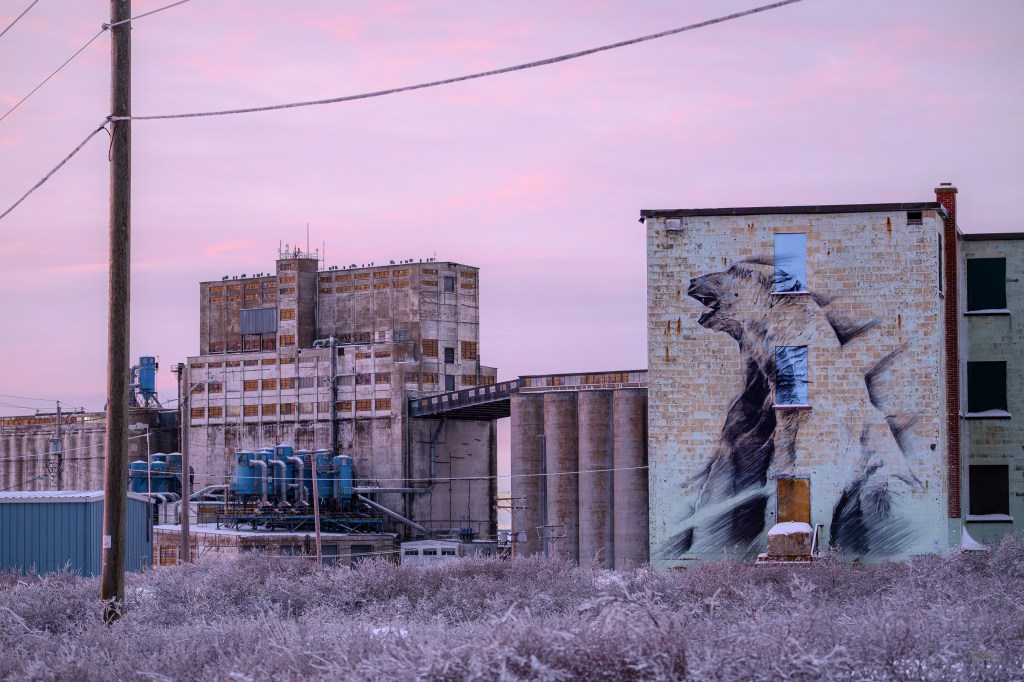
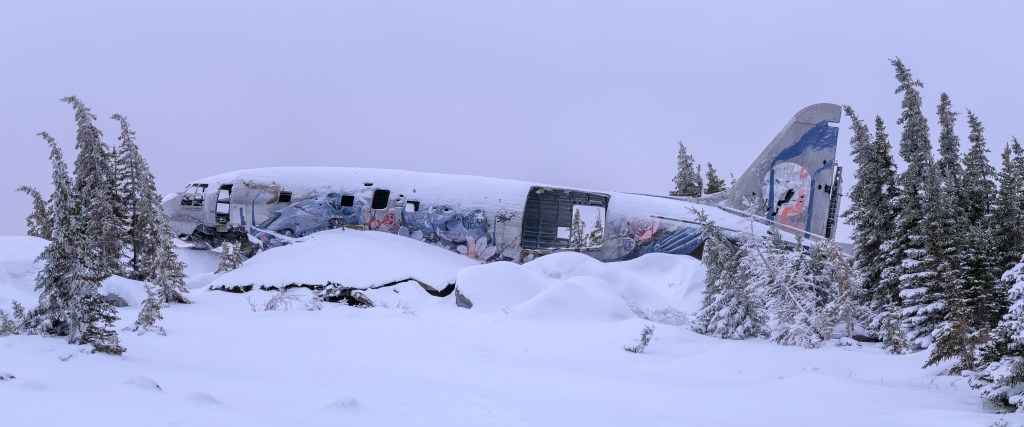
The town itself has a rugged charm, with a mix of historical ruins, colorful murals, and practical, weather-beaten buildings. One of the quirkiest sights is the wreckage of Miss Piggy, a Curtiss C-46 Commando plane that crash-landed in 1979; all aboard survived. Now bedecked in a street art mural, it’s a surreal landmark in an already surreal place.
Hunting Polar Bears (With Cameras, of Course)
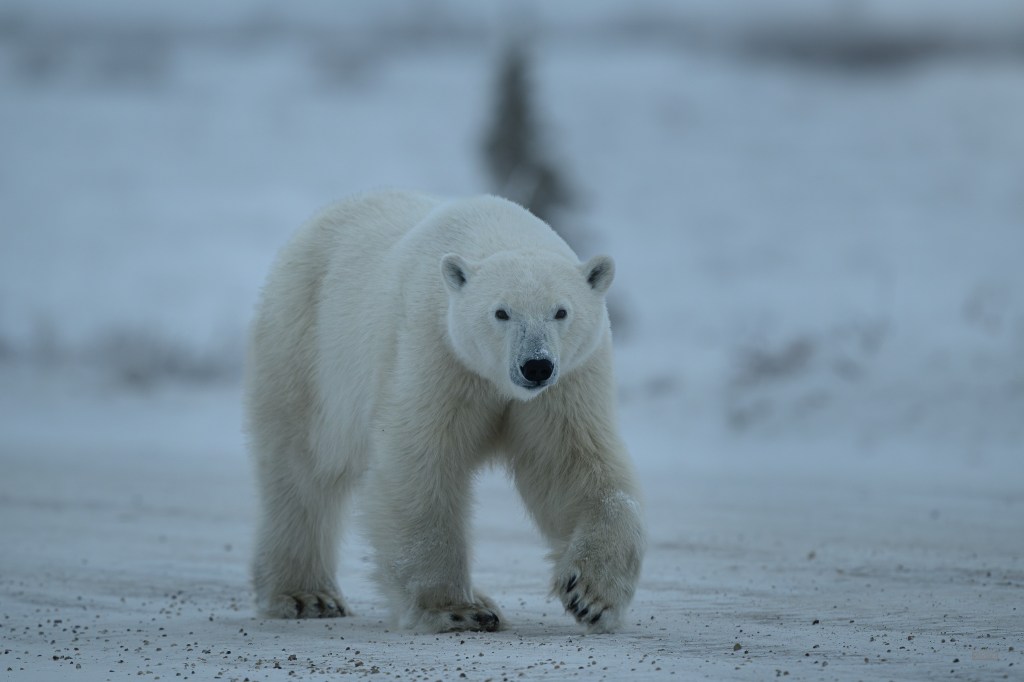
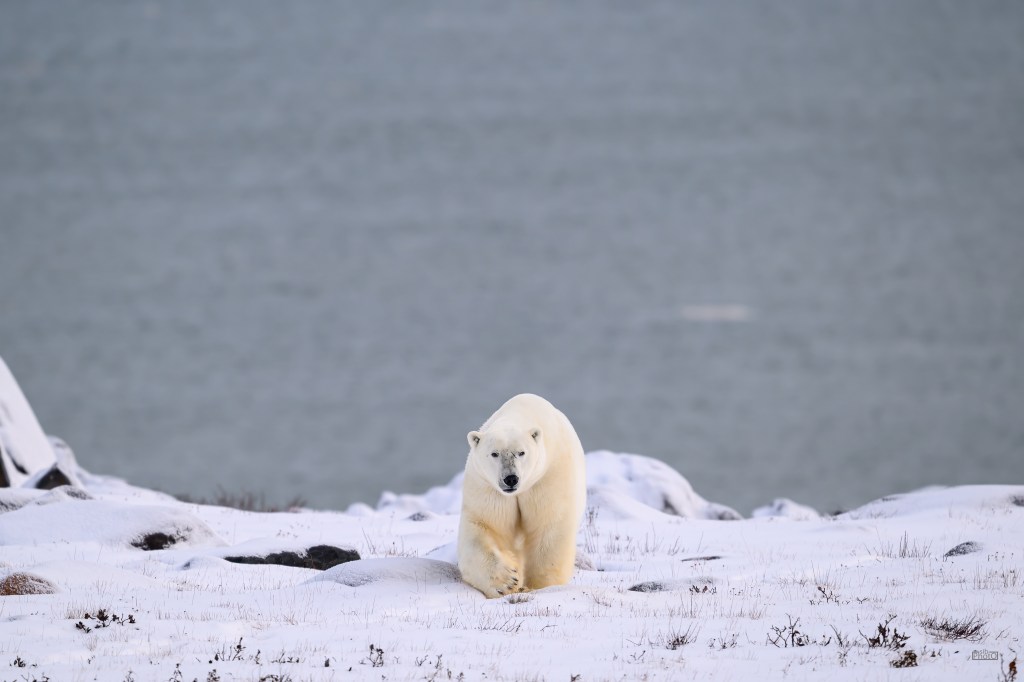
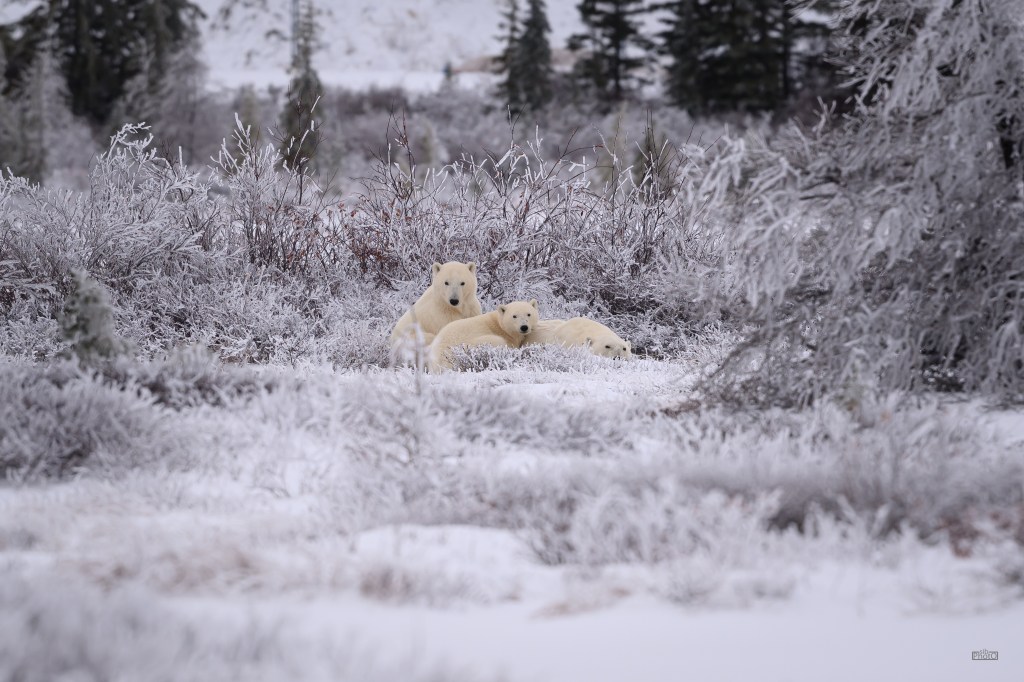
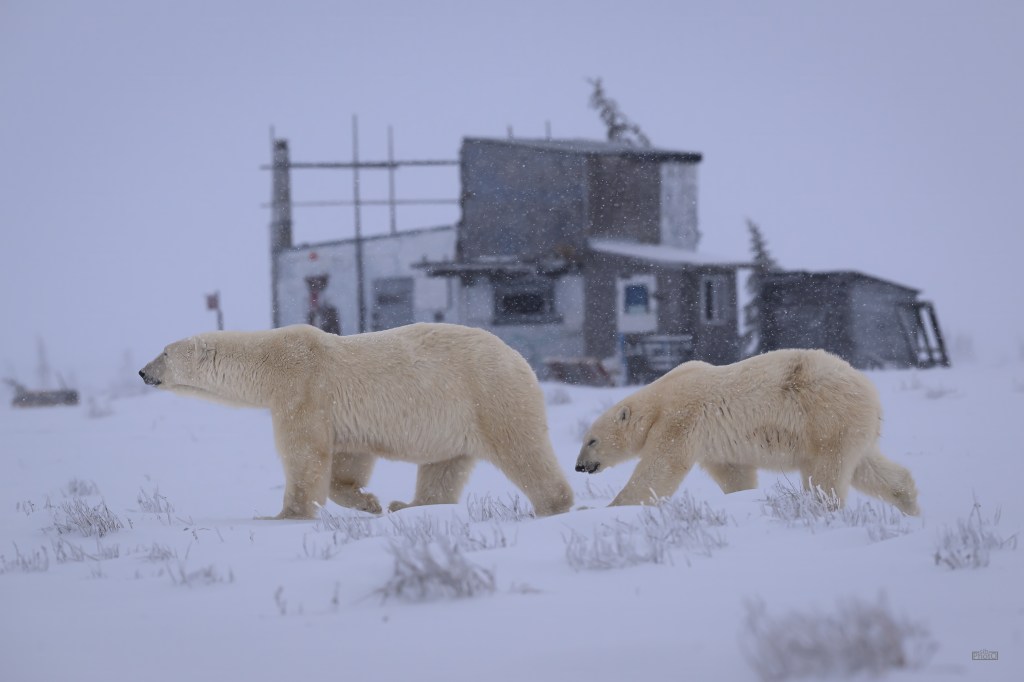
Each day, we headed out in a van with our guide from Nanuk Operations (Caleb twice, Jamie 5x), scanning the tundra for bears. The conditions were perfect: the ice on the bay had not yet frozen, which meant the bears were still waiting on land rather than heading out to hunt seals. Over the week, we saw scores of bears—some lounging in the snow, some wrestling playfully, and others wandering the coastline, sniffing the air for any hint of food.
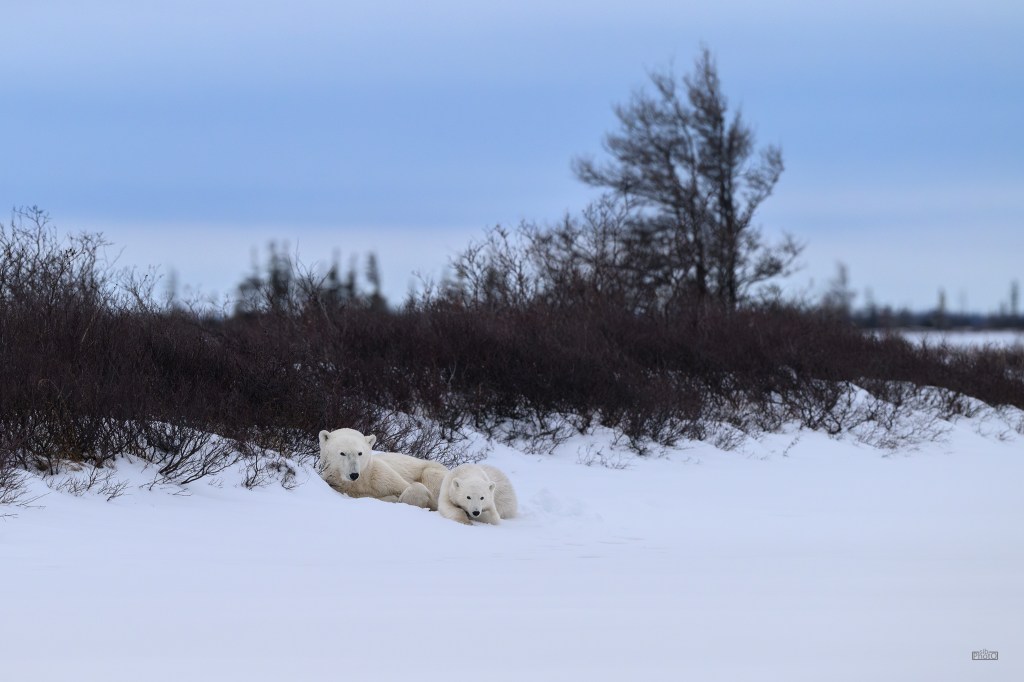
There’s something humbling about watching a polar bear up close. While they appear cute and cuddly, they are massive (up to 1,500 lbs / 680 kg), powerful, and completely unbothered by human presence (as long as you keep a respectful distance). Seeing them move with such grace and patience reminds you that they are masters of their domain, living at the mercy of the sea ice.
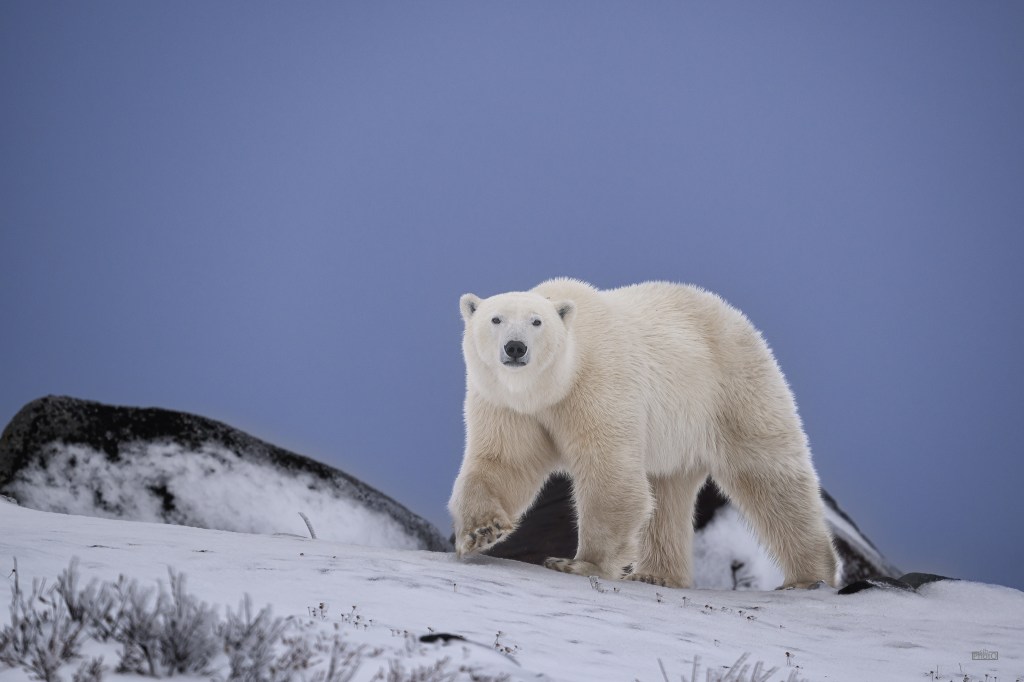

(560mm, f/4.5, 1/800 sec)
More Than Just Bears
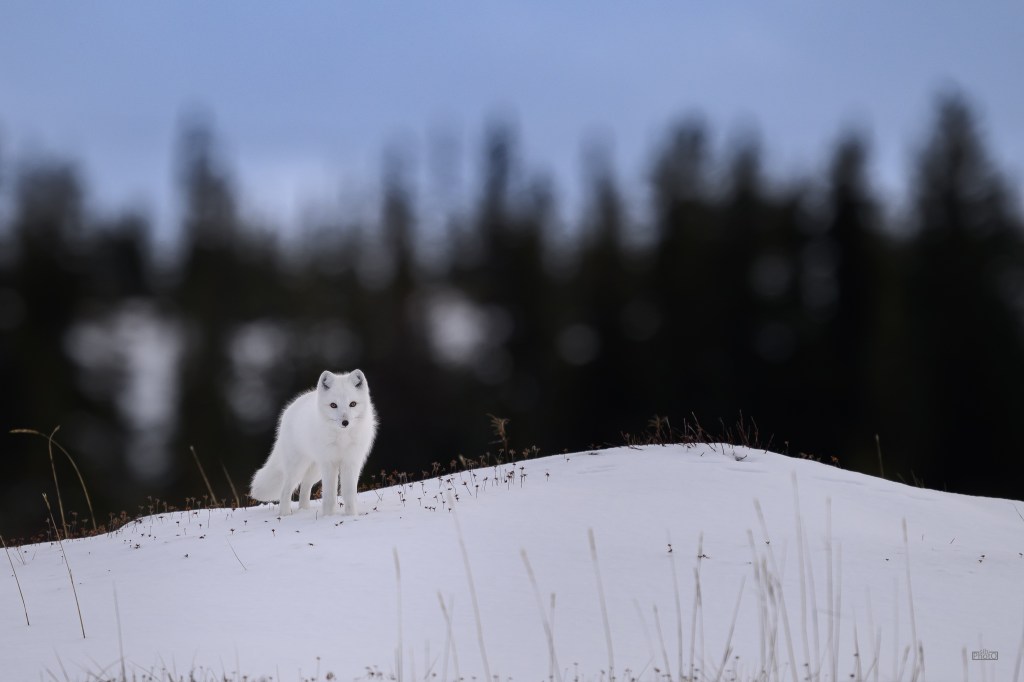
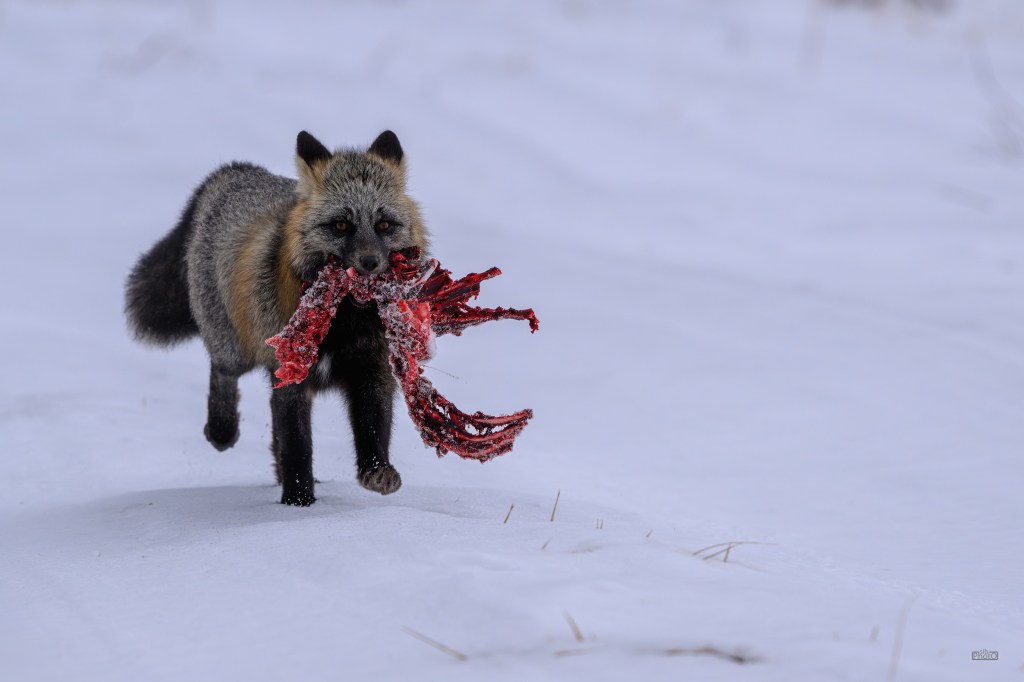
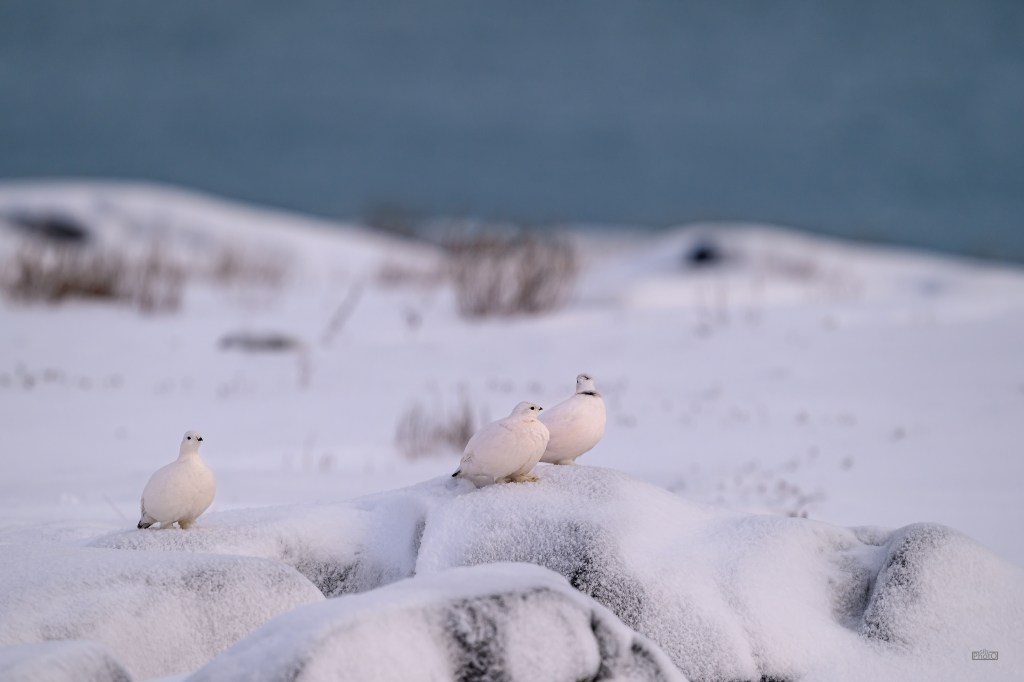
While the polar bears were the main attraction, we were treated to a parade of Arctic wildlife. Arctic foxes, both the classic white and the rarer cross fox variety, darted across the tundra. Red foxes added a splash of color against the white landscape. A snowy owl, perched regally, made for a dreamlike scene. We even saw ptarmigan, their white plumage making them nearly invisible against the snow. The only thing missing? The wolverine whose tracks we found but whose elusive nature kept it hidden from us.
Surviving the Cold (and Finding Good Food!)
Churchill in late November is cold. The wind slices through every layer you wear, and spending six hours outside with a camera requires serious winter gear. We were prepared, but even so, the wind chill had us thankful for the chance to warm up in the van between sightings.

After long days in the field, we explored Churchill’s small but surprisingly good food scene. The Tundra Pub served up a warm and lively atmosphere on its last night of the season. Ptarmigan offered an unexpectedly modern dining experience. And, in a true Arctic oddity, we had Chinese takeout more than once. Nothing like hot stir-fry and dumplings after a day of subzero temperatures!
Why Churchill is Special
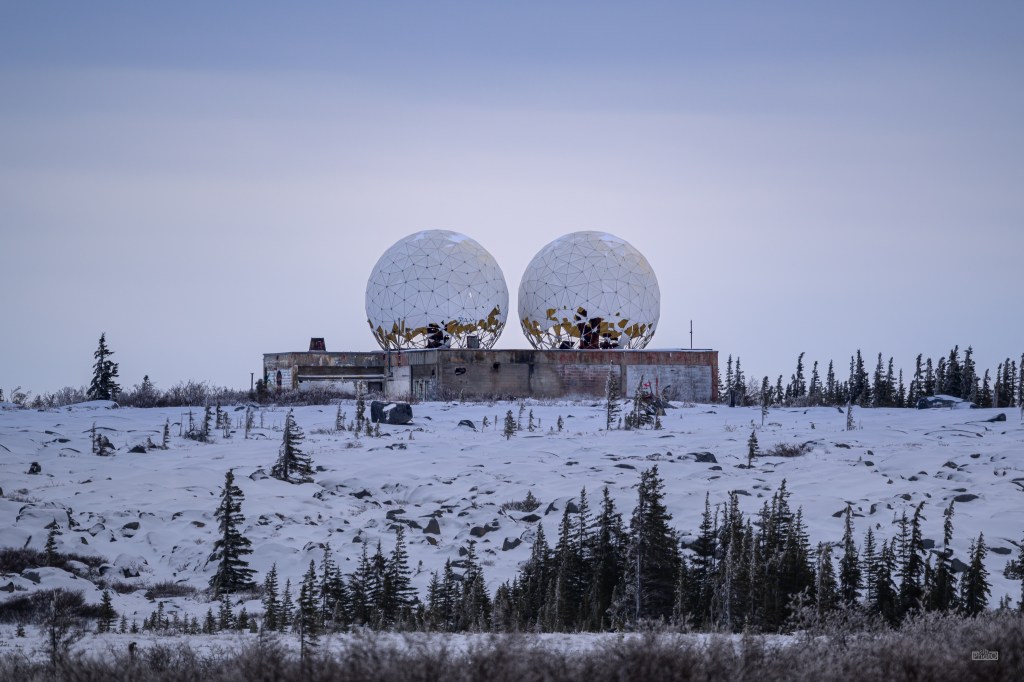
Churchill isn’t just about the bears. It’s about the people who live in this harsh but beautiful place, the stark and haunting beauty of the landscape, and the sheer wildness that still exists here. It’s a place where nature dictates the rules, where history lingers in old military sites and railway remnants, and where the northern lights can suddenly appear to paint the sky green and purple.
For photographers, Churchill is a dream. The bears, the foxes, the frozen seascapes—it’s a place where every frame tells a story of survival and adaptation. We left with full memory cards, frozen toes, and a firm intention to return.
If you ever have the chance to visit Churchill, take it. Just make sure to bring your warmest clothes, a good telephoto lens, and a deep appreciation for the wild.
Travel Tips for Churchill
- Book early – Flights and accommodations fill up fast during polar bear season.
- Dress for the Arctic – Layers, windproof gear, and serious boots are non-negotiable.
- Be patient with flights – Delays are common. Bring a book.
- Support local guides – Independent operators like Nanuk Operations provide an incredible experience.
- Try the food – Yes, even the Chinese takeout.
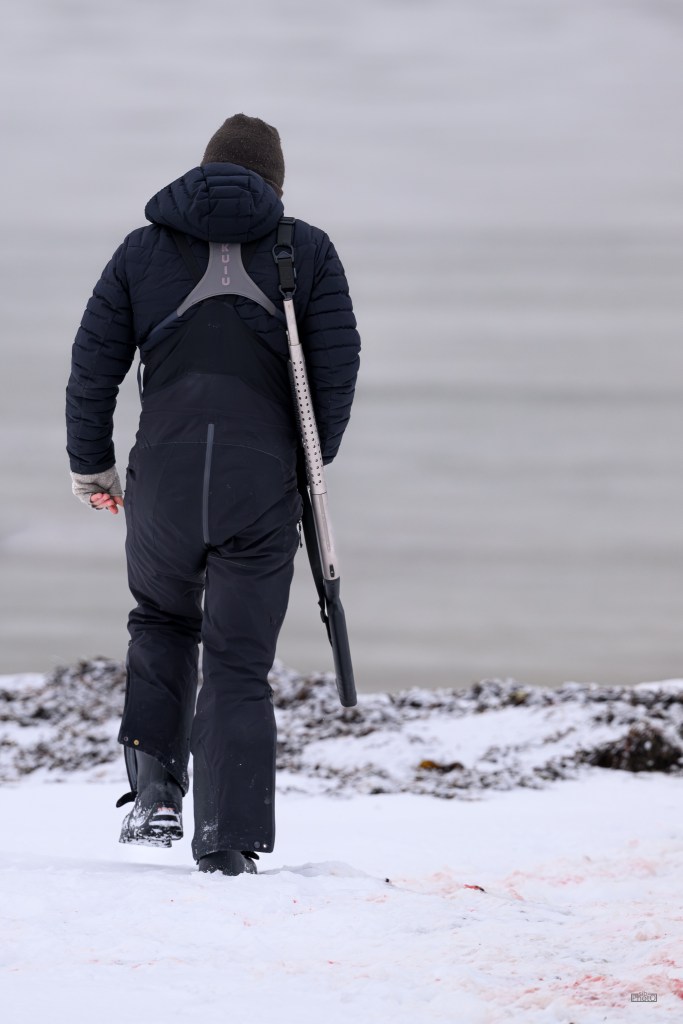
- Respect the bears – They are not zoo animals. Listen to your guide, be ready to get back in the vehicle quickly, and enjoy the privilege of seeing them in the wild.
Would We Go Back?
In a heartbeat. Churchill is one of those rare places where the landscape, wildlife, and sheer remoteness create an experience that sticks with you long after you leave. We came for the bears, but we left with so much more.
Until next time, Churchill. Keep the bears (mostly) out of town for us.
 Fernweh
Leave a comment