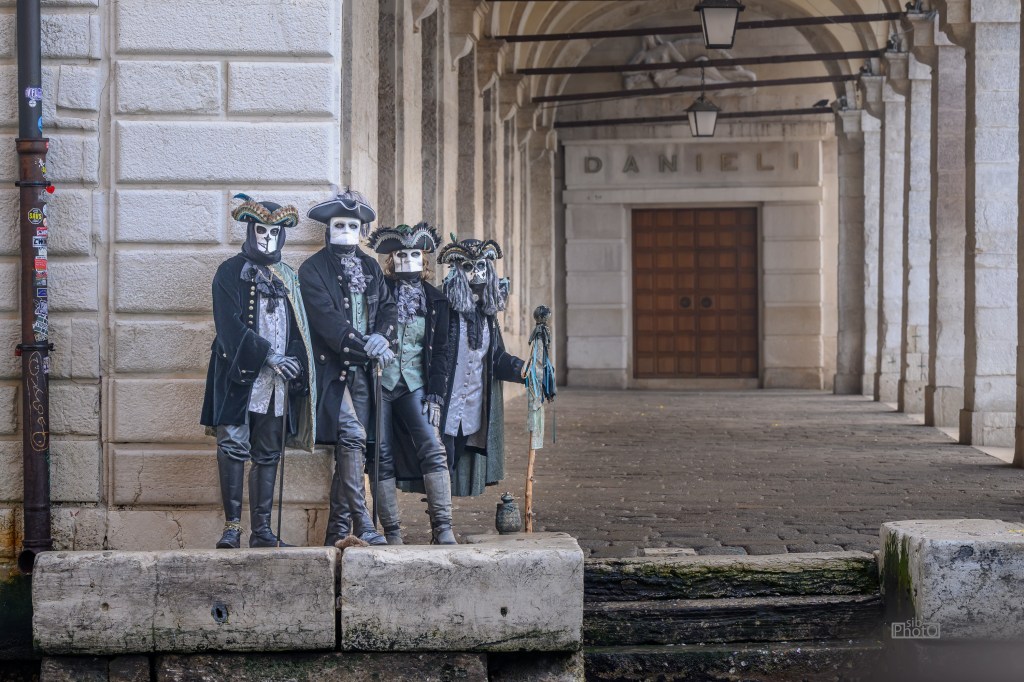
If you’re a photographer, the Carnival of Venice is one of those “bucket list” events. For the two weeks leading up to Lent, the city transforms into a stunning, surreal, and sometimes utterly chaotic collision of history, art, and (let’s be honest) tourism.
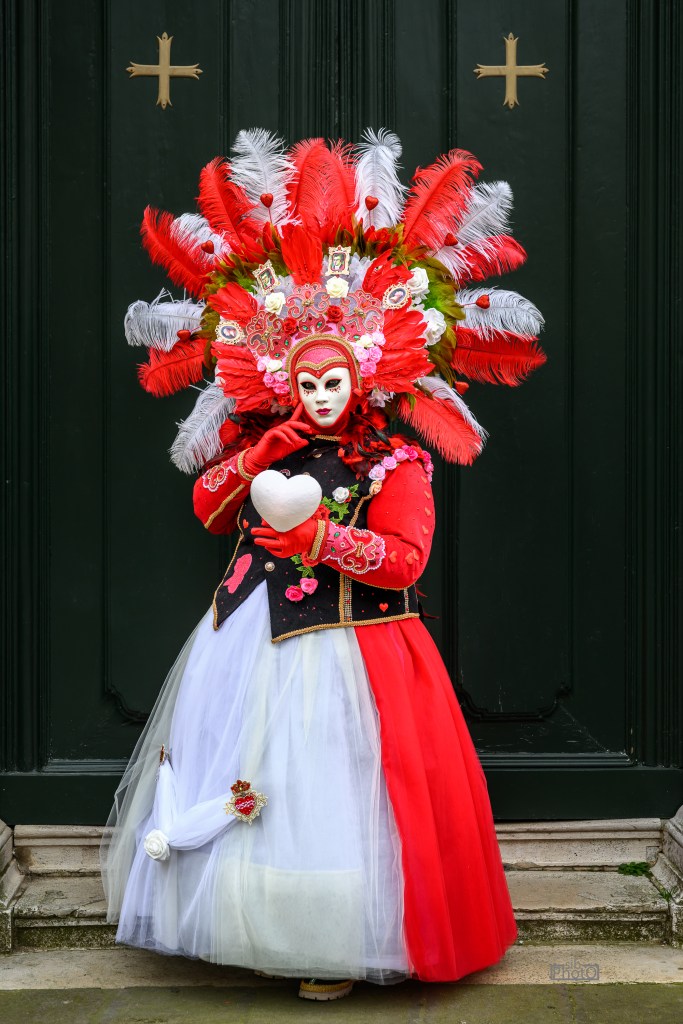
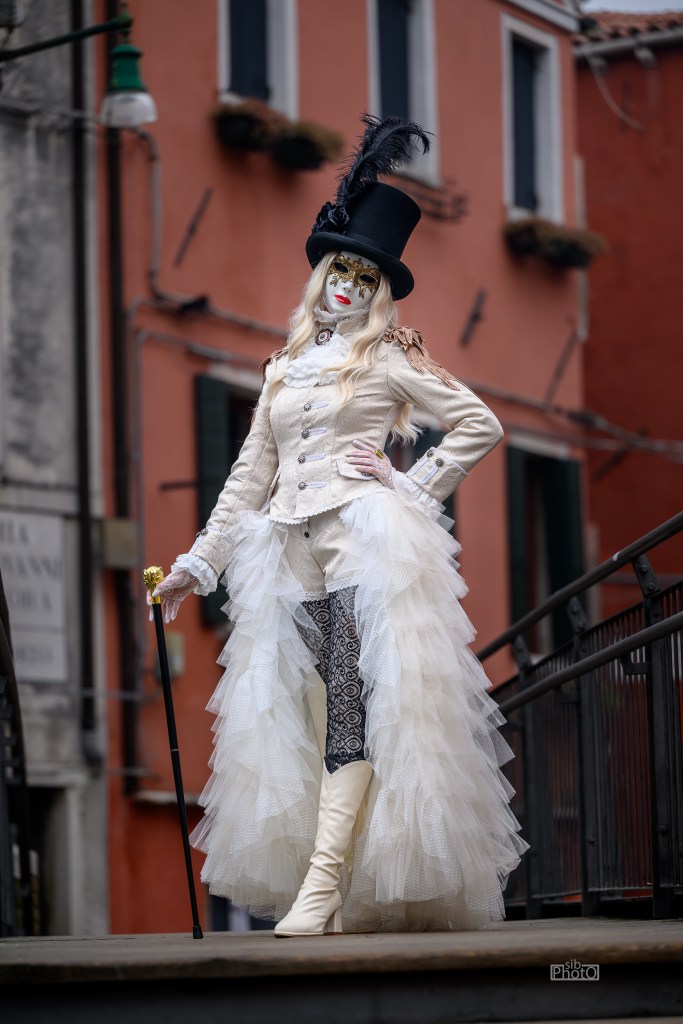

We just spent a week there, cameras in hand, navigating the pre-dawn fog, the crowds, and the jaw-dropping costumes. The goal: to capture a bit of the magic.
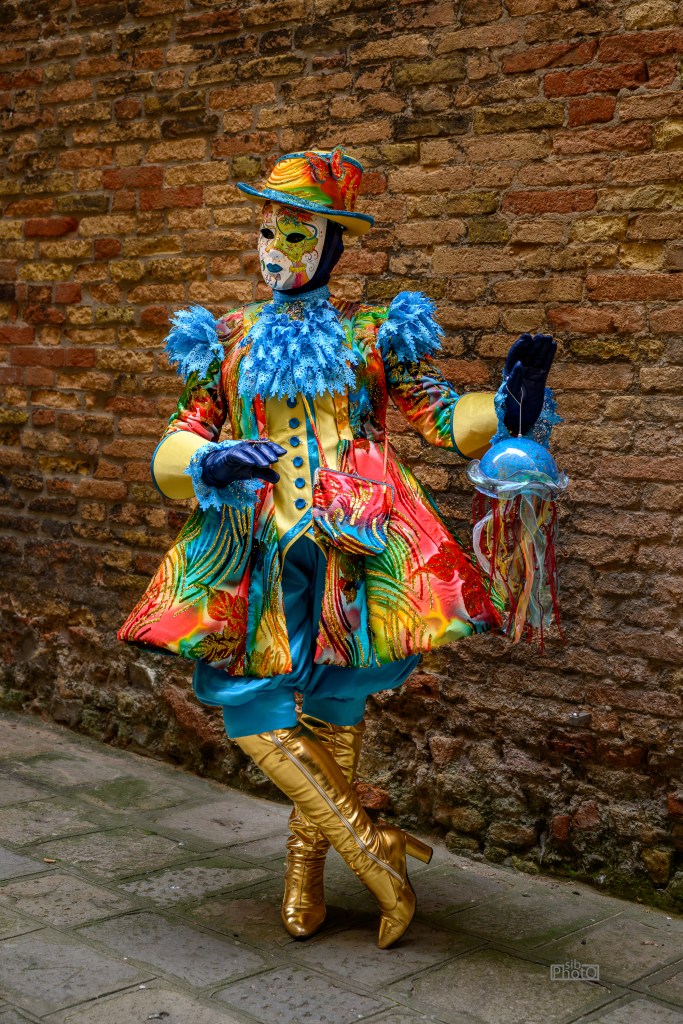
The Carnevale di Venezia isn’t some new-fangled invention for Instagram, though it is spectacularly good for that. It’s an ancient festival, tracing its roots to the Middle Ages. For centuries, the masks provided total anonymity, letting a duke rub elbows with a baker—a very big deal in the rigid Venetian society. The party was apparently so good that Emperor Francis II of Austria abolished it in 1797 when he took over (buzzkill.)
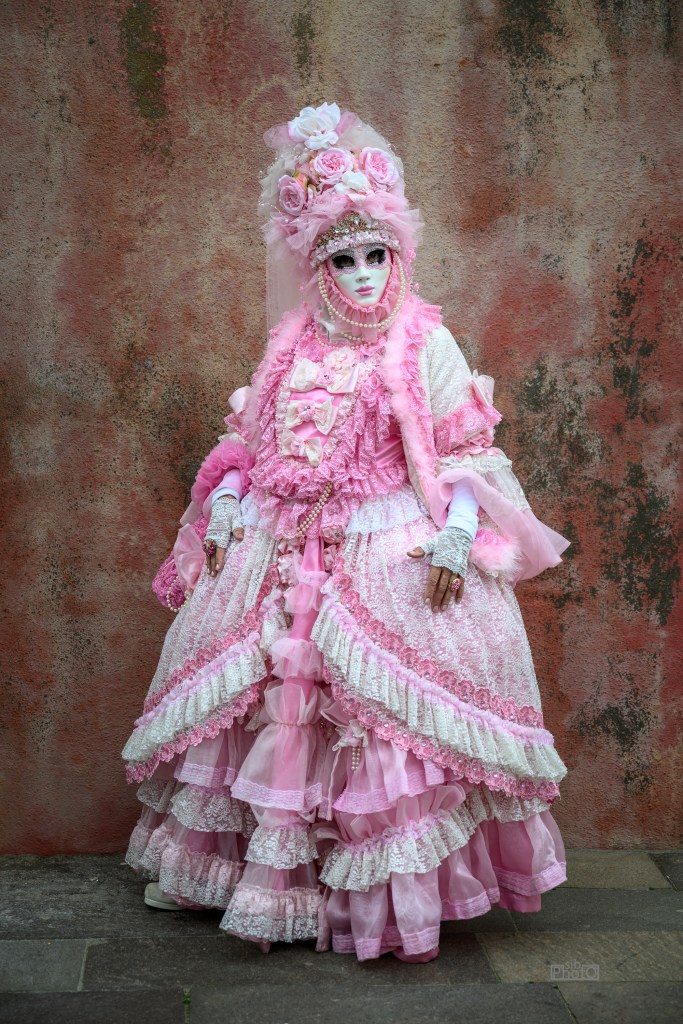
Thankfully, the tradition was revived in 1979, and now it attracts millions of people… and their cameras.
The “Masks” Are the Stars
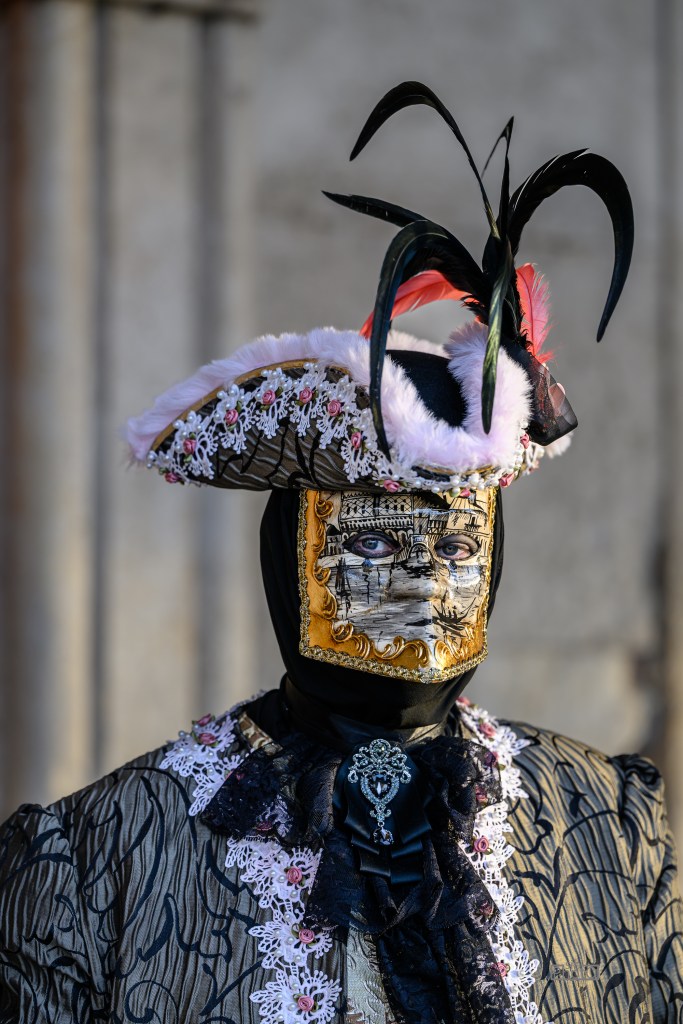
We went with the goal of photographing the costumed participants, known universally as “Masks” (or maschere in Italian). Let’s be clear: these are not your average last-minute party outfits. These are walking works of art.
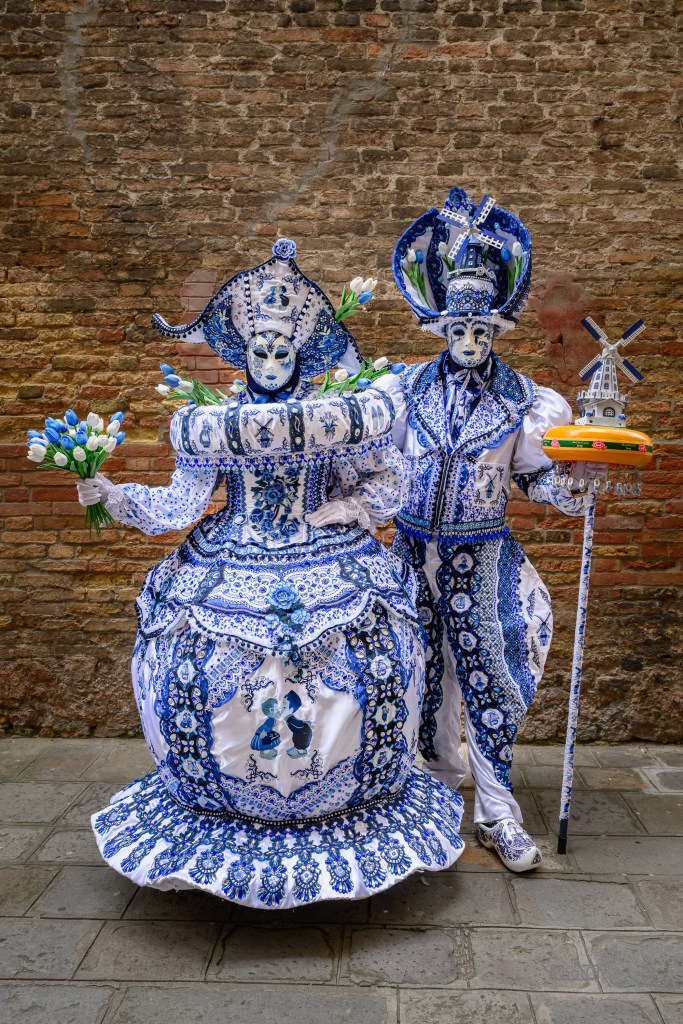
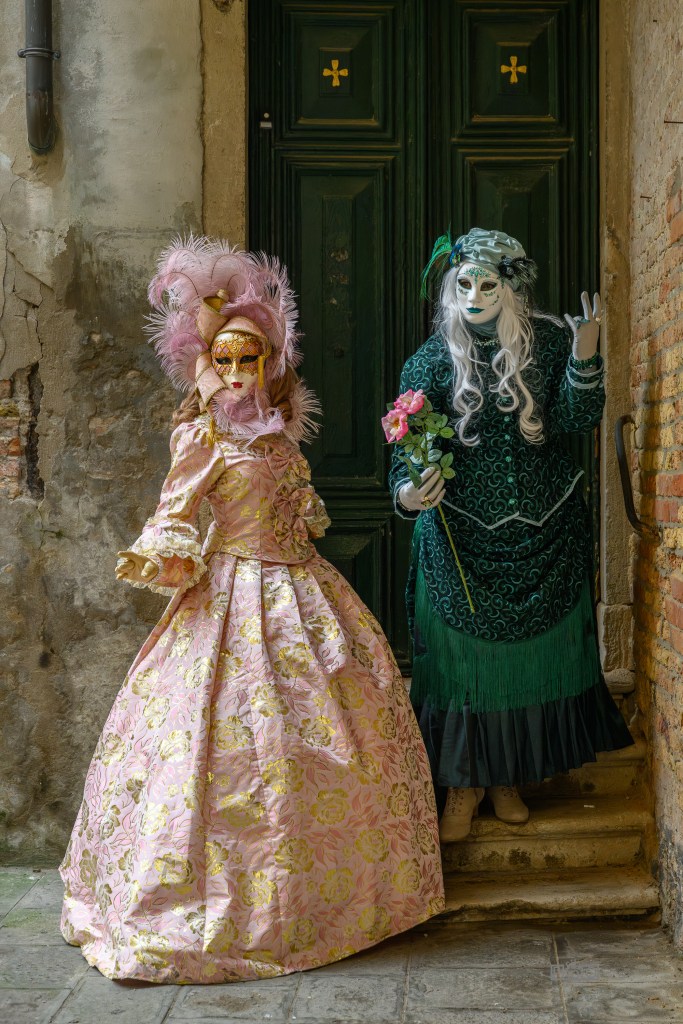

We learned that the Masks spend months, sometimes years, conceptualizing, designing, and hand-crafting their costumes. Many have been participating for decades. The most elaborate getups can weigh 40-50 pounds. They wear these creations all day long, navigating narrow alleys and tiny bridges, often in heels. The dedication is astounding.
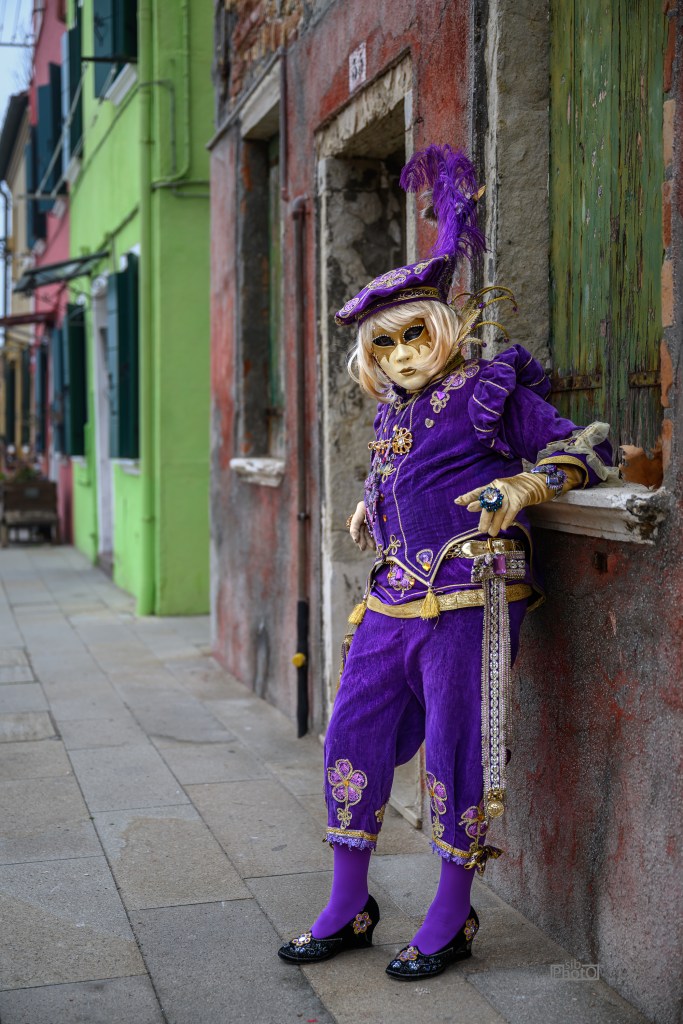

How to Approach and Photograph the Masks
Here’s the best part, and our most interesting discovery: the Masks want to be photographed. They are just as interested in having their photo taken as we are in shooting them. They didn’t spend a year gluing on feathers to be ignored.
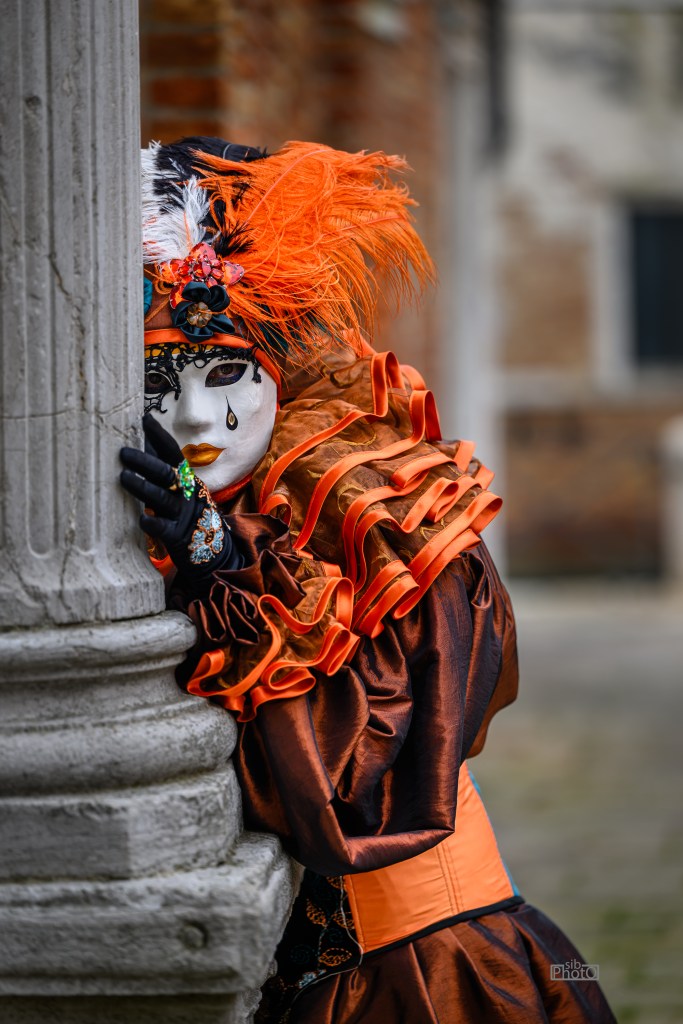
As long as you are polite and respectful, most are more than willing to “model” for a few minutes. You can often (politely!) use words or gestures to position them for better light or a cleaner background. Our “system” was simple:
- Make eye contact;
- Give a warm smile;
- Gesture to your camera;
- Ask for a photo. A rotation of Italian (“Posso?”), English, and German gets the point across to just about everyone.

In almost every case, they will say yes. Afterwards, many will hand you a business card or share their Facebook account, hoping you’ll send them a photo – don’t forget to follow up. It’s a fantastic, collaborative experience.
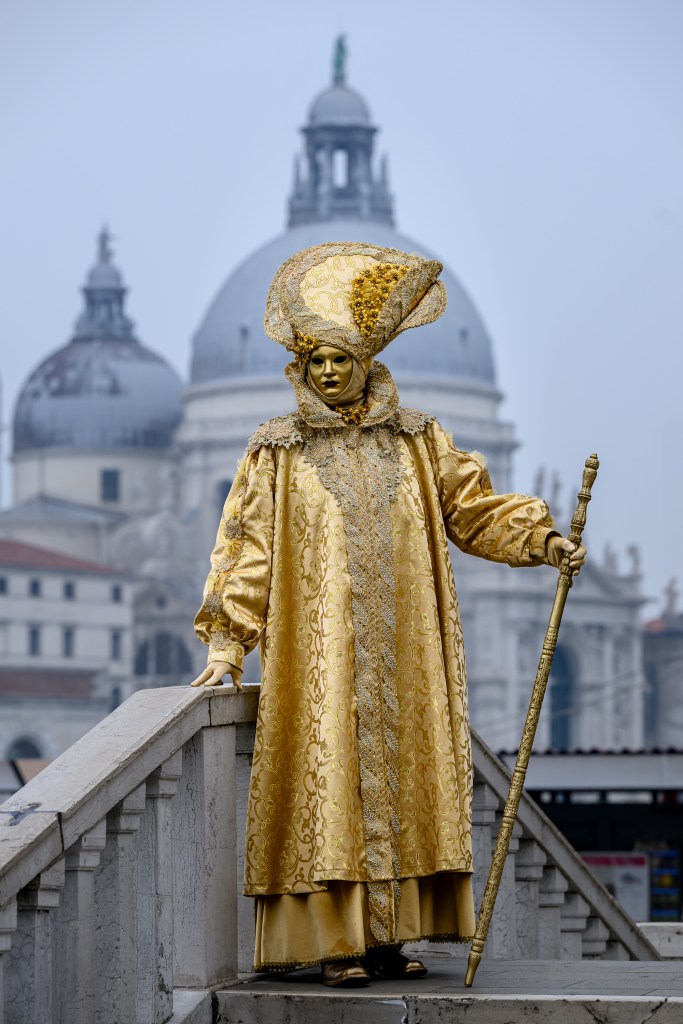
Going Private: Setting Up Your Own Shoots
If you want to get away from the crowds and truly control the scene, you can also arrange private shoots. This is how you get those epic shots in a stunning hotel lobby, a hidden alley, or on a gondola—all without a thousand tourists in puffer jackets in the background.
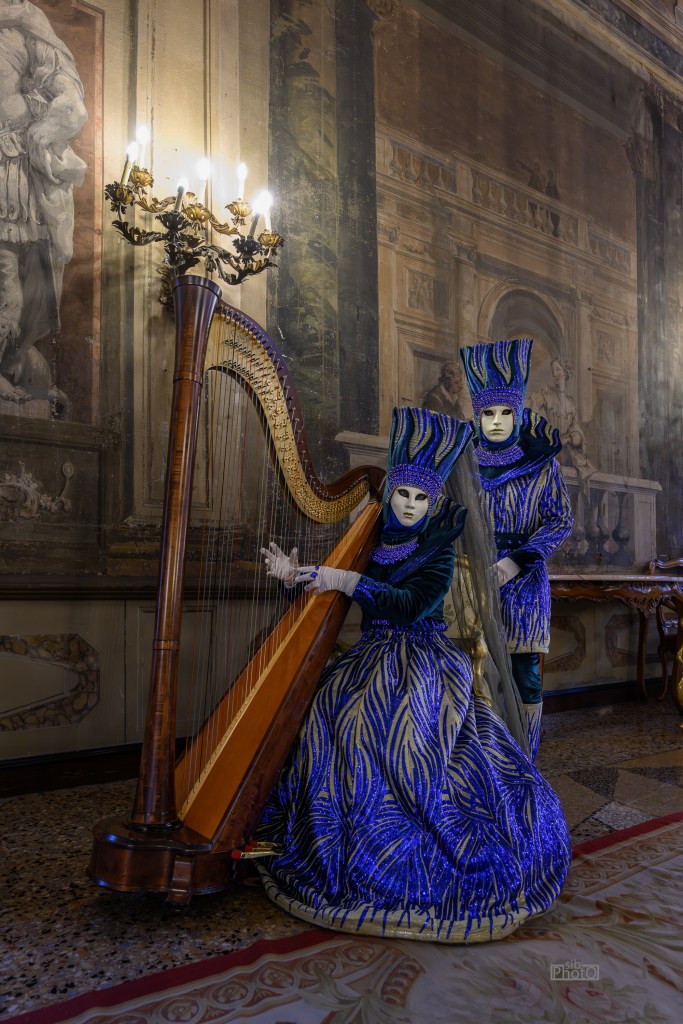
Facebook groups dedicated to the Carnevale are a great place to start, or you can simply reach out to Masks you’ve shot in previous years. If you can share a portfolio of your work, clearly express what you’re trying to accomplish, and (most importantly) demonstrate a sense of fun and collaboration, you’ll find plenty of willing partners.

A Day in the Life: Where to Go
As for the “where and when,” the festival is a target-rich environment. There are plenty of scheduled events, but the real magic is often in the unscheduled moments.

Most mornings, there’s a large, informal gathering of Masks along the Grand Canal near St. Mark’s Square, starting before sunrise. This is your chance for those incredible, moody blue-hour images with the fog rolling off the water. The group stays for an hour or two as the light comes up.
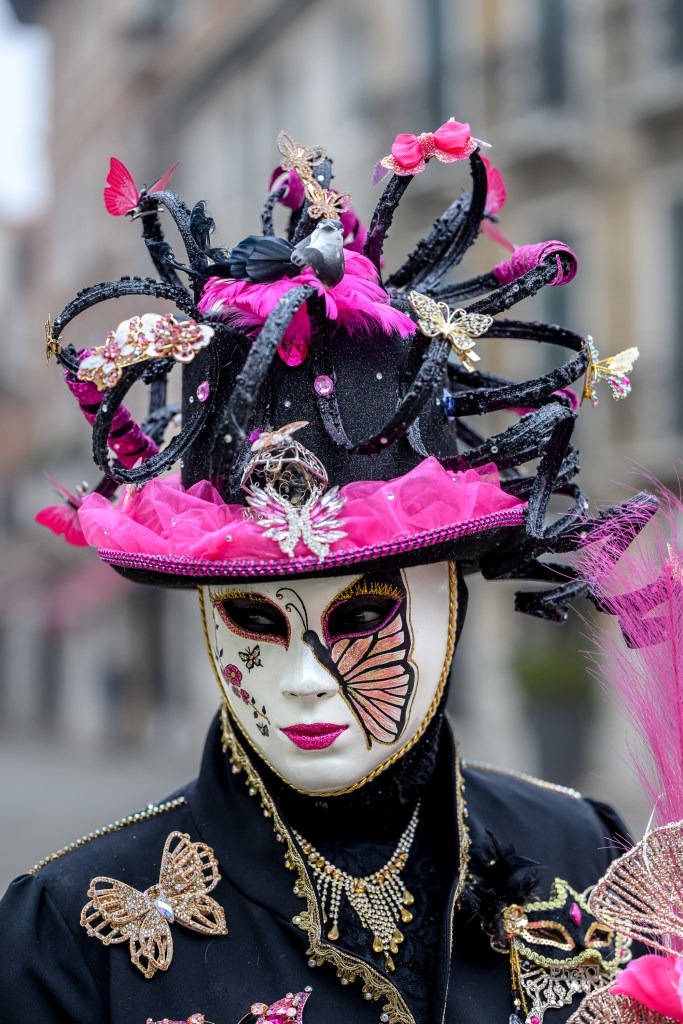
After that, you’ll find other gatherings at famous locations all over the city—Campo San Zaccaria, the Arsenale, Santa Maria Della Salute, Santa Maria Formosa, and of course, the impossibly colorful island of Burano (a must-visit).
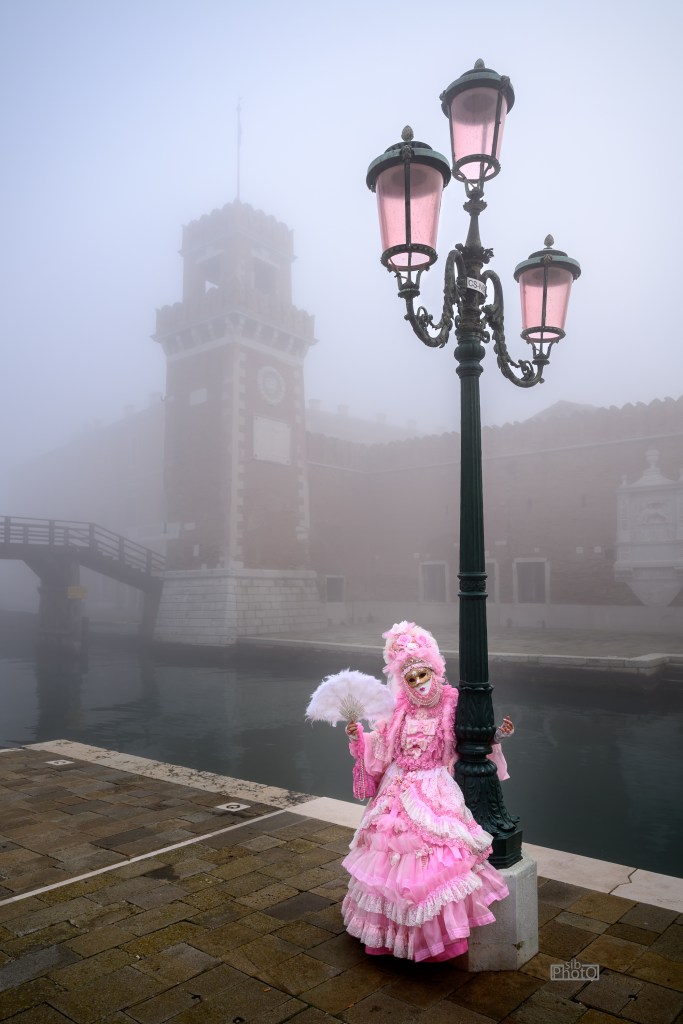
The festival organization publishes a guide, but honestly, the best plan is to just spend the day from dawn to dusk wandering the calli (streets) and campi (squares). You really can’t go wrong. Just follow the feathers.
Gear Notes
There are so many different subjects and compositions that you could really use just about any lens from ultra-wide to telephoto. Wide-aperture primes would be fun and allow for extremely shallow depth of field, as well as shooting in the early morning or into dusk. What I found was that nearly 90% of my shooting ended up being on f/2.8 zooms, both 24-70mm and 70-200mm (another 10% on the 14-24mm for some unusual locations or group shots) – and about 80% was not at max aperture. The flexibility of the zooms helped with the crowds, the sometimes tight shooting locations, and the need to recompose quickly. I mostly didn’t use a flash, although plenty of photographers did and they made good images.

 Fernweh
Leave a comment