We visited northern New Mexico between Christmas and New Year’s and stayed in a small casita within walking distance of central Santa Fe. The weather was cold, but the streets and major sites were quieter than they would have been during a warmer holiday.
The trip divided naturally into three parts: Santa Fe’s churches and public art, Taos Pueblo, and a roadside museum in Embudo. Each offered a different version of the region’s architecture, from cut stone to adobe to a yard full of old gasoline pumps.
Santa Fe
Santa Fe is the oldest state capital in the United States. Much of the central area can be covered on foot, which made it possible to move between historic buildings, galleries, restaurants, and public art without dealing with the car between every photograph.
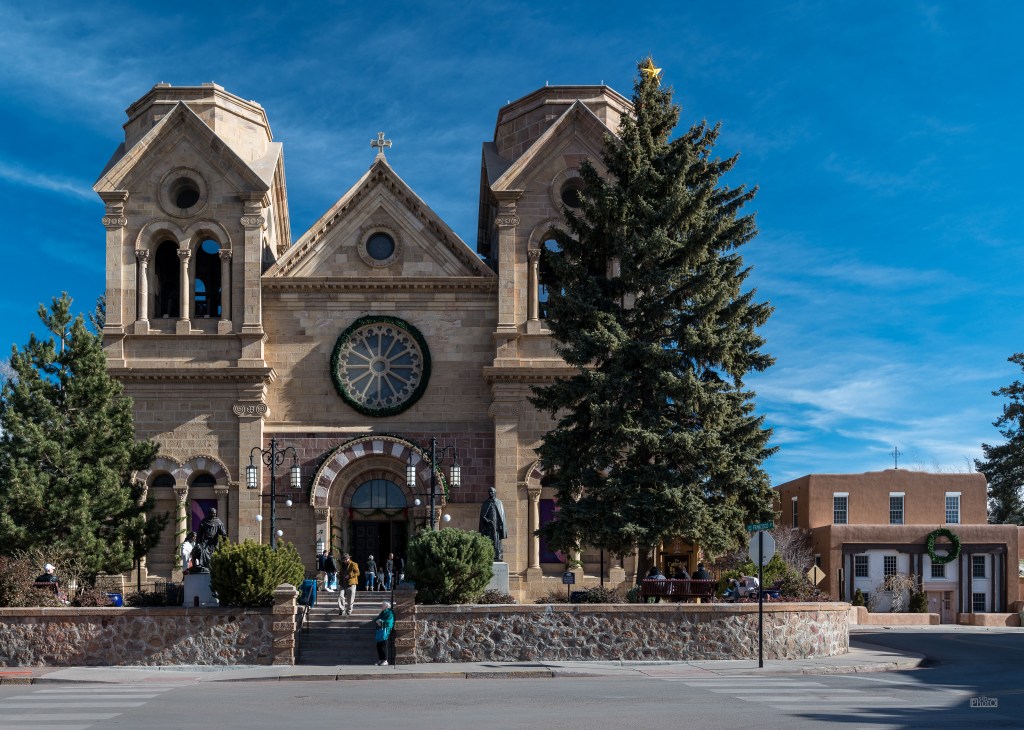
The Cathedral Basilica of St. Francis of Assisi was built in the late nineteenth century at the direction of Archbishop Jean-Baptiste Lamy. Its Romanesque Revival stone exterior differs sharply from the lower adobe buildings nearby.
Inside, a 16mm lens framed the nave, arches, and stained glass from close range. The 1/20-second exposure was just slow enough to require some attention to posture, breathing, and the likelihood that someone would walk into the frame.

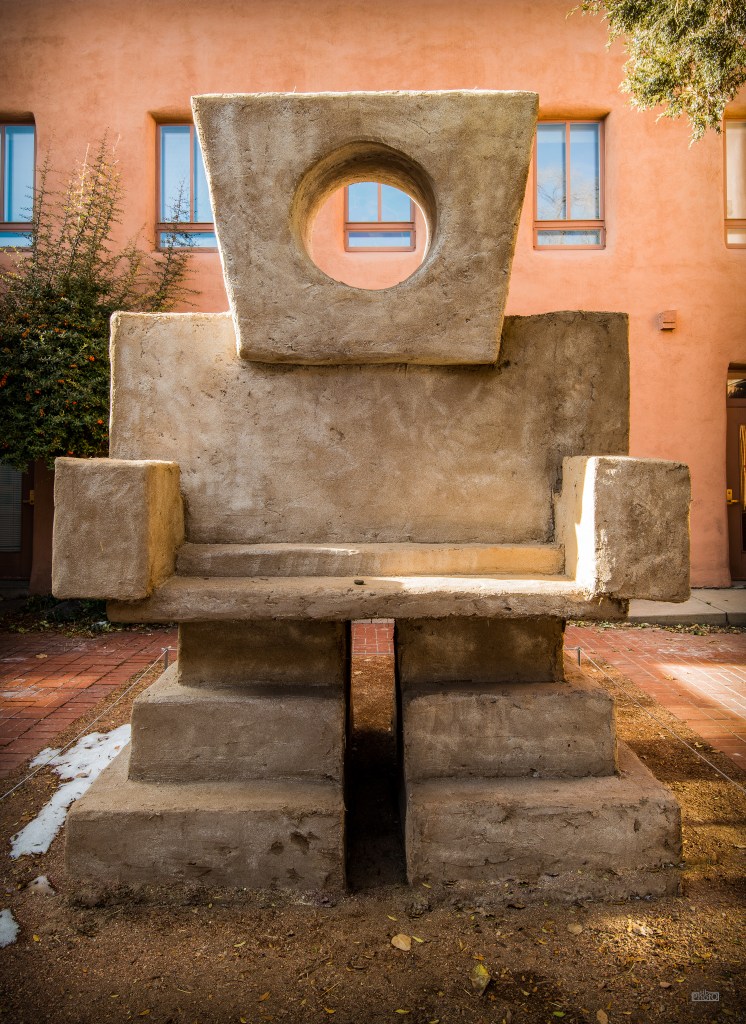
Santa Fe places contemporary artwork in courtyards, parks, museum grounds, and along the sidewalks. At the Museum of Contemporary Native Arts, Wayne Gaussoin’s Adobobot combined the shape of an adobe structure with the posture of a large mechanical figure.
The Loretto Chapel is a Gothic Revival building best known for its helix-shaped “Miraculous Staircase.” The staircase makes two full turns without an obvious central support and connects the chapel floor to the choir loft.
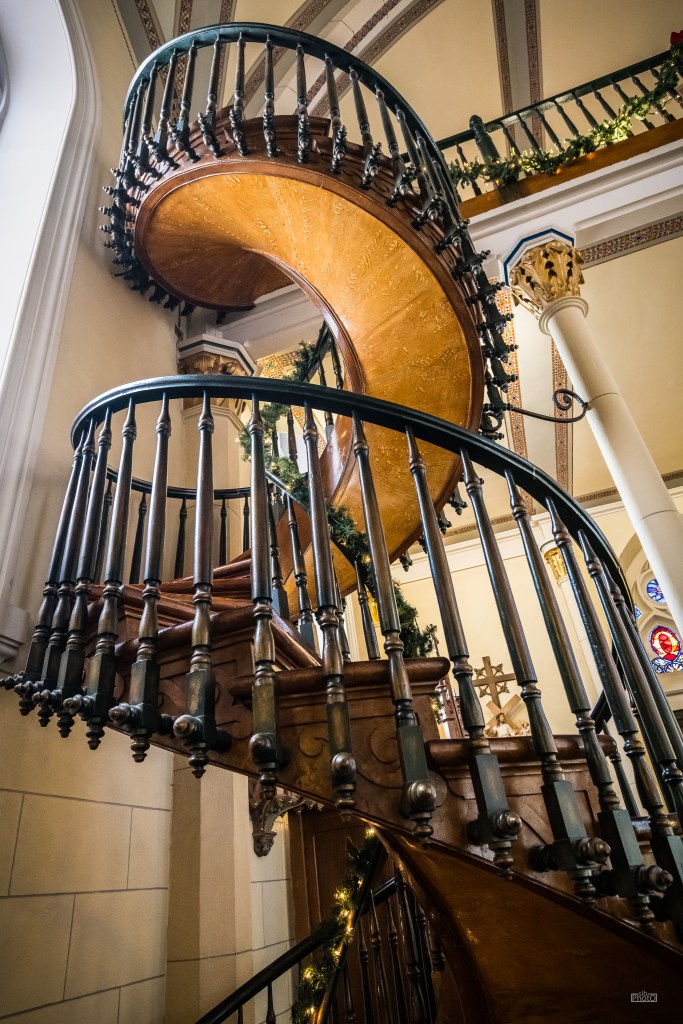
According to the story associated with the chapel, a carpenter arrived after the Sisters of Loretto completed nine days of prayer for a solution to the inaccessible loft. He built the staircase over several months and left without asking for payment. Whatever one makes of the story, the staircase is difficult to photograph without also photographing several people looking up at it.
Taos Pueblo
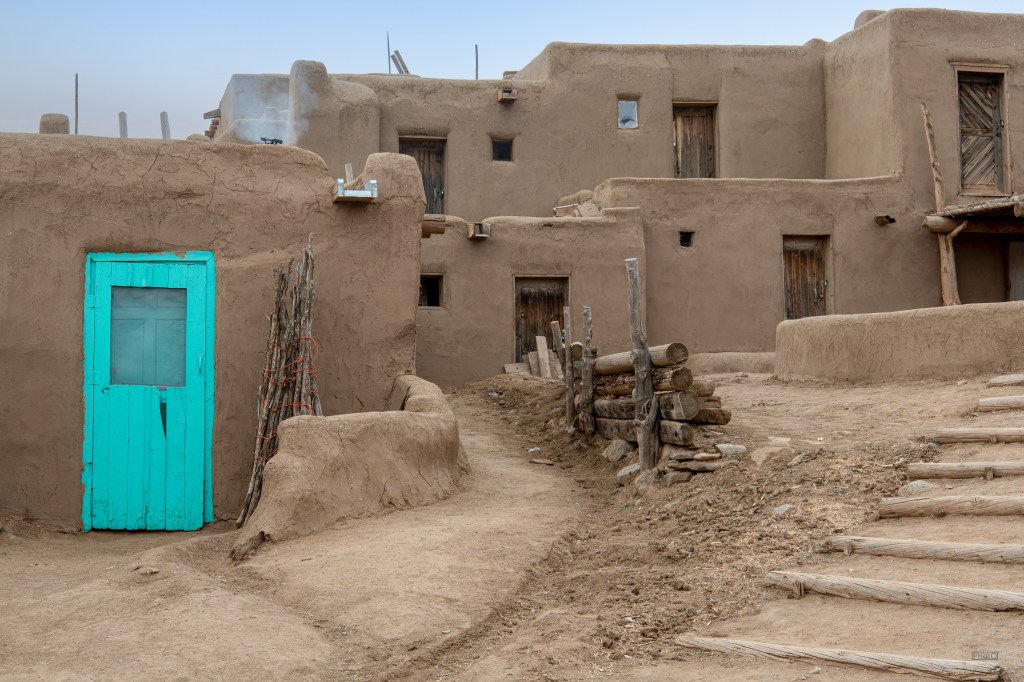
Taos Pueblo lies north of Santa Fe at the base of the Sangre de Cristo Mountains. The multi-story adobe buildings are centuries old and remain part of a living community. A visit is therefore different from walking through an abandoned settlement or an architectural reconstruction.
The largest building contains many separate homes. From outside, the repeated doors, windows, projecting beams, and uneven surfaces make the structure look unified; each doorway, however, belongs to an individual residence.
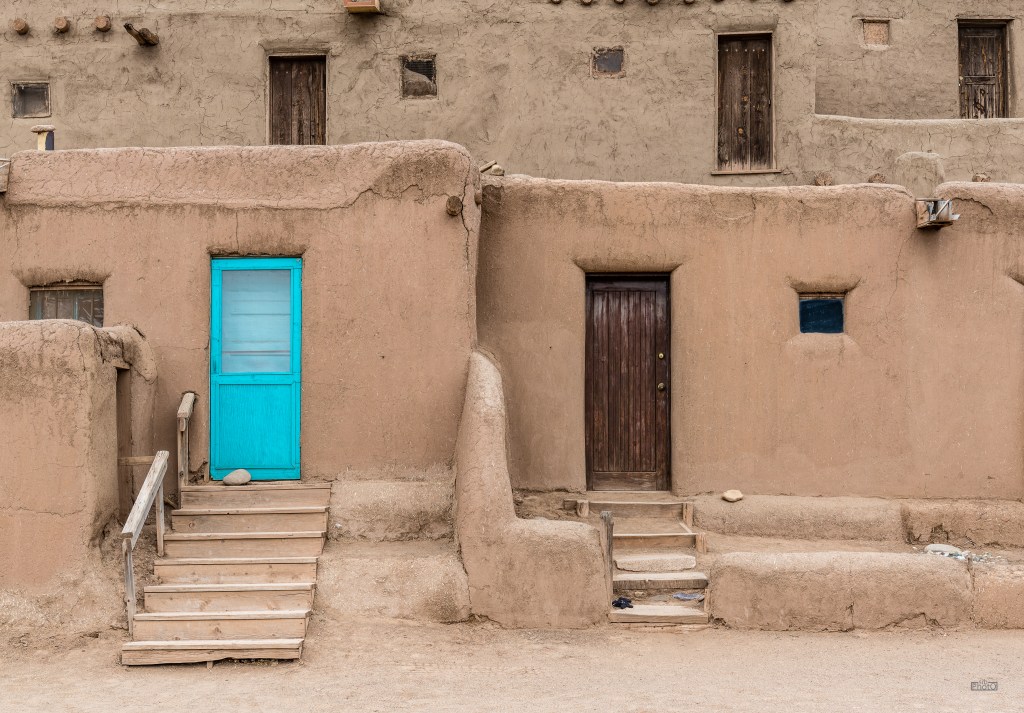
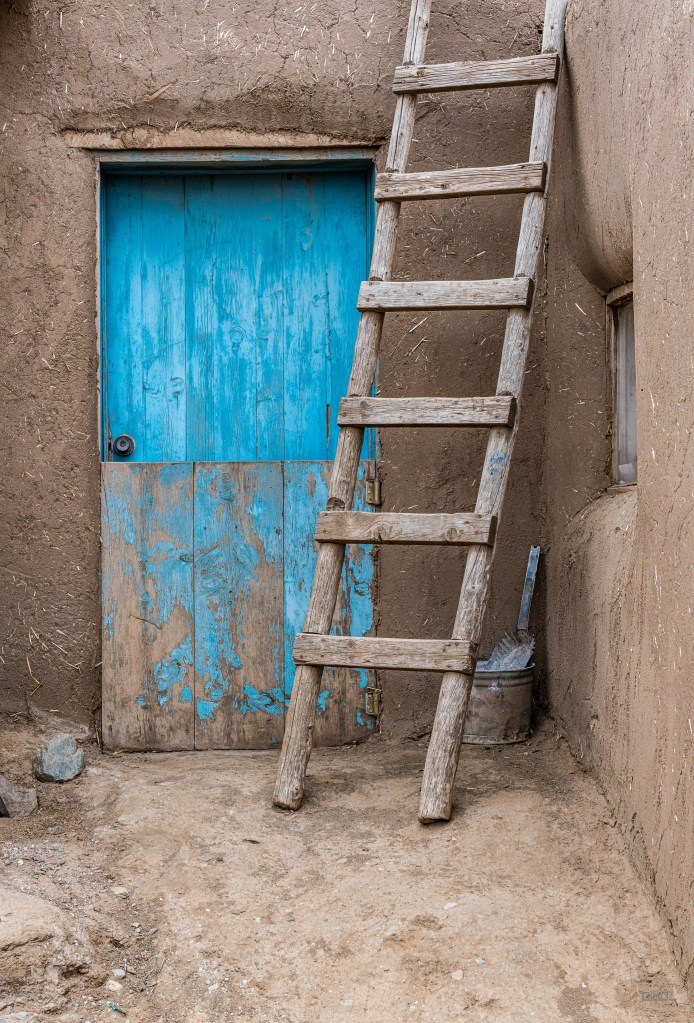
The upper levels do not use internal staircases. Residents reach them by ladders, and the vertical access is visible on the exterior. Historically, ground-floor doors were omitted for defensive reasons and entry was made through openings in the roof.
San Geronimo Church was built in 1850. Its adobe walls, twin bell structures, and simple facade share the same earth-colored material as the nearby dwellings, while crosses and painted details identify its different use.

The winter light was useful for the adobe surfaces because it crossed them at a low angle. Small irregularities in the walls produced more texture than they would under the flatter light of a summer midday.
The Classical Gas Museum
In Embudo, roughly halfway between Santa Fe and Taos Pueblo, Johnnie Meier operates the Classical Gas Museum. The collection includes old gasoline pumps, oil cans, signs, automotive parts, and other material from roadside businesses.
The objects are arranged across the property rather than isolated in museum cases. Faded paint, rust, weeds, and overlapping signs are part of the photographs, which suits the collection better than polished restoration would.
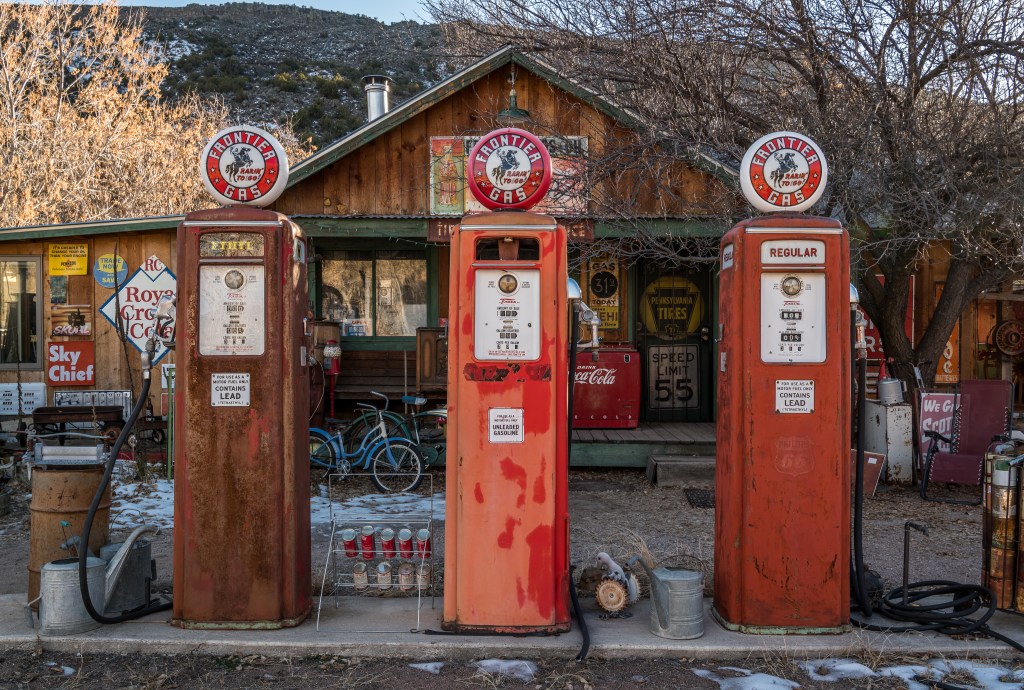
One rusty Coca-Cola advertisement offered advice along with the brand name. Age had made the sign less effective as advertising and considerably more useful as a subject.

The drive between Santa Fe and Taos could have been treated as transit time. Stopping in Embudo produced some of the least predictable photographs of the trip, and also confirmed that a person can own substantially more gas-station memorabilia than seems advisable.


Leave a Reply