Greece, located in south-eastern Europe, is a country of about 10 million people. A number of city-states that formed more than 2,600 years ago were unified by Philip II of Macedon in the fourth century BC to create most of what is now modern Greece. Generally considered the birthplace of Western civilization, Greece is credited with the invention of democracy as well as major influence on philosophy, literature, science, math, and theater.
Athens: A Blend of Ancient and Modern
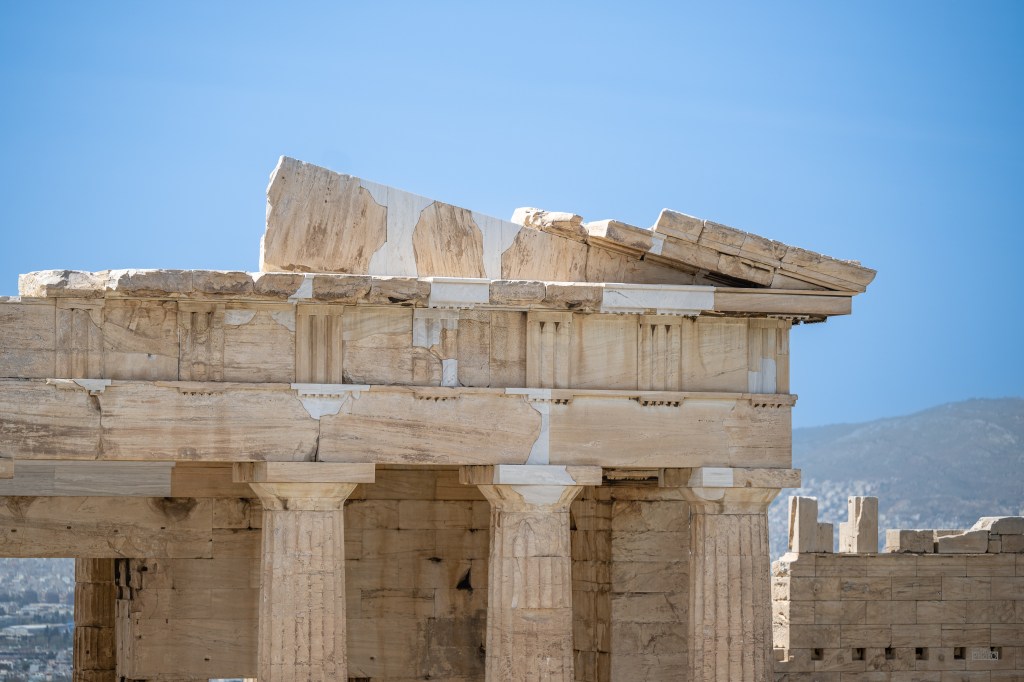
Athens is the capital of, and by far the largest city in, Greece, with almost 4 million inhabitants, and has been continuously inhabited for at least 5,000 years. While it is a modern metropolis, the city is filled with ancient monuments and ruins, from the Classical Greek period as well as Roman and Byzantine works. Perhaps the most famous of all, and visible from throughout the city, is the Parthenon, a former temple atop the Acropolis of Athens.
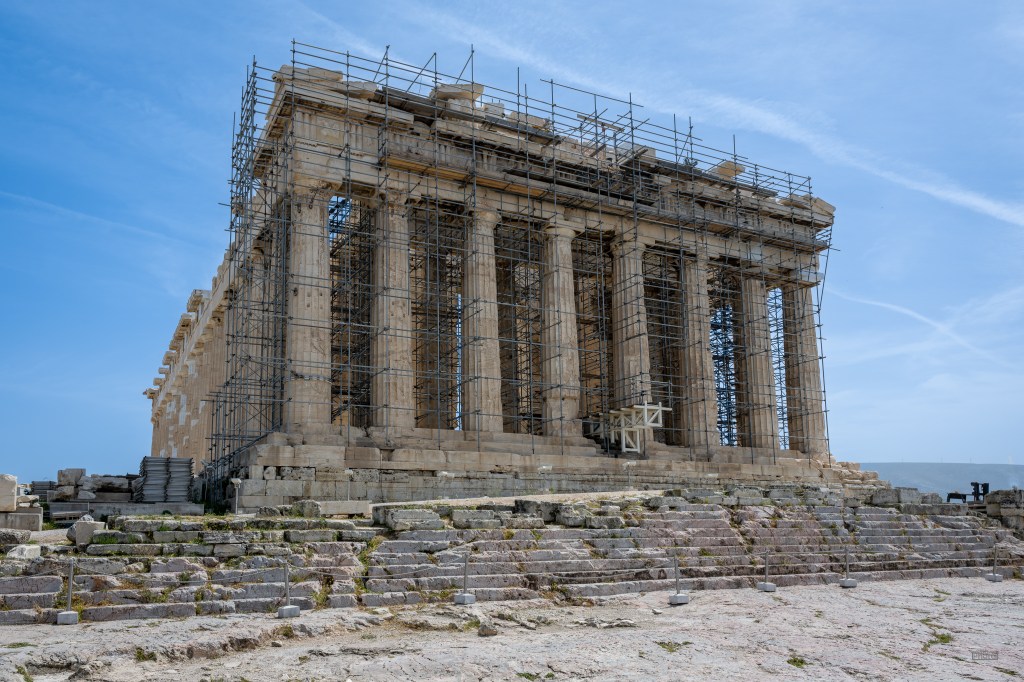
The Parthenon, built in the 5th Century BC, was dedicated to Athena and erected in honor of the Greek victory over the Persians. Approximately 1,000 years later, it was converted into a Christian church, dedicated to Mary. In the 15th century, it became a mosque. In the late 17th century, it was seriously damaged during a war between the Venetians and the Ottomans. For the past 50 years, various restoration projects have been ongoing.
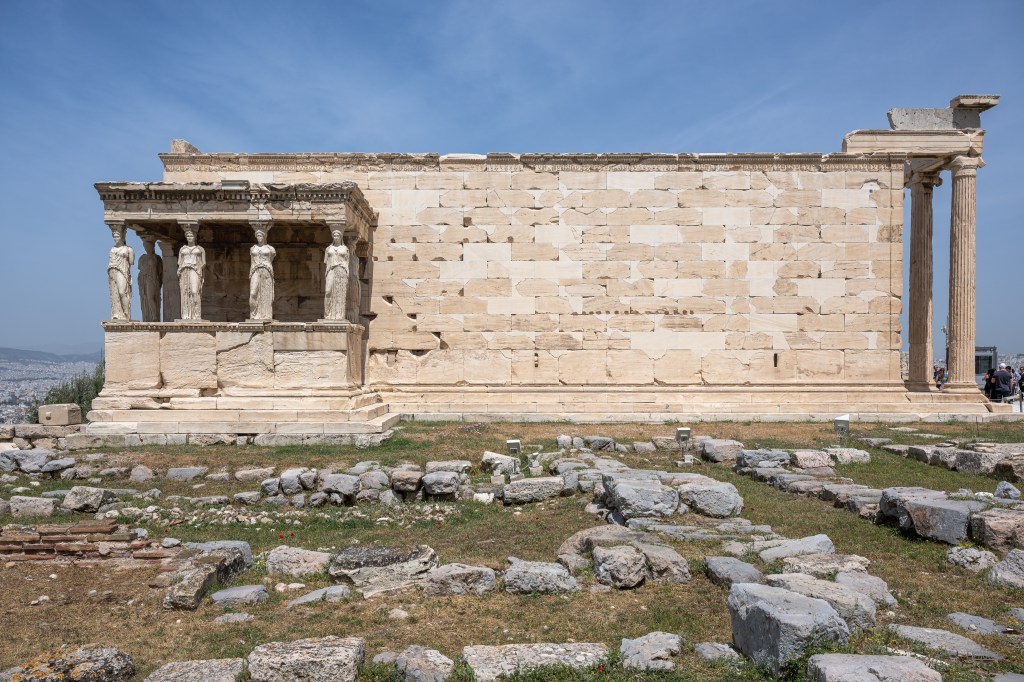
Among the buildings on top of the Acropolis is the Pandroseion, a sanctuary dedicated to a daughter of the first king of Attica Greece; it also contained the olive tree given to Athens by Athena. Attached to this building is the Porch of the Caryatids. Caryatids are female figures acting as structural support in place of columns. In front of the building can be seen the ruins of the Old Temple of Athena – a building whose exact history and name are unclear.

The Odeon of Herodes Atticus (aka Herodeion) is a Roman stone theater completed in AD 161, built in memory of Atticus’ wife, Aspasia Annia Regilla. It was destroyed and left in ruins about 100 years later. The theater was restored in the 1950s and has since been the venue for many famous performers, from Sting, Diana Ross, and Frank Sinatra to Luciano Pavarotti, Andrea Bonelli, and Elton John. In the background, atop the hill, is the Philopappos Monument.
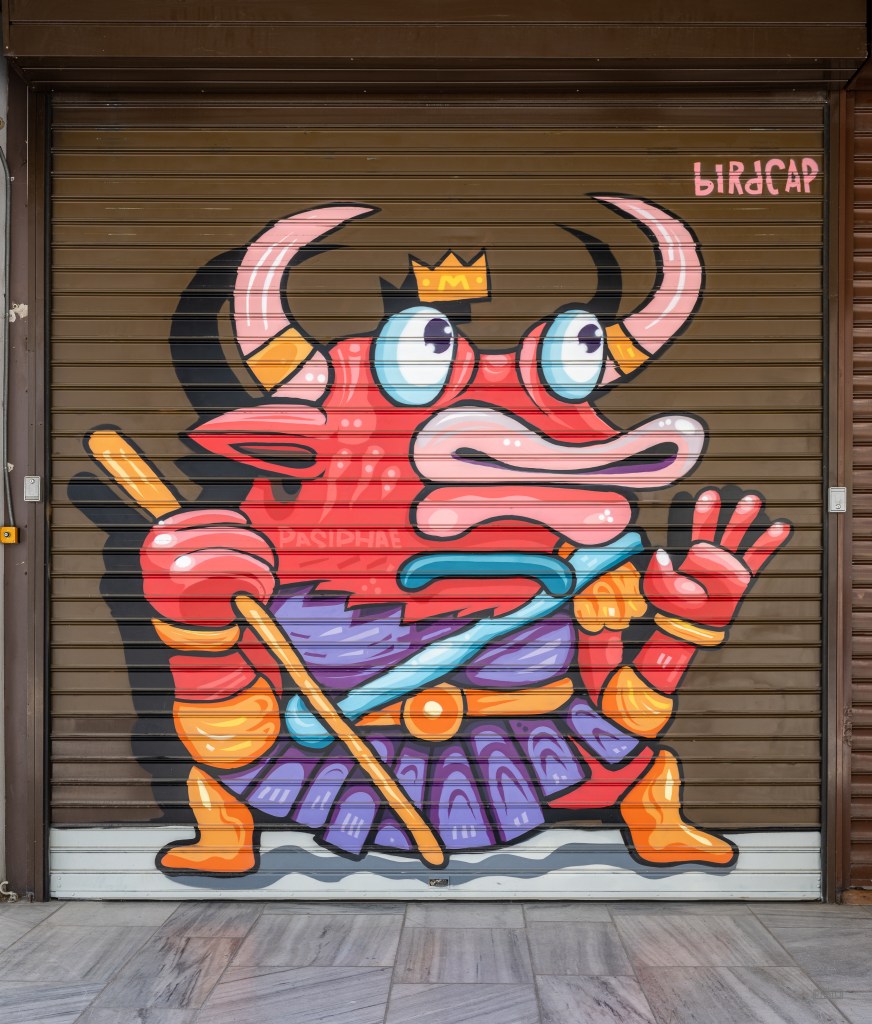
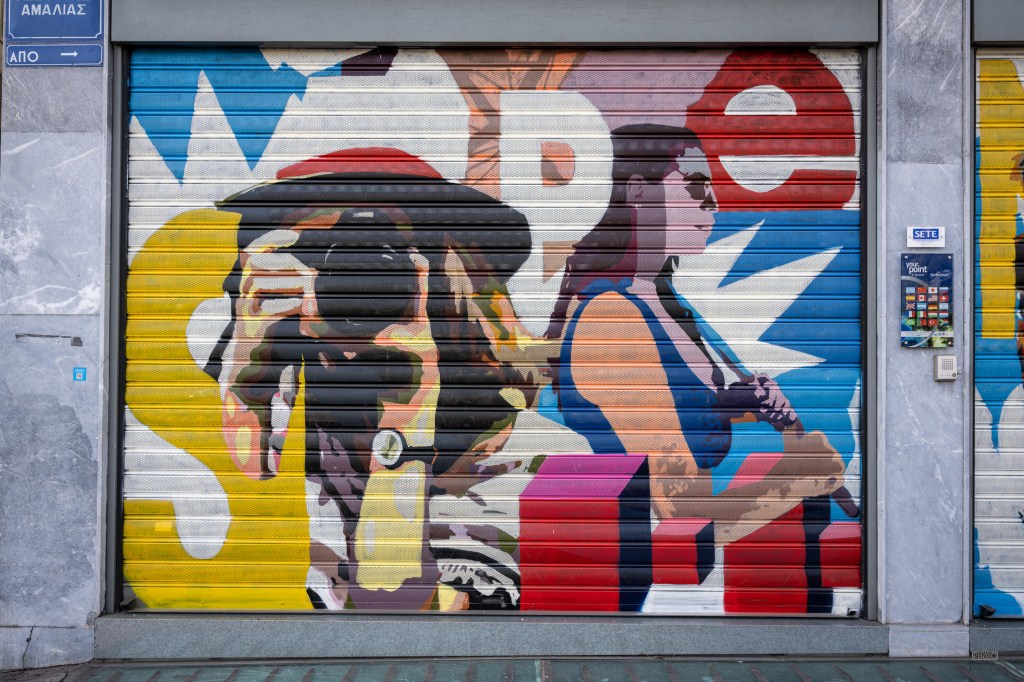
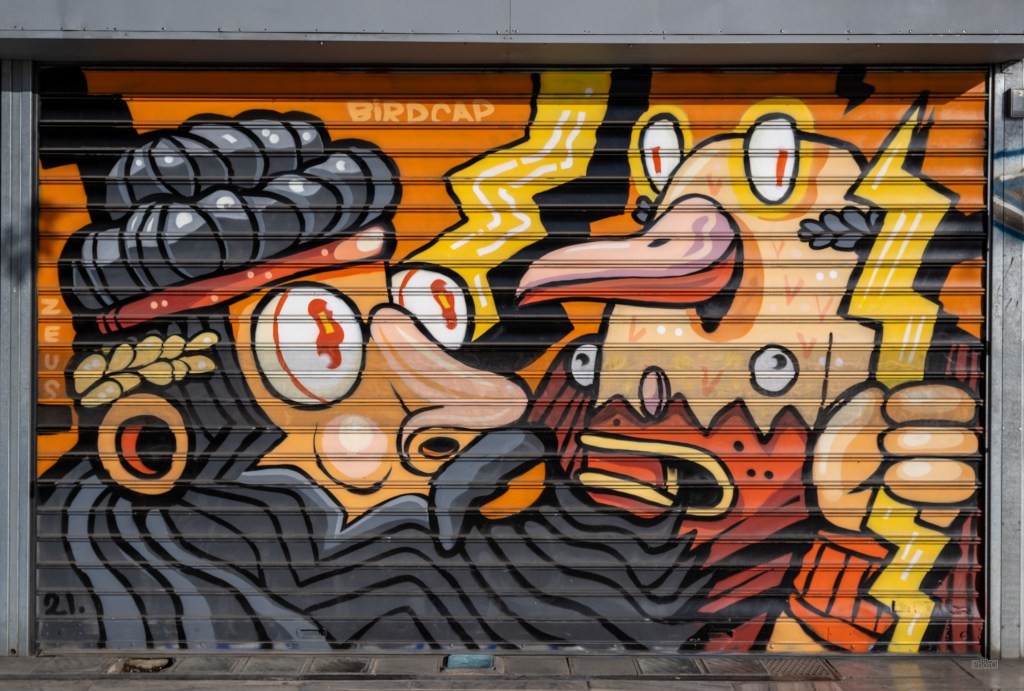
Along with the ancient monuments, Athens is also full of interesting and colorful graffiti murals, generally placed respectfully and where they improve the view.
Santorini: Iconic Island of White Houses
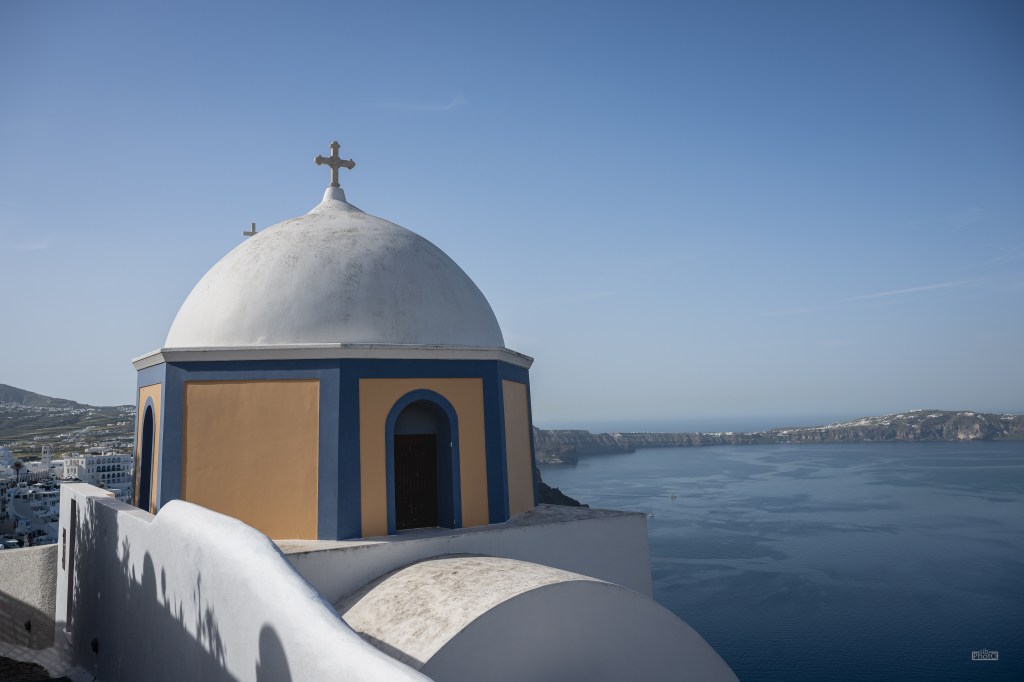
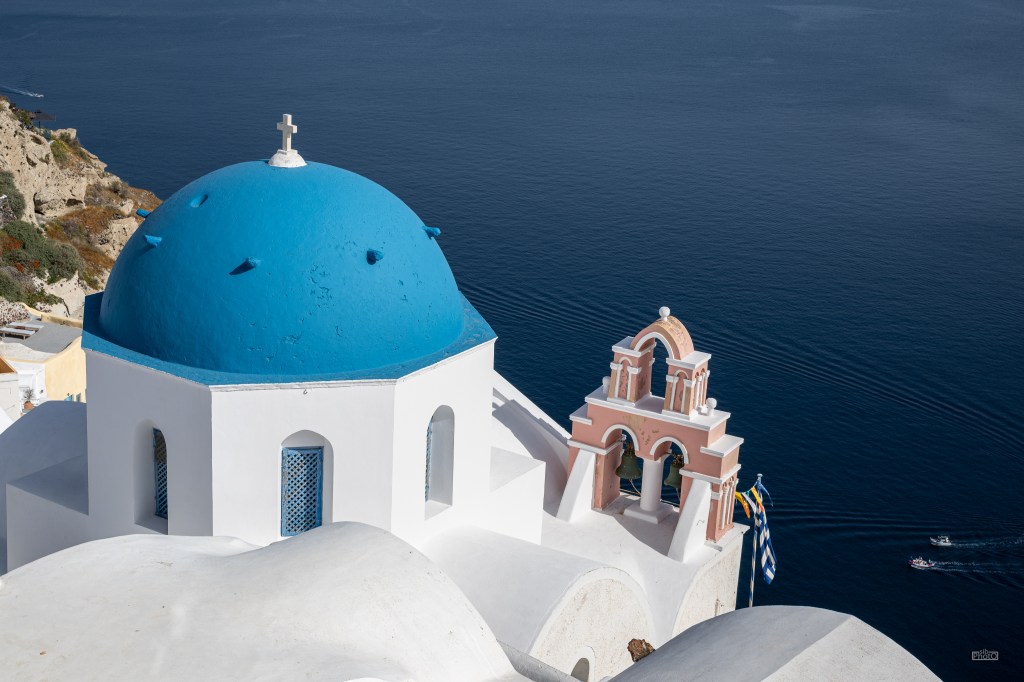
Santorini is one of the most famous of the thousands of Greek islands, and for good reason. Built on the remains of a volcanic caldera formed by an eruption about 3,600 years ago, today about 15,000 people live there, while about 2,000,000 tourists visit annually. Famous for its traditional white cubical houses, with extensions dug into the rock providing natural insulation during the hot summer months, there are also hundreds (or maybe thousands) of small churches with domed roofs.
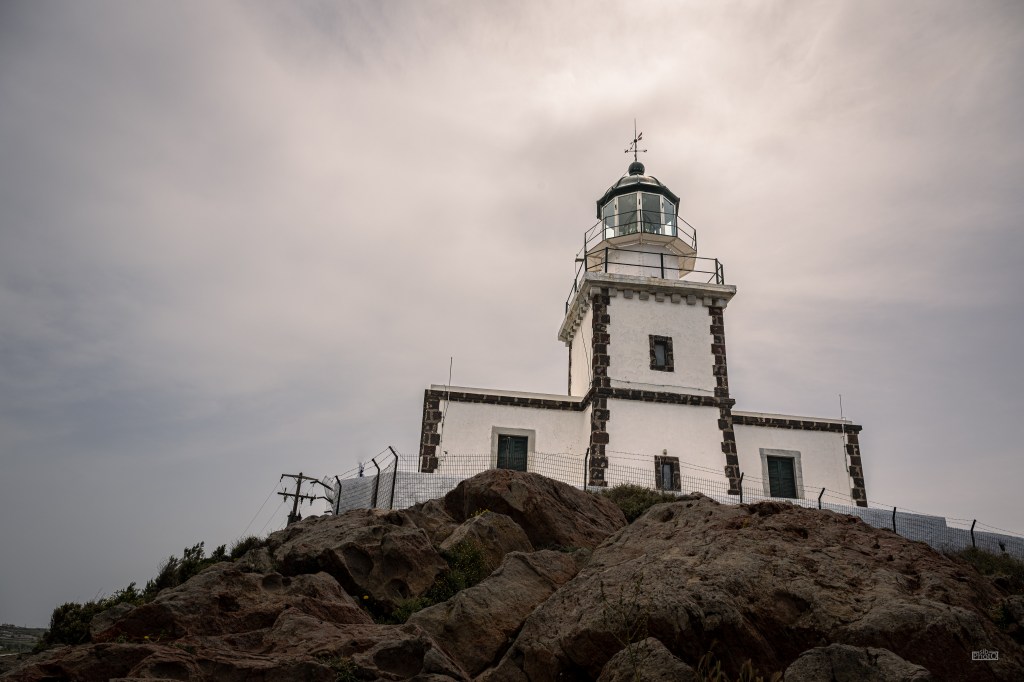
At the far southwest tip of the island is the Akrotiri Lighthouse – built in the late 19th century and still in use today to protect shipping. Although you can’t visit the inside of the building, the site provides beautiful views of both the caldera and the sunset.
Meteora: Monasteries in the Sky
Meteora is a rock formation in north-central Greece which is home to 6 surviving monasteries built on top of huge natural stone pillars. In the 13th and 14th centuries, 24 monasteries were built here. These monasteries provided the monks with sanctuary from political upheaval as well as invasion by the Turks who wanted control over the fertile landscape below. Originally, the only access to the monasteries was through ropes and ladders, which could be pulled up when under threat. More recently, stone steps and walkways have been built, enabling easier access (and tourism!) We traveled to Meteora via a 3-4 hour train trip.
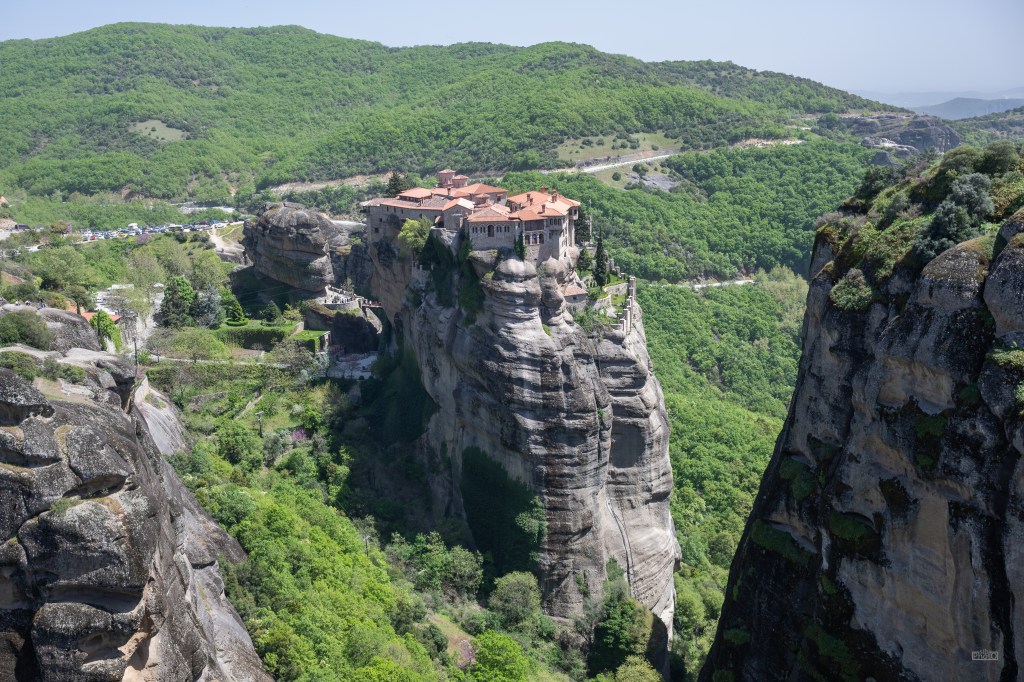
Varlaam is the second-largest of the monasteries. Construction began by a single monk. Upon his death, the site was abandoned for two hundred years until two brothers continued the process, again raising materials by hand, using ropes.
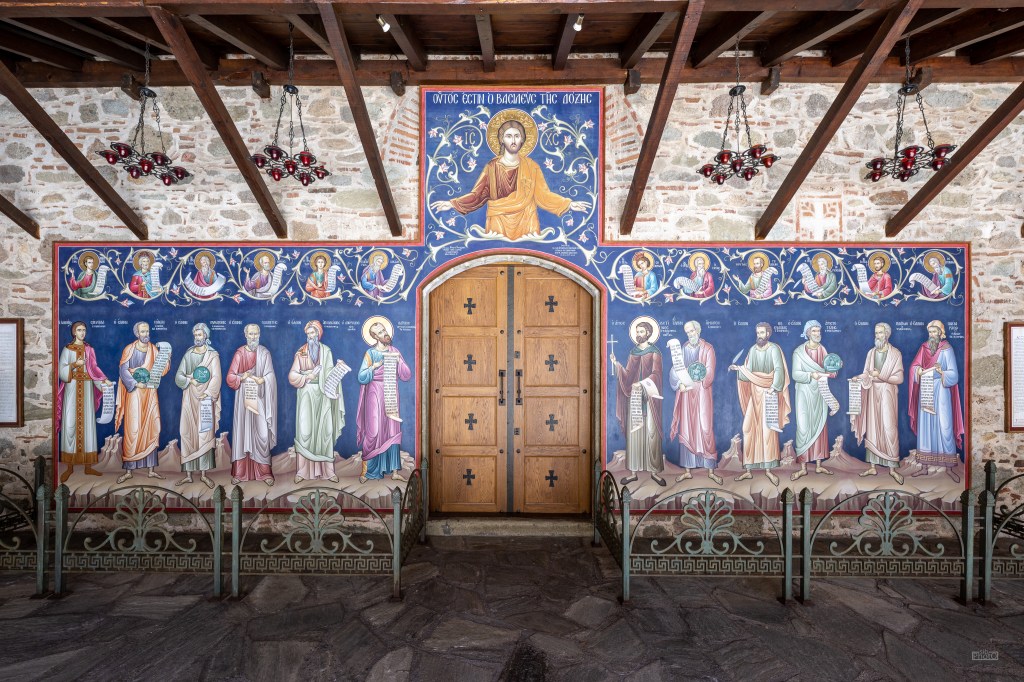
The largest of the monasteries, and the first to be built, is the Holy Monastery of the Great Meteoron. It contains many buildings, including three churches and a hospital; at one time there were more than 300 monks living there.



 Fernweh
Leave a comment