Our trip to Greece covered three very different locations: Athens, the island of Santorini, and the monasteries of Meteora. Athens supplied layers of Greek, Roman, and Byzantine history within a modern city. Santorini was built around a volcanic caldera, while Meteora required a train ride north to a group of monasteries perched on stone pillars.
Athens
Athens is Greece’s capital and largest metropolitan area, with a population of almost four million. The city has been continuously inhabited for at least 5,000 years. Ancient monuments remain visible throughout it, although none is as prominent as the Parthenon on the Acropolis.
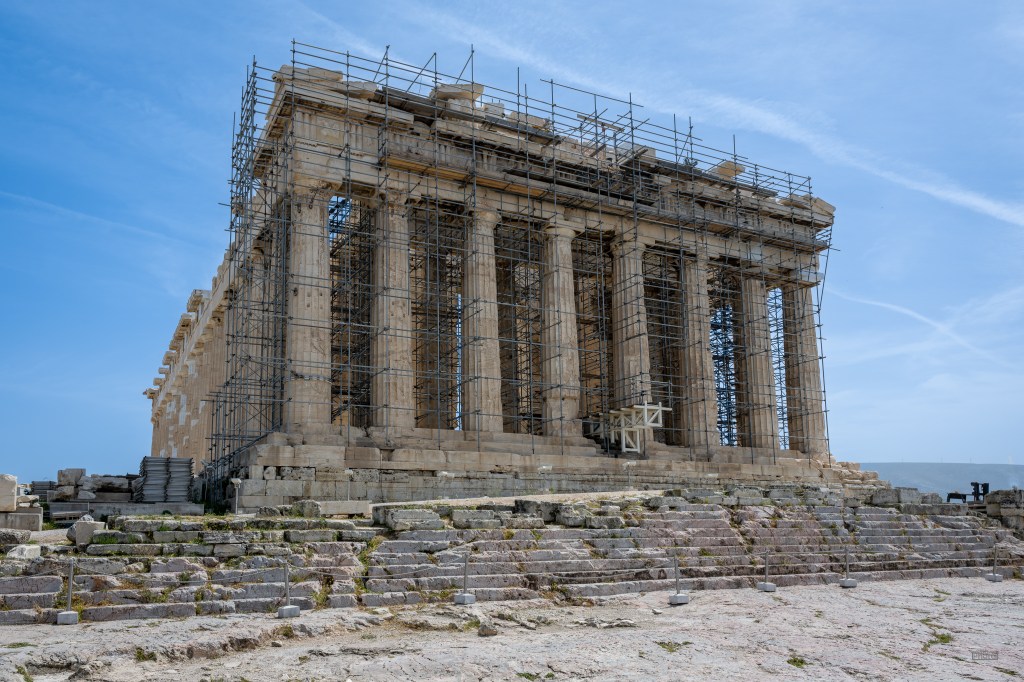
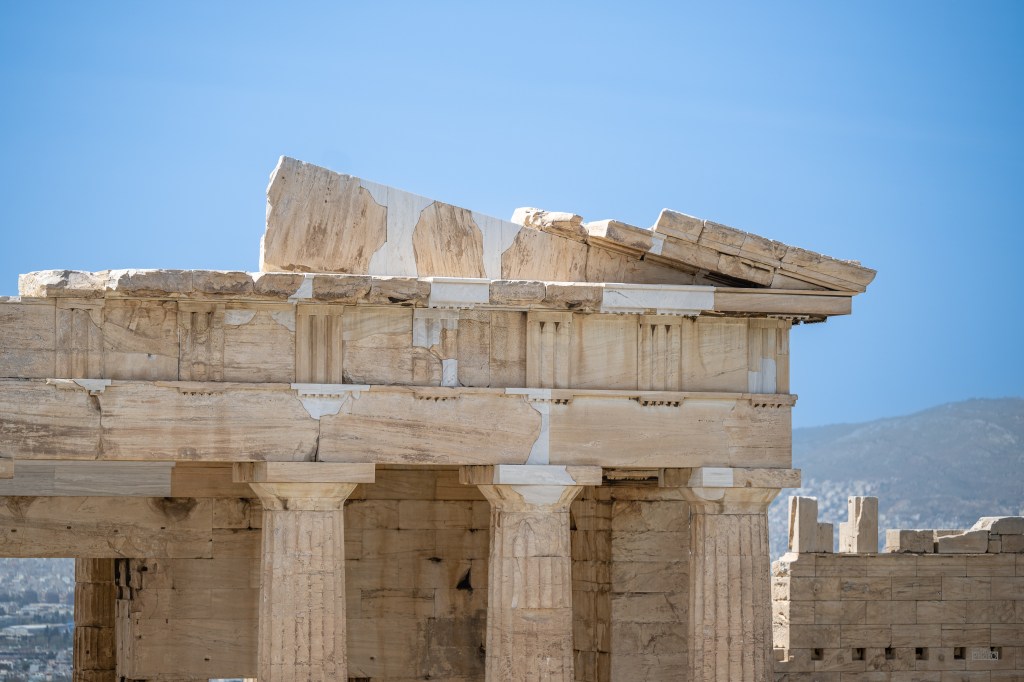
The Parthenon was built in the fifth century BC and dedicated to Athena. It later served as a Christian church and, after the Ottoman conquest, as a mosque. An explosion during the war between Venice and the Ottoman Empire badly damaged it in 1687; restoration work has continued in various forms for the past half-century.
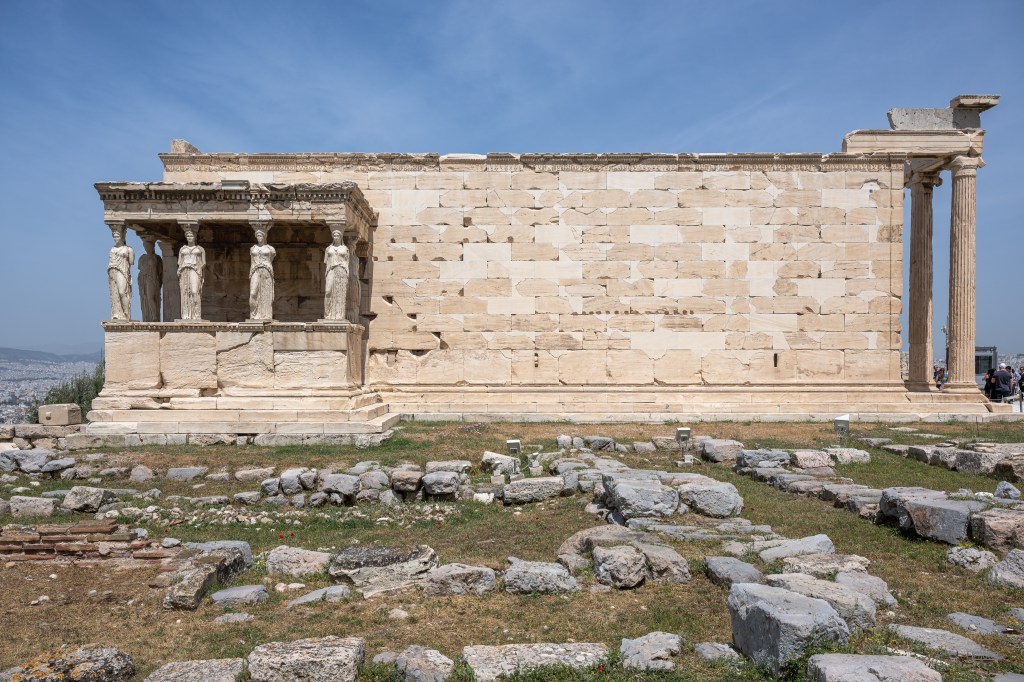
The Pandroseion, also on the Acropolis, was dedicated to Pandrosus, a daughter of the first king of Athens. Beside it is the Porch of the Caryatids, where sculpted female figures take the place of conventional columns. The ruins of the Old Temple of Athena are visible in front of the structure, although parts of that building’s history remain uncertain.
The Odeon of Herodes Atticus is a Roman stone theater completed in AD 161 in memory of Herodes Atticus’s wife, Aspasia Annia Regilla. It was destroyed roughly a century later, restored in the 1950s, and is again used for concerts and performances. The Philopappos Monument appears on the hill behind it.

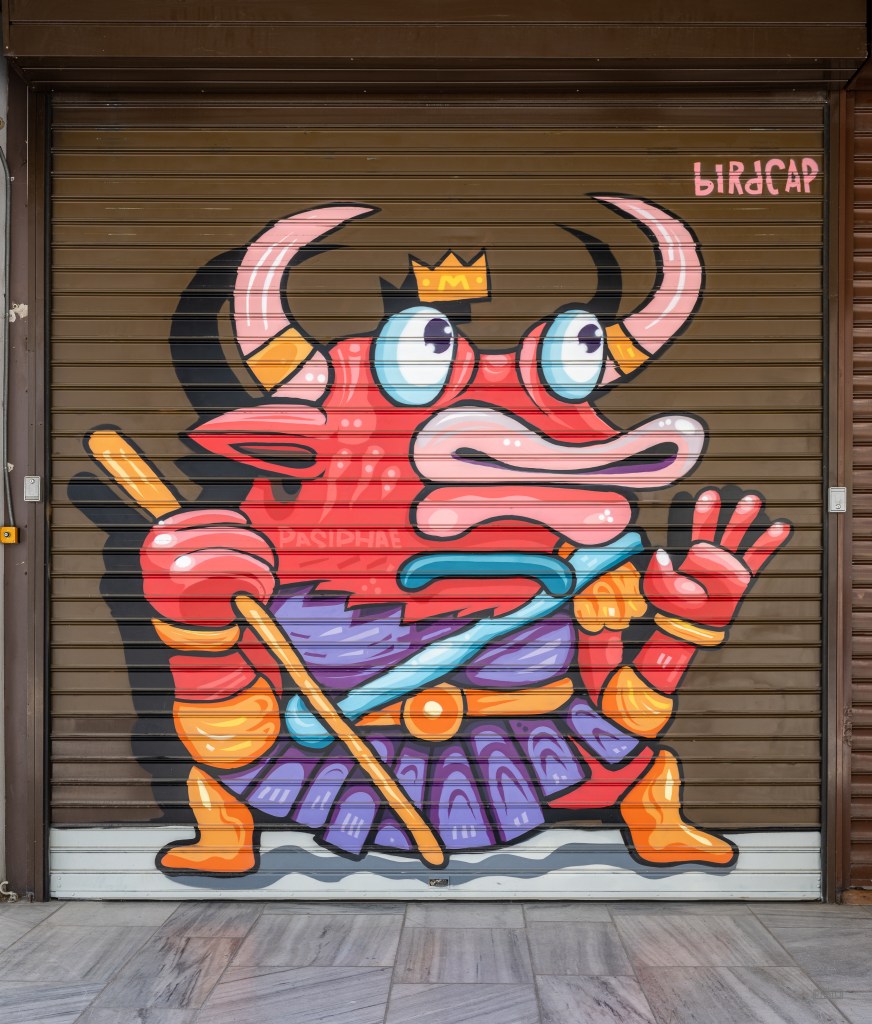
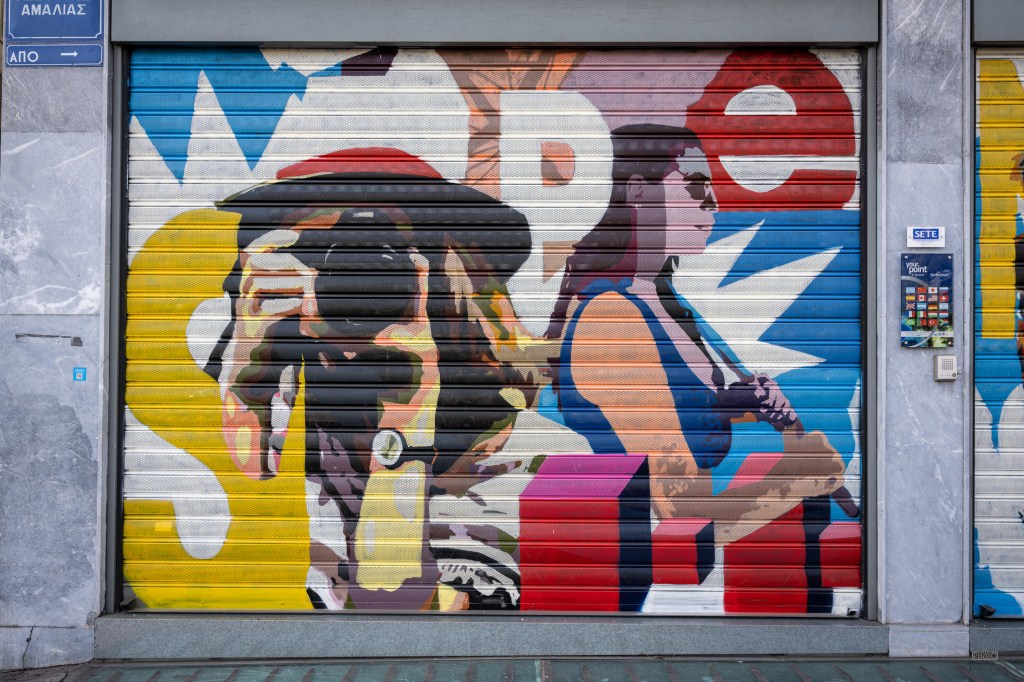
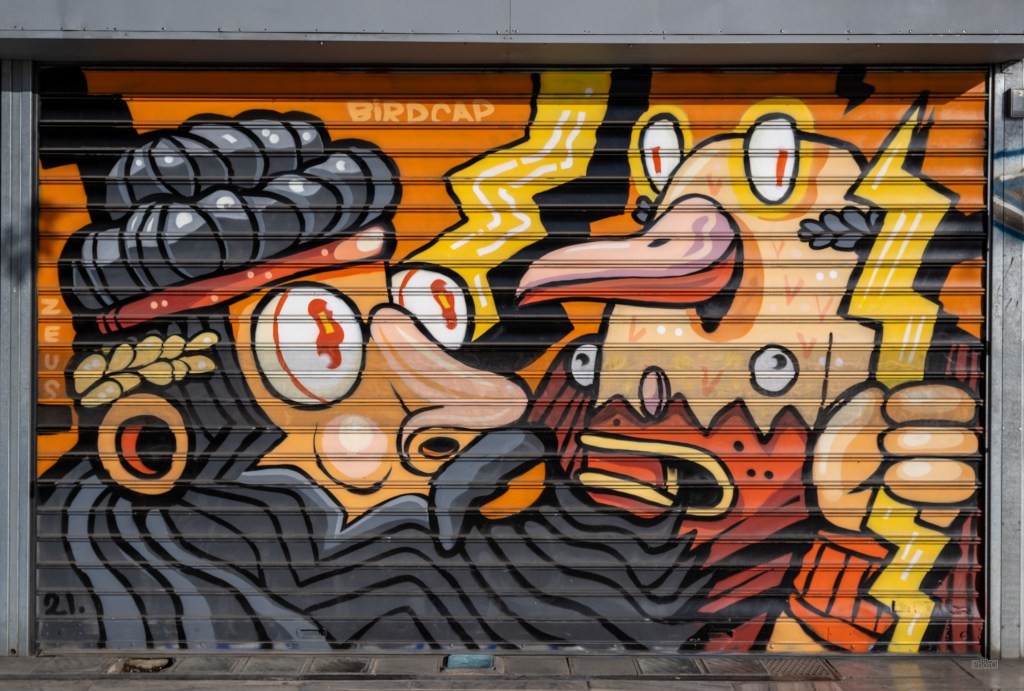
Athens also had extensive graffiti and large murals, usually placed away from the ancient sites. They added color to otherwise ordinary walls and gave us subjects that did not require another dive into classical history.
Santorini
Santorini occupies the remains of a volcanic caldera formed by a major eruption about 3,600 years ago. Around 15,000 people live on the island, which receives roughly two million visitors in a typical year. Those numbers help explain why photographing its narrow streets can require patience.
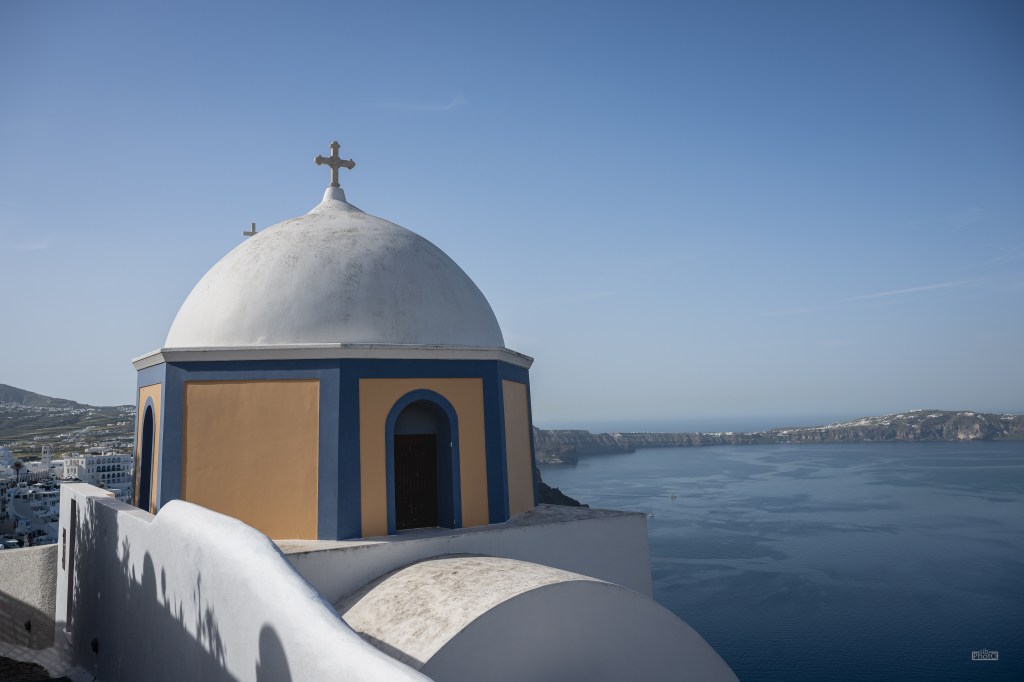
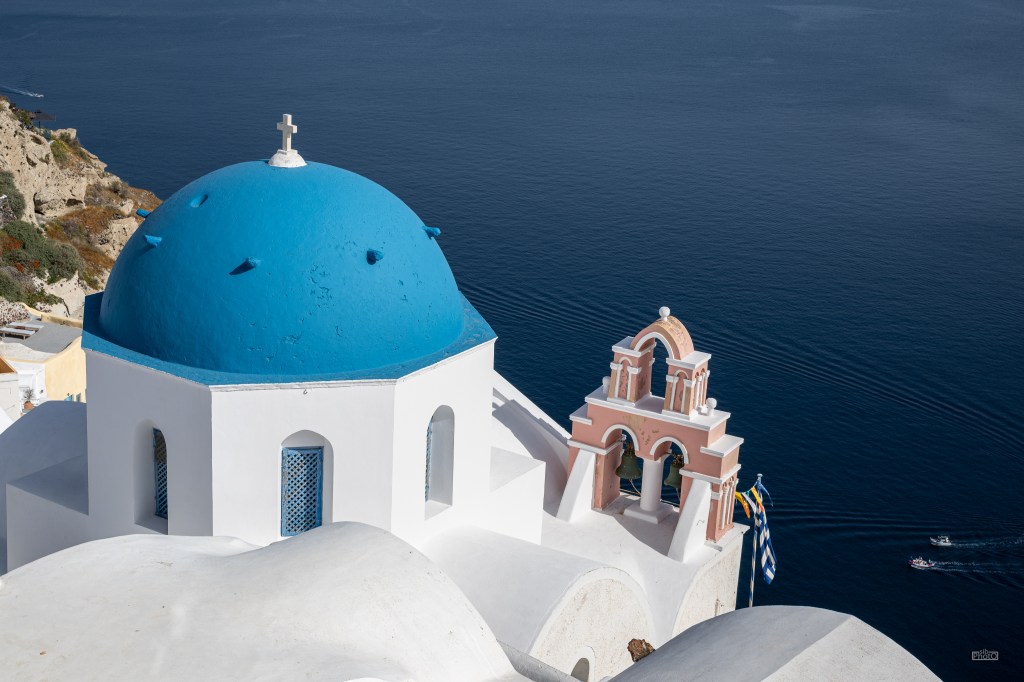
The island’s white cubic houses often extend into the rock, where interior rooms remain cooler during the summer. Small churches are common, many marked by domed roofs that stand above the closely packed houses.
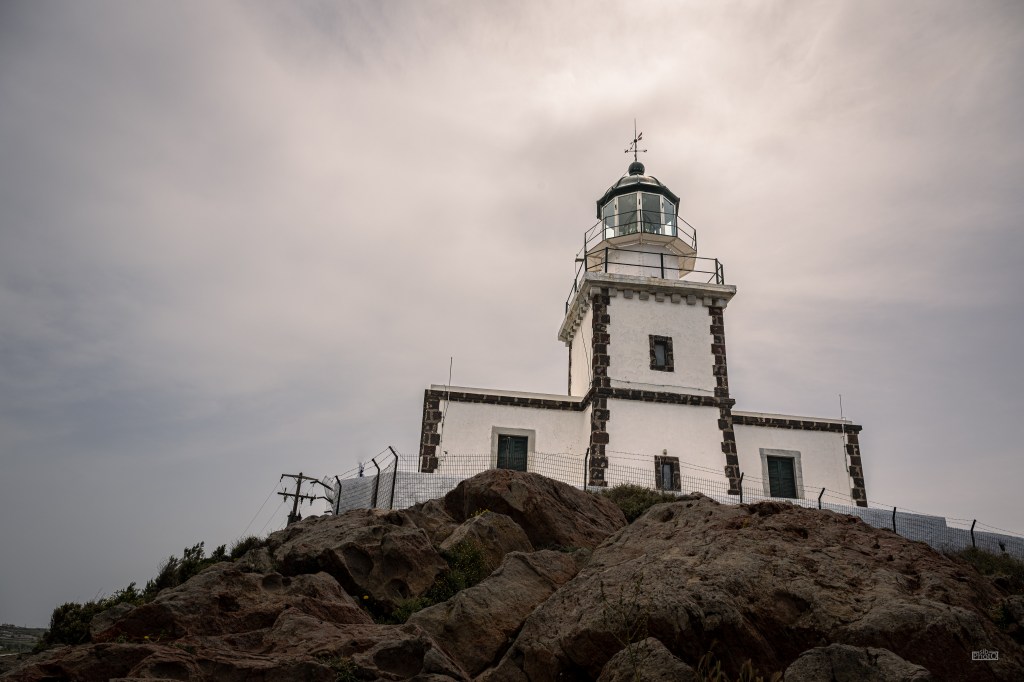
At the southwestern tip of the island, the Akrotiri Lighthouse has been operating since the late nineteenth century. The building itself is closed to visitors, but the surrounding ground provides an open view across the caldera and toward the sunset.
Meteora
Meteora is in north-central Greece, about three to four hours from Athens by train. Six active monasteries remain on top of its tall stone pillars; 24 were built in the area during the thirteenth and fourteenth centuries.
The monasteries offered their residents isolation and security during periods of political conflict and invasion. Access was originally by removable ladders and by nets raised with ropes. Stone steps and walkways now make the climb less alarming and substantially more practical for visitors.
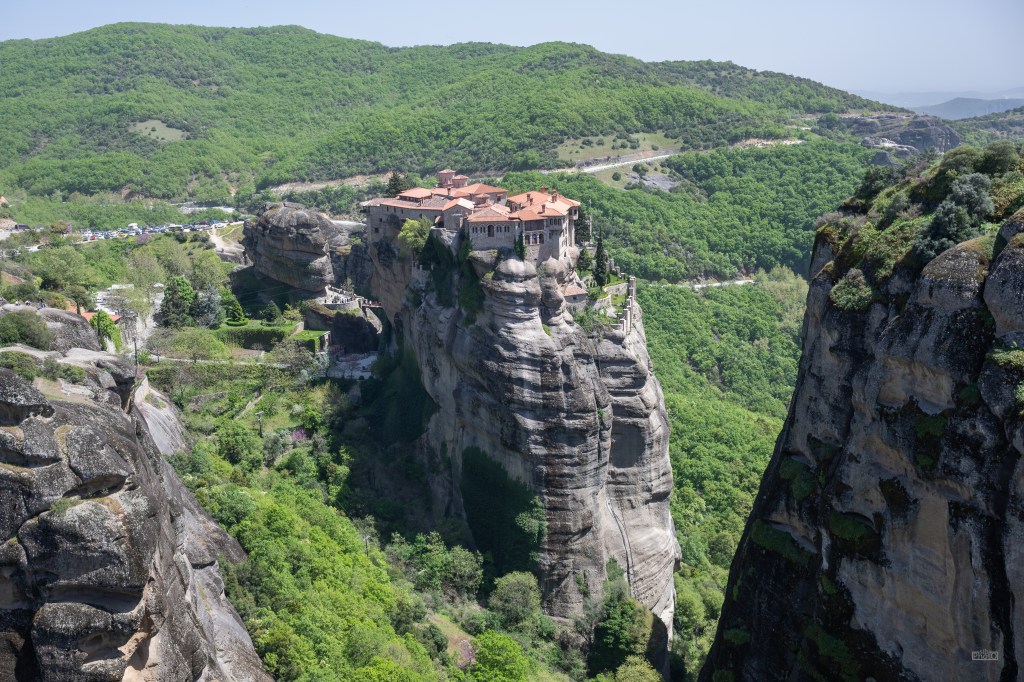
Varlaam is the second-largest surviving monastery. A single monk began construction there, after which the site stood abandoned for about two centuries. Two brothers later resumed the work, hauling materials to the summit by rope.
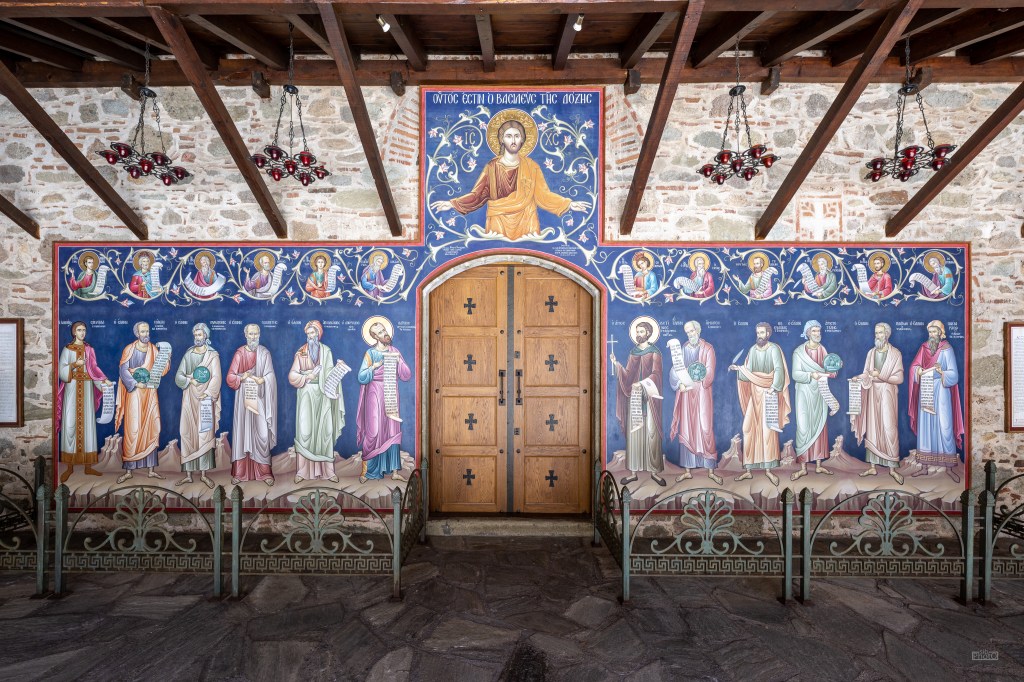
The Great Meteoron was the first monastery established at Meteora and remains the largest. Its complex includes three churches and a former hospital; at its height, more than 300 monks lived there. Inside, the dim chapel and painted walls required a wide lens and a shutter speed of 1/15 second.
Athens, Santorini, and Meteora did not need to be forced into a single version of Greece. Our visits and the photographs worked better when each place was treated on its own terms: crowded ruins in a functioning city, white buildings above a caldera, and monasteries reached by train, stairs, and more stairs.


Leave a Reply