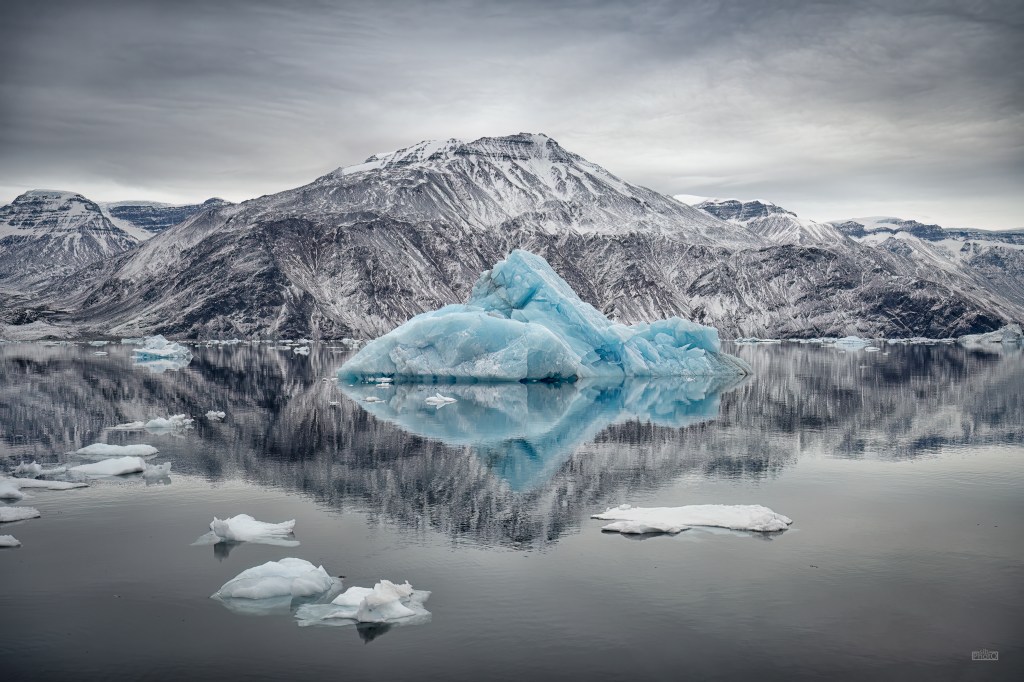
We traveled with two close friends on a sailboat journey through Scoresby Sund on Greenland’s east coast. The island country’s ice sheet and mountains are difficult to grasp from a map, and the icebergs were larger than we had expected even after seeing plenty of photographs. We kept watch for polar bears but sadly never saw one.

After two days of equipment and weather delays, we flew from Reykjavík in a small plane to the rugged Nerlerit Inaat Airport at Constable Point, about 24 miles from Ittoqqortoormiit. From the airstrip, we walked for roughly 20 minutes to the shore and boarded the sailing vessel Rembrandt van Rijn by Zodiac.

We spent about eight days sailing the mostly calm waters of Scoresby Sund. The return was less gentle: two very rough days across the Greenland Sea to Akureyri, Iceland, before the trip home.
Icebergs
Icebergs were the main subject of the trip. We photographed them from the ship, from Zodiacs, and occasionally from land. They ranged from small fragments to mountains of ice hundreds of feet long, sometimes under blue sky but more often beneath low cloud, rain, or snow.
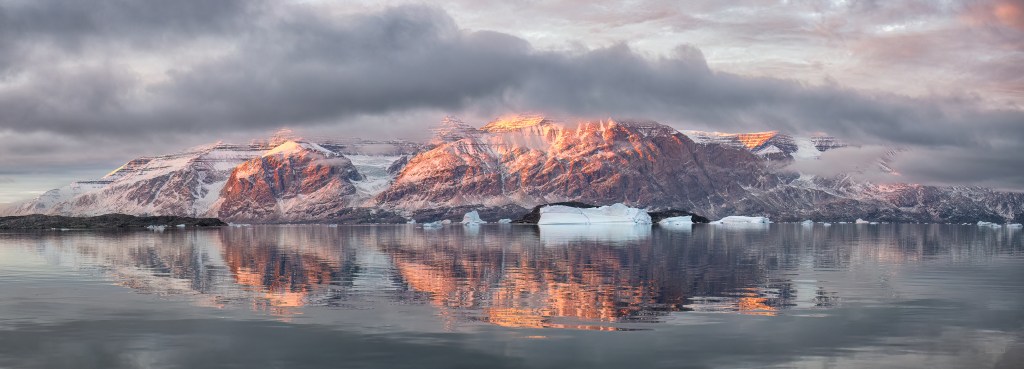
Our first morning brought the only colorful sunrise of the trip. The water was nearly still, and the low clouds caught enough color to separate the icebergs from the dark mountains behind them. We did not yet know that the rest of the week would be mostly gray.

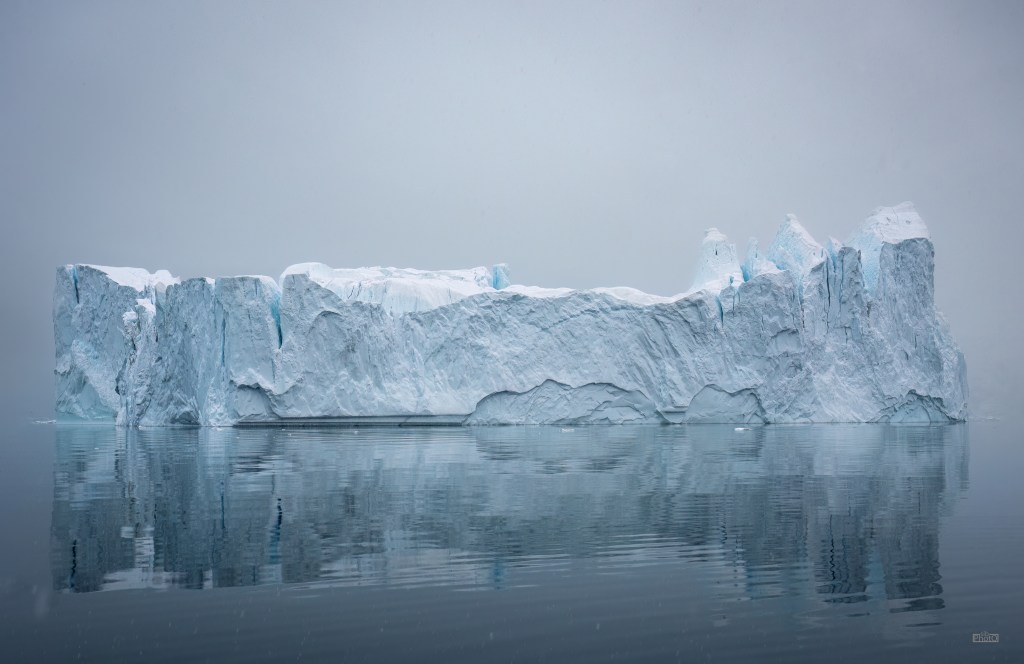
Most days looked more like this. It was often difficult to tell the time from the light, or even to locate the sun. Fortunately, the captain was not navigating by the stars. The flat light also showed details in the ice that stronger sunlight might have obscured: old waterlines, fractures, blue cavities, and surfaces polished while submerged.

The scale took time to register. Many of the icebergs were several hundred feet long and stood well above the masts of our 160-foot ship. Their shapes ranged from low slabs to forms large enough to suggest buildings or ships.
The captain kept a careful distance. An unstable iceberg can roll or shed large pieces of ice, producing waves that would be dangerous for a vessel our size. We preferred to observe that possibility from well outside the splash zone.
We had enough gear to stay mostly warm and dry through the rain and snow. The crew kept hot drinks and snacks ready whenever we went below to warm up. They were also willing to circle an iceberg for another angle. Since all 16 passengers were photographers, no one objected to going around in circles.
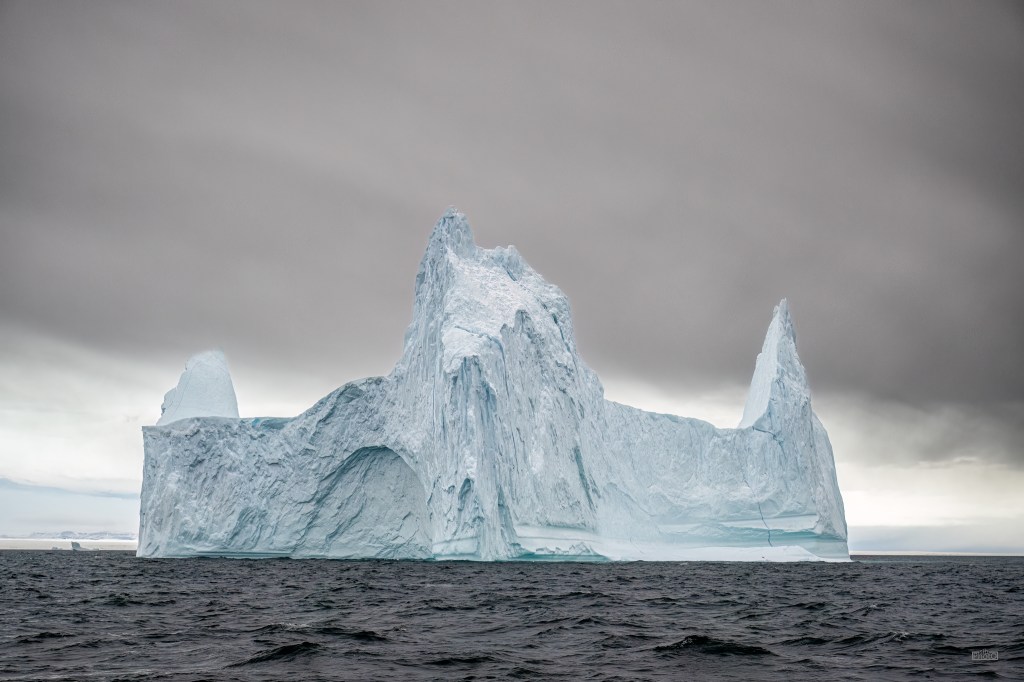
Near the end of the trip, we passed an unusually square iceberg, estimated at 1,000 feet on each side and nearly 500 feet high. Those numbers were hard to reconcile with the fact that 90% of its volume remained below the surface. We stayed well back because of the risk of falling ice.

Lines, Shapes, and Contrasts
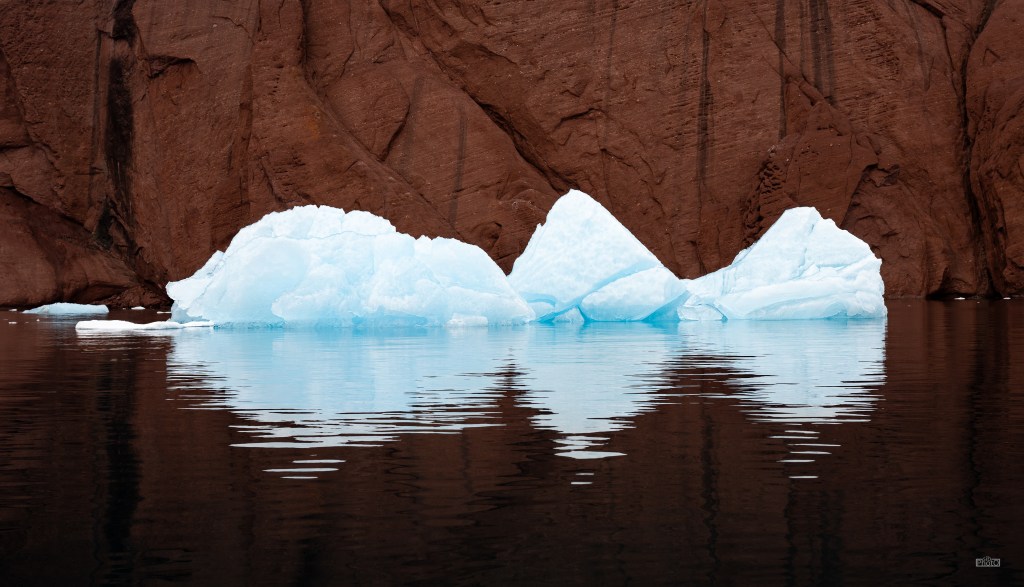
The ice also lent itself to quieter compositions. Against dark cliffs or gray water, a single ridge, channel, or patch of blue could carry the photograph without much else in the frame.
On the days when we could land, we climbed some of the surrounding hills. Looking down from shore changed the geometry of the icebergs and made it possible to isolate details that were difficult to see from water level.

What remains strongest in memory is the mismatch of scale: a 160-foot ship could look small beside an iceberg that the captain described as medium-sized. The cold and rough return crossing were part of traveling on the season’s final sailing, but so were empty water, changing weather, and long stretches with nothing in sight except rock and ice.


Leave a Reply