
We planned a short family trip to Japan for the spring cherry blossoms, or sakura (桜). This was not primarily a photography trip, but the cameras came along. We started in Tokyo and followed the bloom north through Honshu to Hokkaido, eventually reaching Daisetsuzan National Park.
We divided the trip between rental cars and the Shinkansen. Both were straightforward: the train covered long distances quickly, while the car made it possible to stop in smaller towns and change plans when the blossom forecast changed. I had visited Tokyo before, but this was my first time traveling through the rest of the country.
Following the Blossoms North
Cherry trees do not bloom across Japan at the same time. By the time the flowers have fallen in one region, trees farther north may still be covered in tight buds. That difference allowed us to keep moving with the season rather than betting the entire trip on a few days in Tokyo.
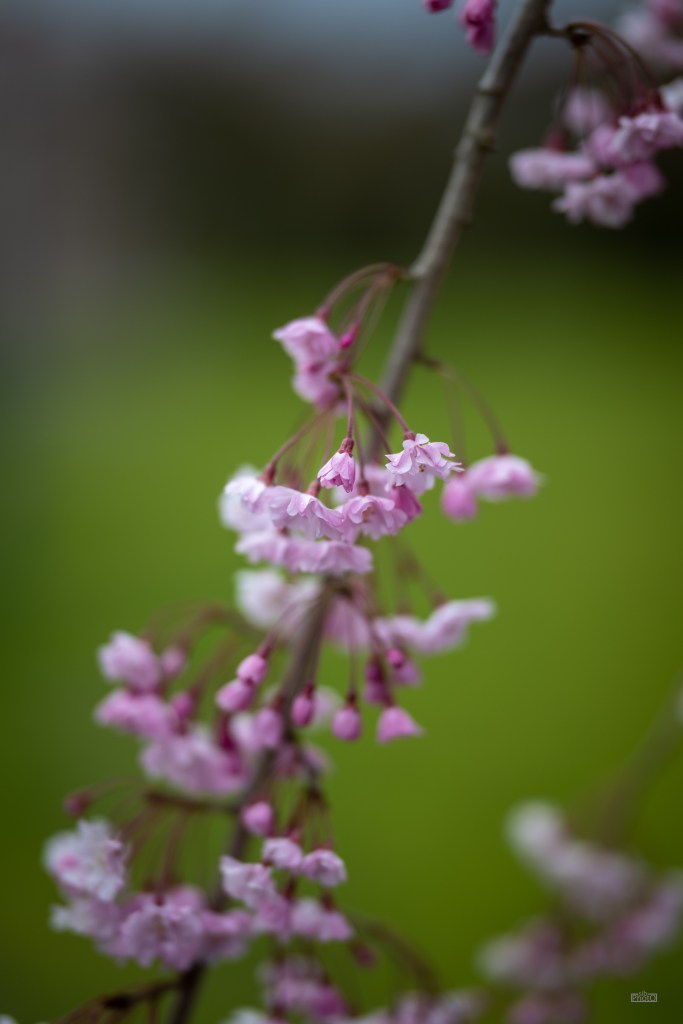
In Kitakami, Iwate Prefecture, some branches were only beginning to open. A close view showed the mix of buds and fresh flowers more clearly than a photograph of the whole tree.
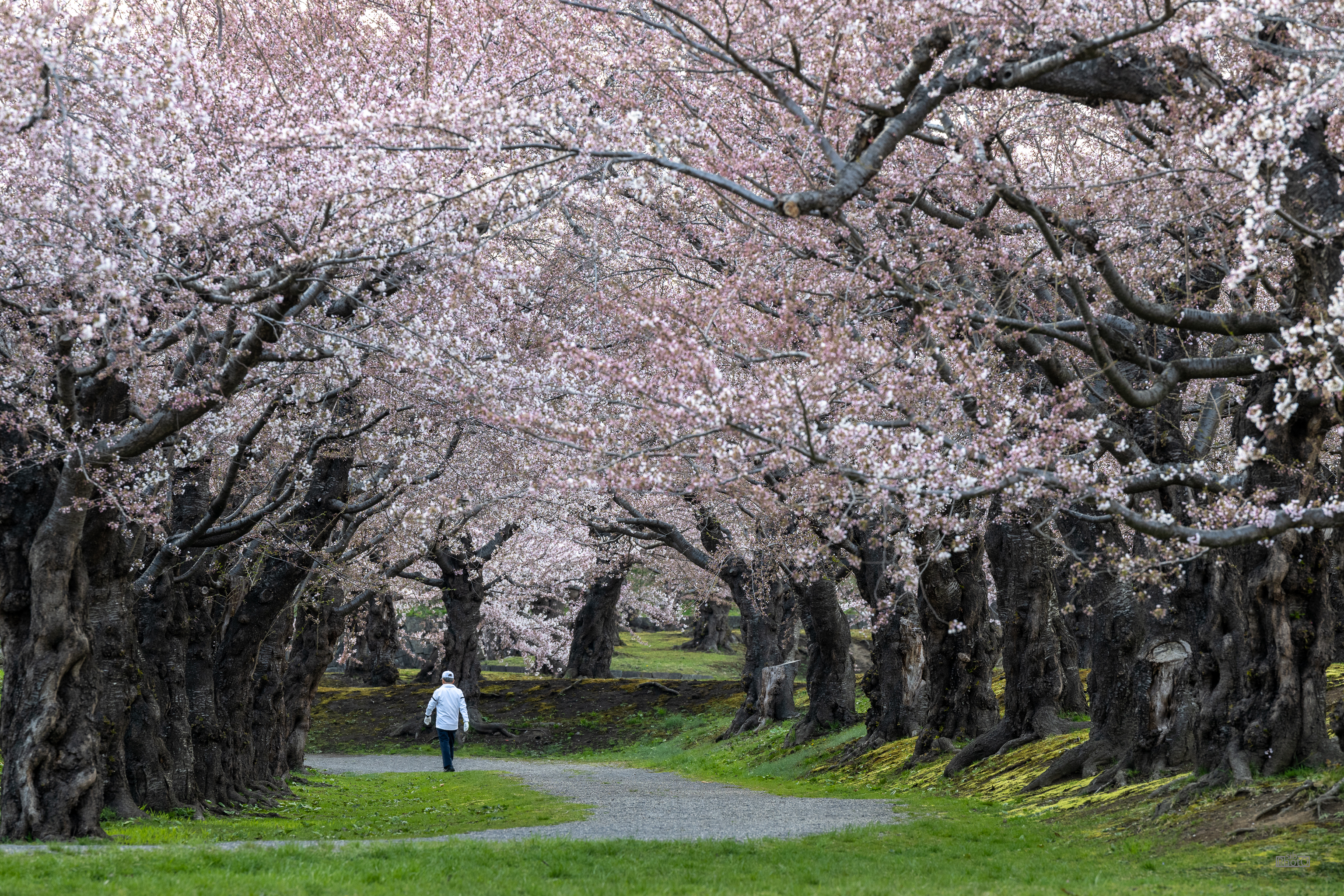
By Hakodate, the trees at Goryokaku Fortress were far enough along to form a canopy over the paths. A longer lens compressed the rows of trees and turned the path into a tunnel of blossoms.
The clear weather at Hakodate Park produced a different picture. Instead of filling the frame with pale flowers, I used the deep blue sky to separate the branches and individual clusters of blossoms.

After several days, the obvious photograph of a flowering tree became less interesting than the variations: buds at the edge of opening, branches seen from below, petals over a walkway, or a patch of color against an otherwise empty sky. The subject stayed the same; the useful camera position did not.
Temples and Fortunes in Nikko
Nikko contains a UNESCO World Heritage complex of Shinto shrines, a Buddhist temple, and associated ruins. The site is wooded and extensive, so the buildings appear in sections as the paths climb between them.
Inside one temple, subdued light fell across a Buddha figure. The low contrast and limited space called for a quieter photograph than the bright blossom scenes outside.

At Toshogu Shrine, visitors had tied omikuji fortune strips to a rack. The accumulated strips made their own small landscape of folded white paper.

The temples and shrines did not need a grand theory about old and new Japan. They were busy places used by worshippers, school groups, tourists, and staff, sometimes all within the same frame.
Shops, Streets, and Buildings
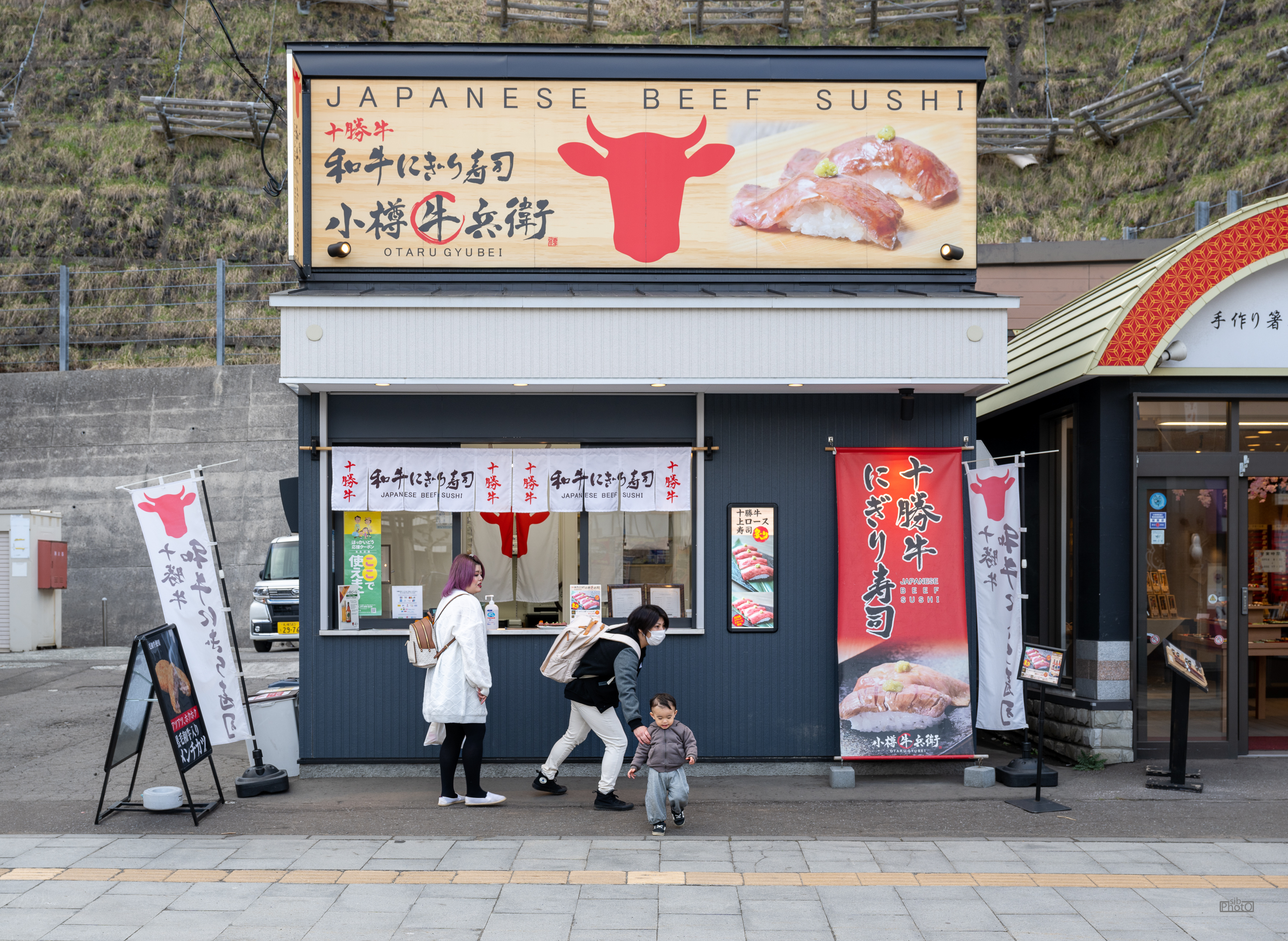
Away from the formal sites, much of what caught my attention was commercial and ordinary. Otaru had a beef-sushi shop with a sign that explained itself efficiently.
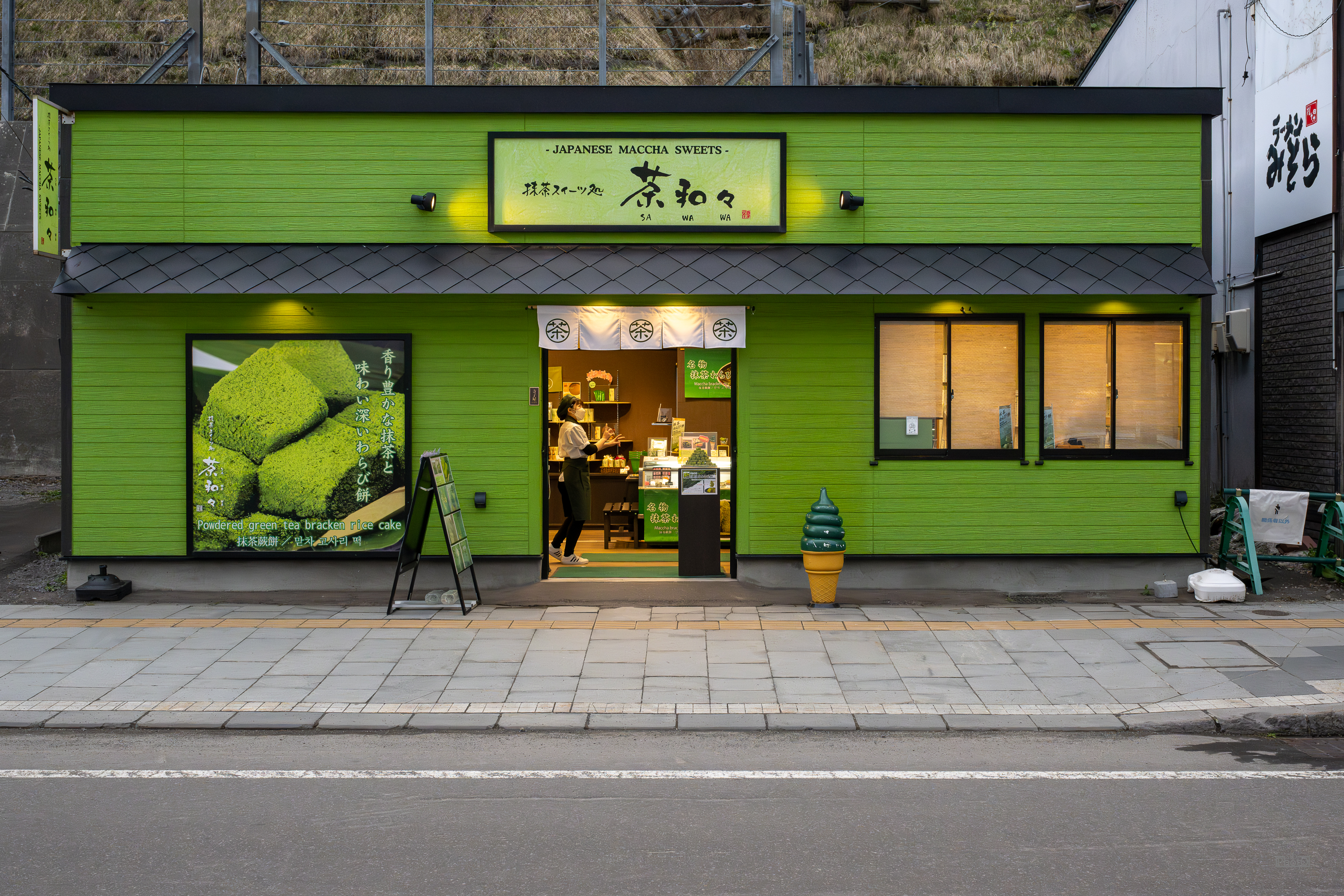
Down the street, an entire store seemed devoted to every matcha product that could plausibly be sold.
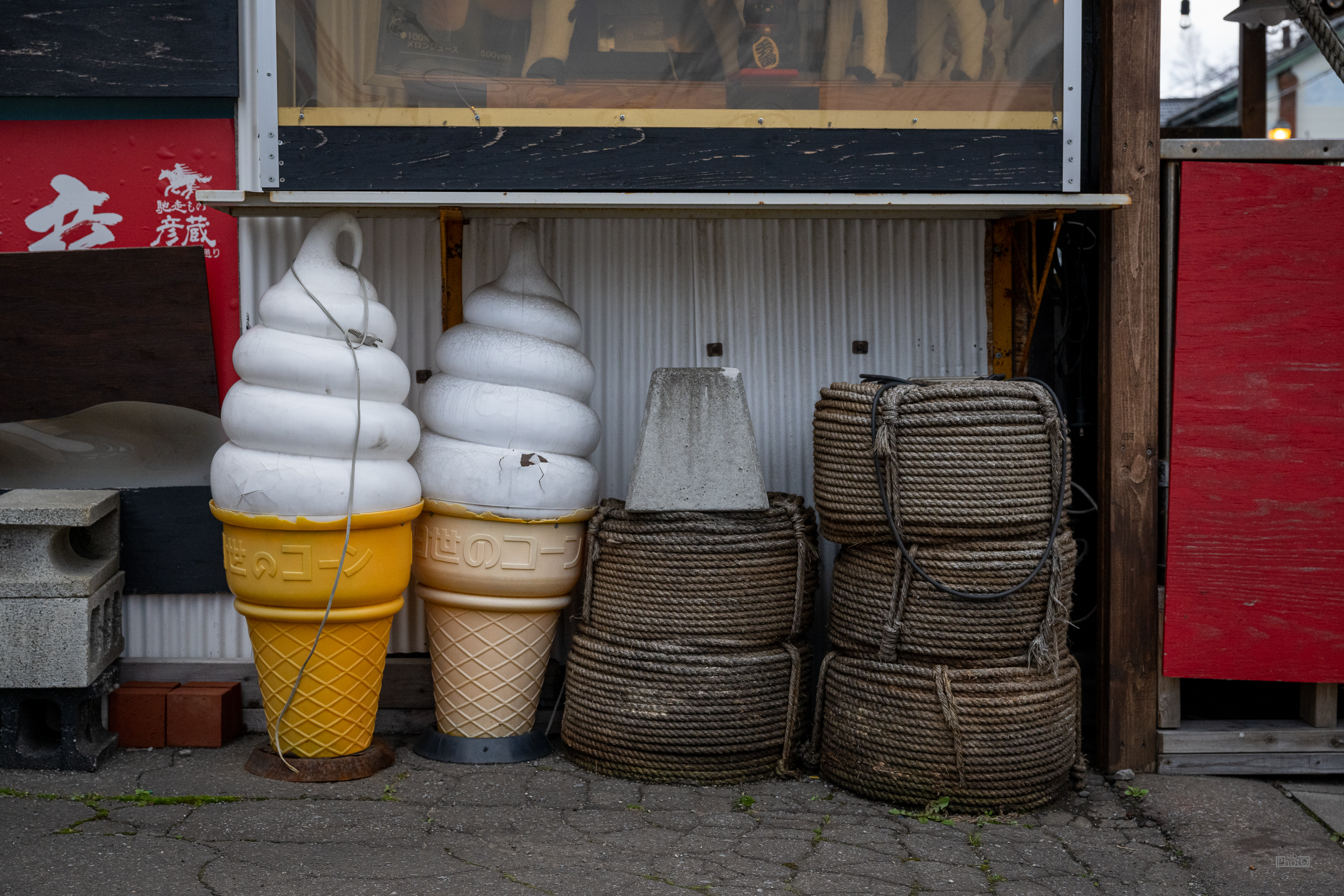
The streets supplied less intentional arrangements. Old ropes and several sculptures occupied one sidewalk; while the purpose seemed to be storage, decoration was the outcome. They were more interesting for that ambiguity.
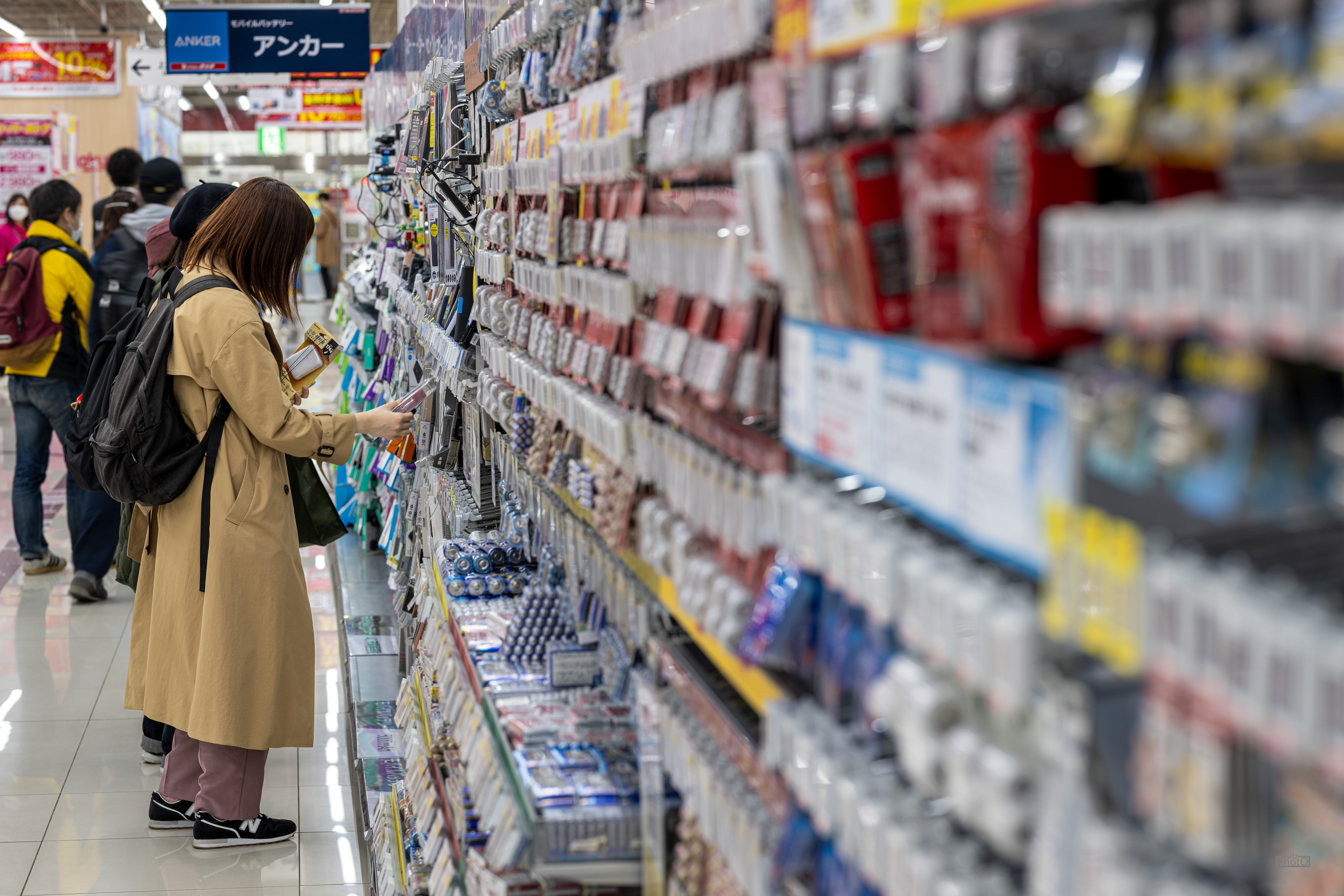
Sapporo’s electronics stores operated at another scale. One section of one aisle on one floor held enough products to occupy a typical shop by itself.
Kappabashi Street in Tokyo specializes in restaurant supplies. The ceramics shops offered walls of bowls, plates, cups, and serving pieces arranged with enough precision to make browsing feel mildly inadequate as a response.

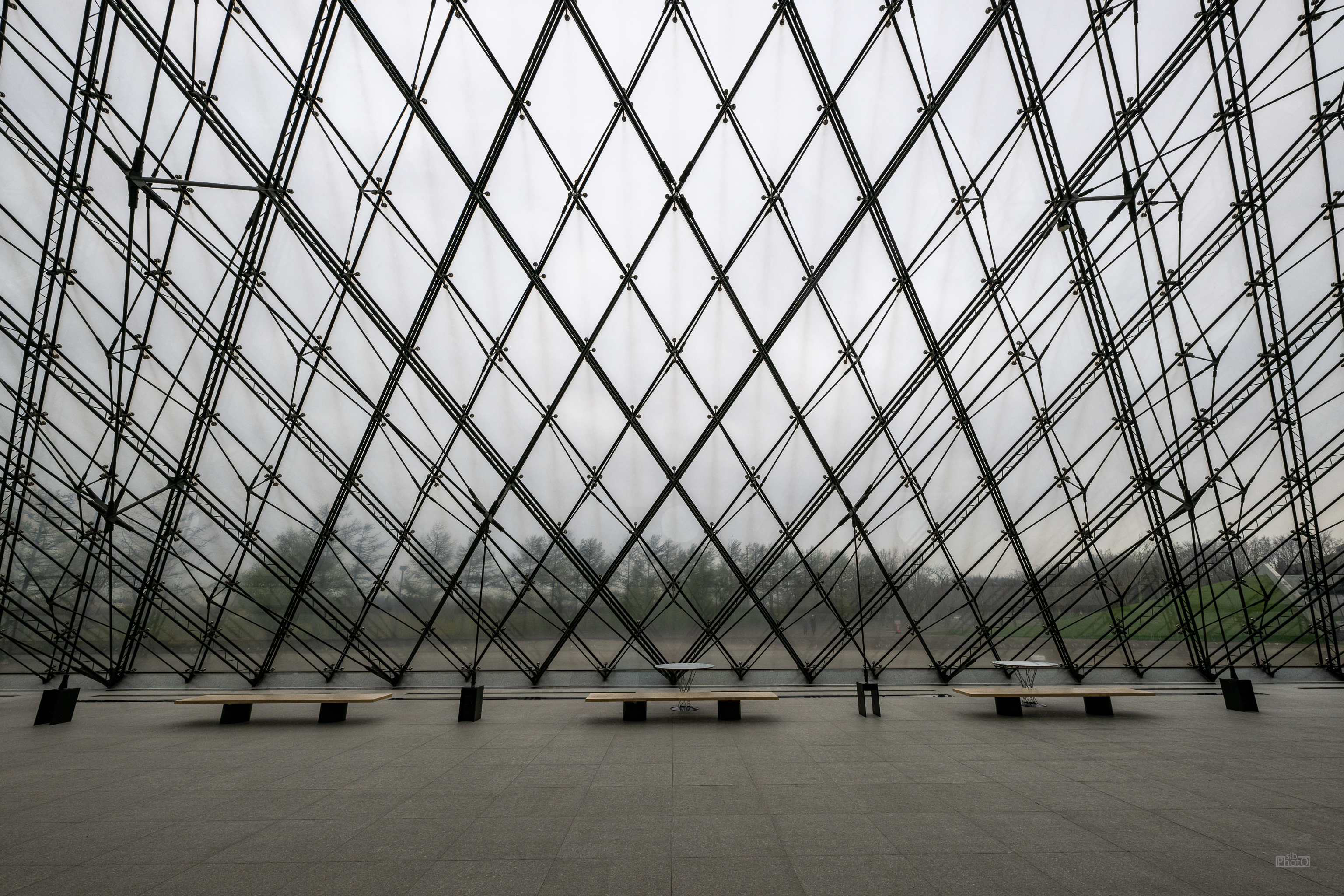
Modern buildings provided cleaner lines. At Moerenuma Park in Sapporo, the Glass Pyramid framed the flat grey weather outside with steel and glass. The overcast sky reduced the scene to geometry and a narrow range of tones.
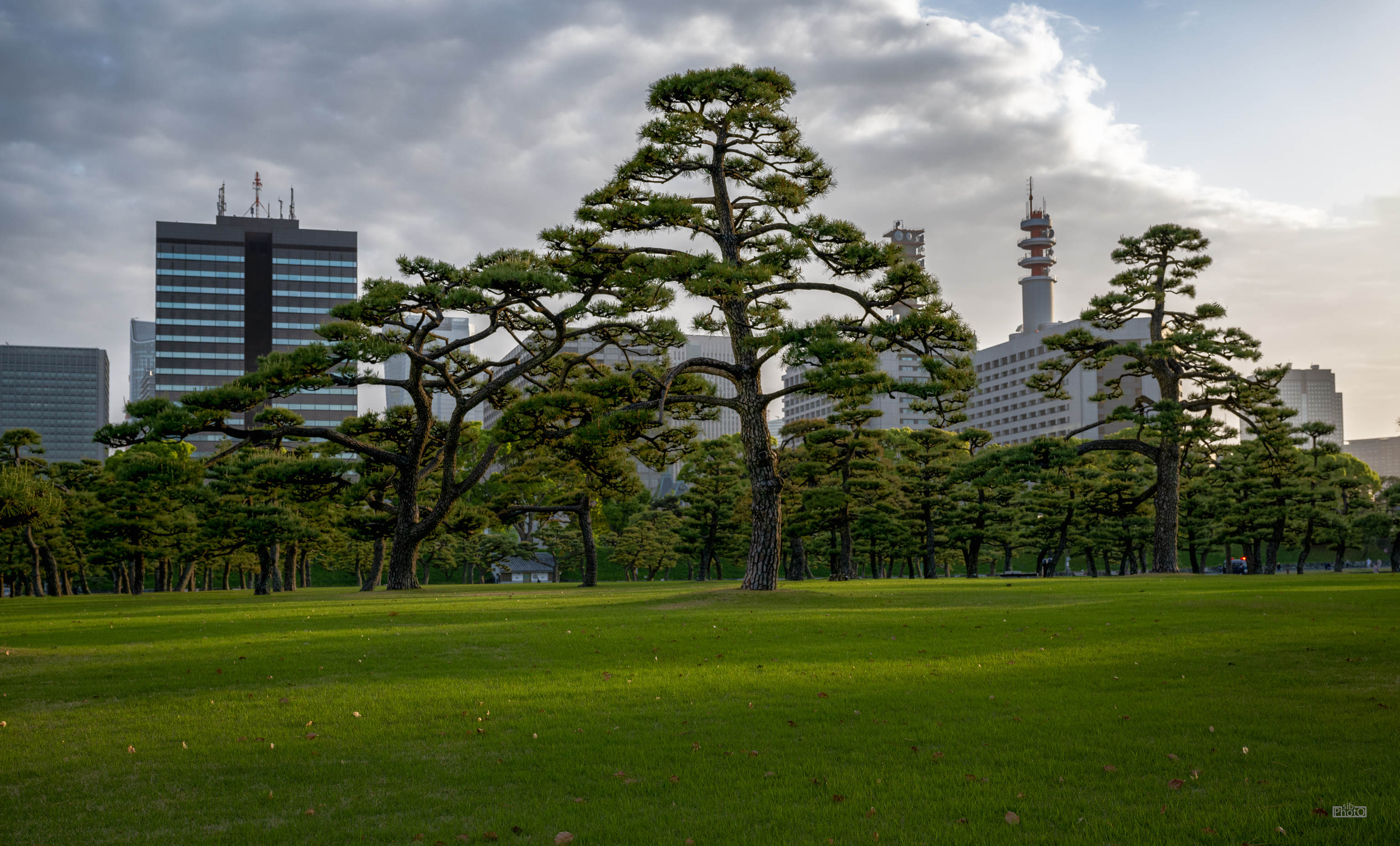
On the Imperial Palace grounds in Tokyo, mature evergreens blocked most of the surrounding buildings. Moving a few steps changed whether the frame looked like a park or the center of a large city.
Sapporo and Tokyo after Dark
Sapporo was especially productive at night. Covered shopping streets stayed bright after sunset, and the roof held the shop lighting in a long, even corridor. An 85mm lens isolated people and signs without losing the repetition of the storefronts.

A nearby lane of small restaurants sat below the surrounding office towers. The contrast was physical and easy to photograph: low roofs and warm doorways at street level, with larger buildings rising around them.

There were interesting images all around at night; from mysterious signs to classic sculptures contrasting with abstract trees.
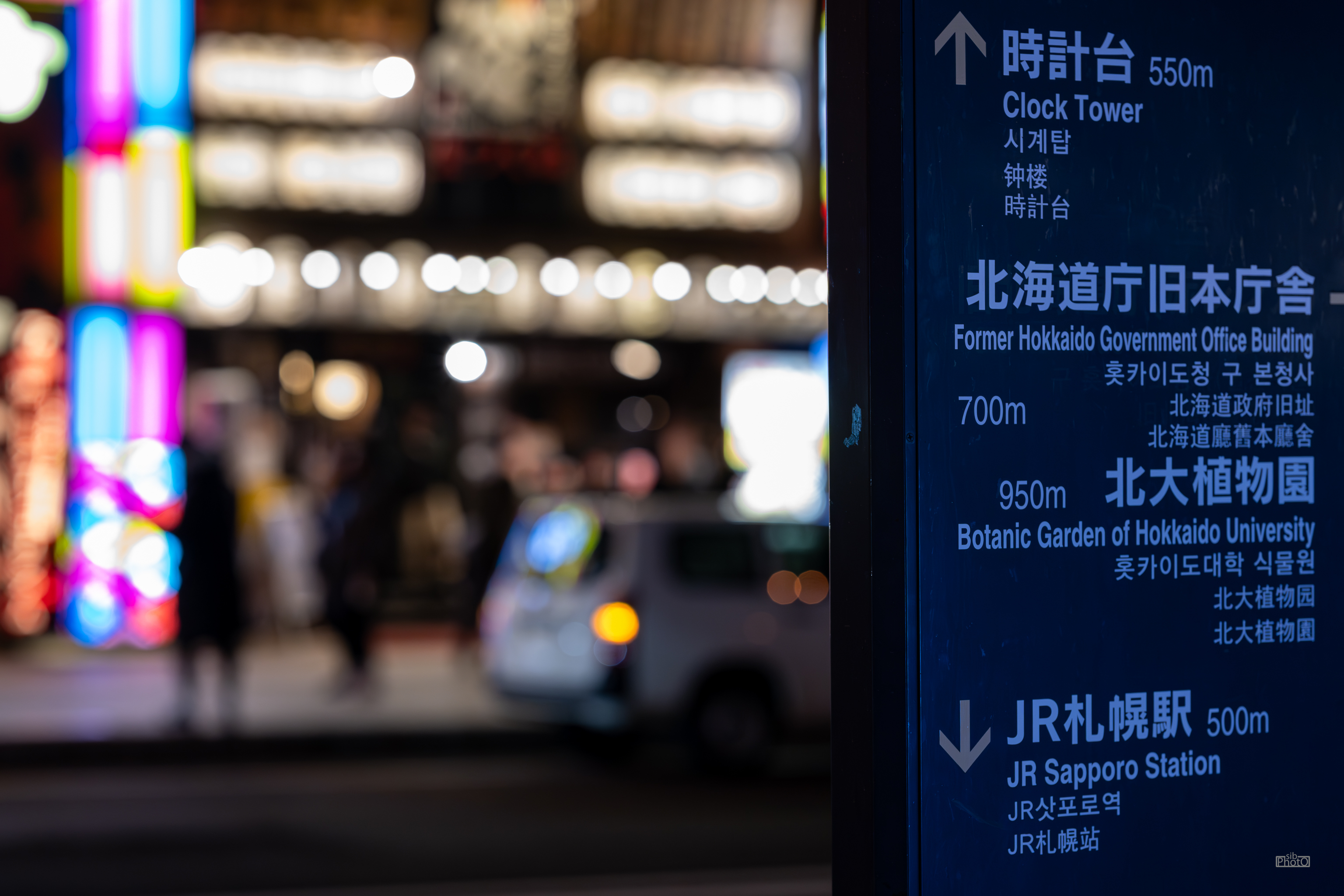

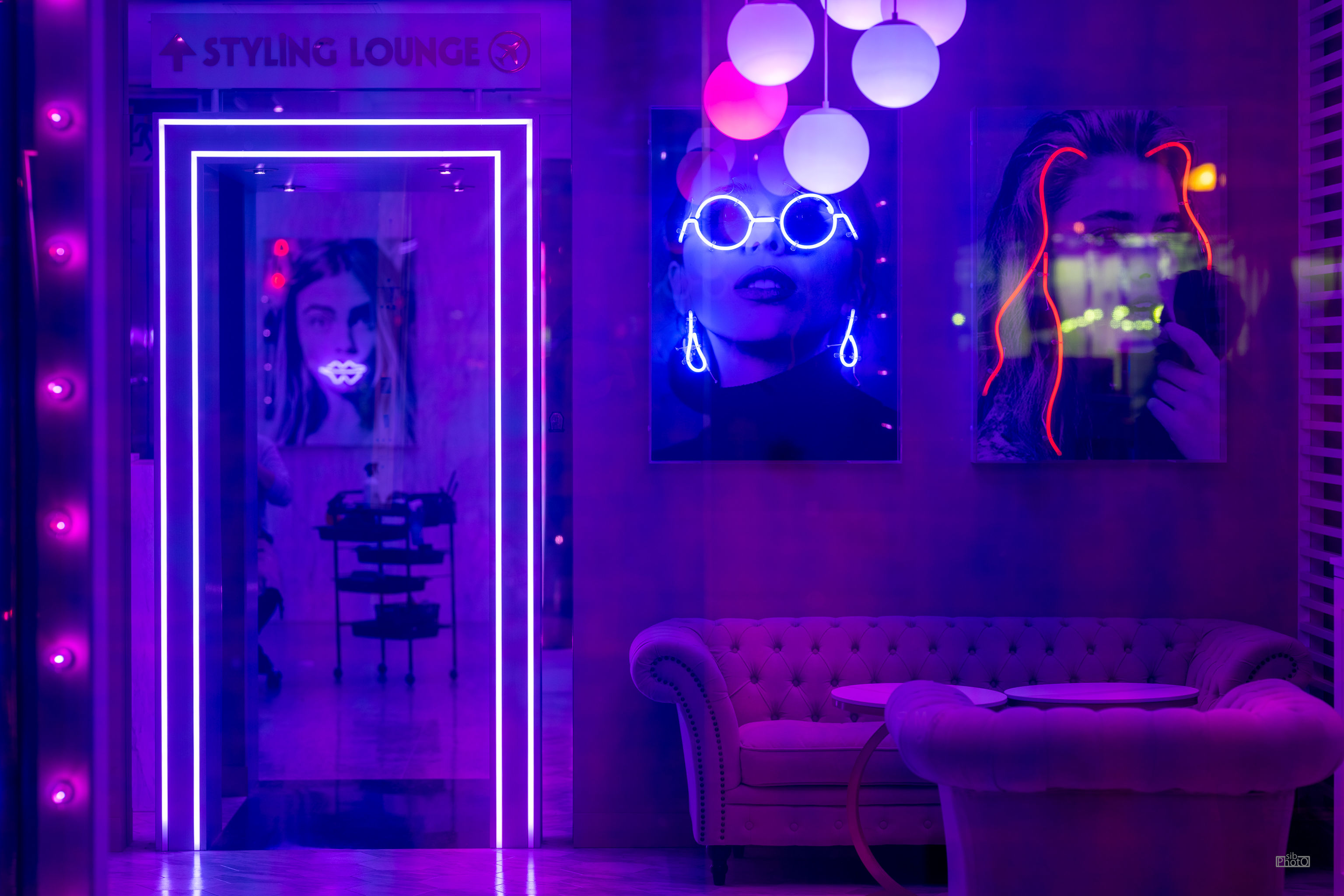
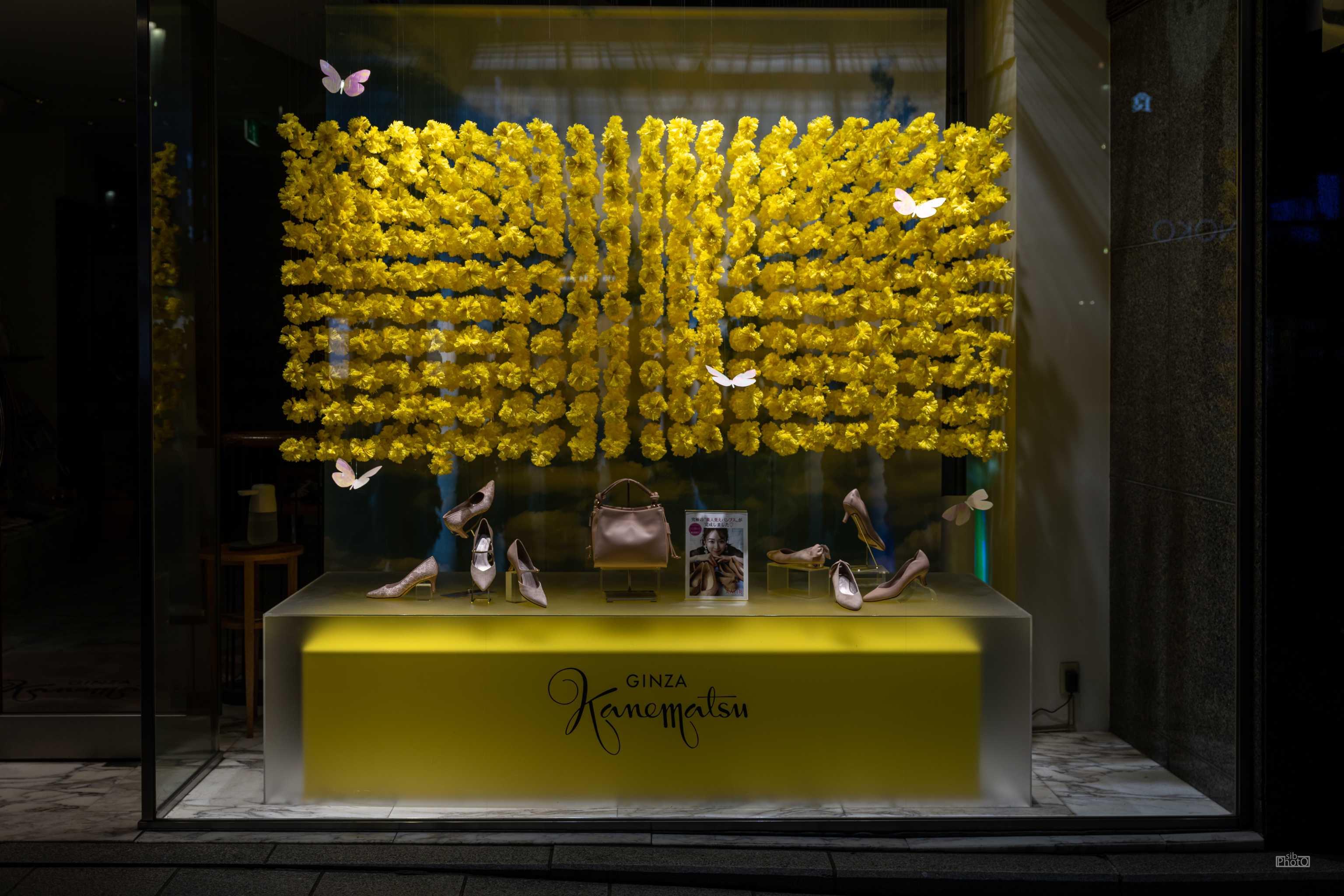
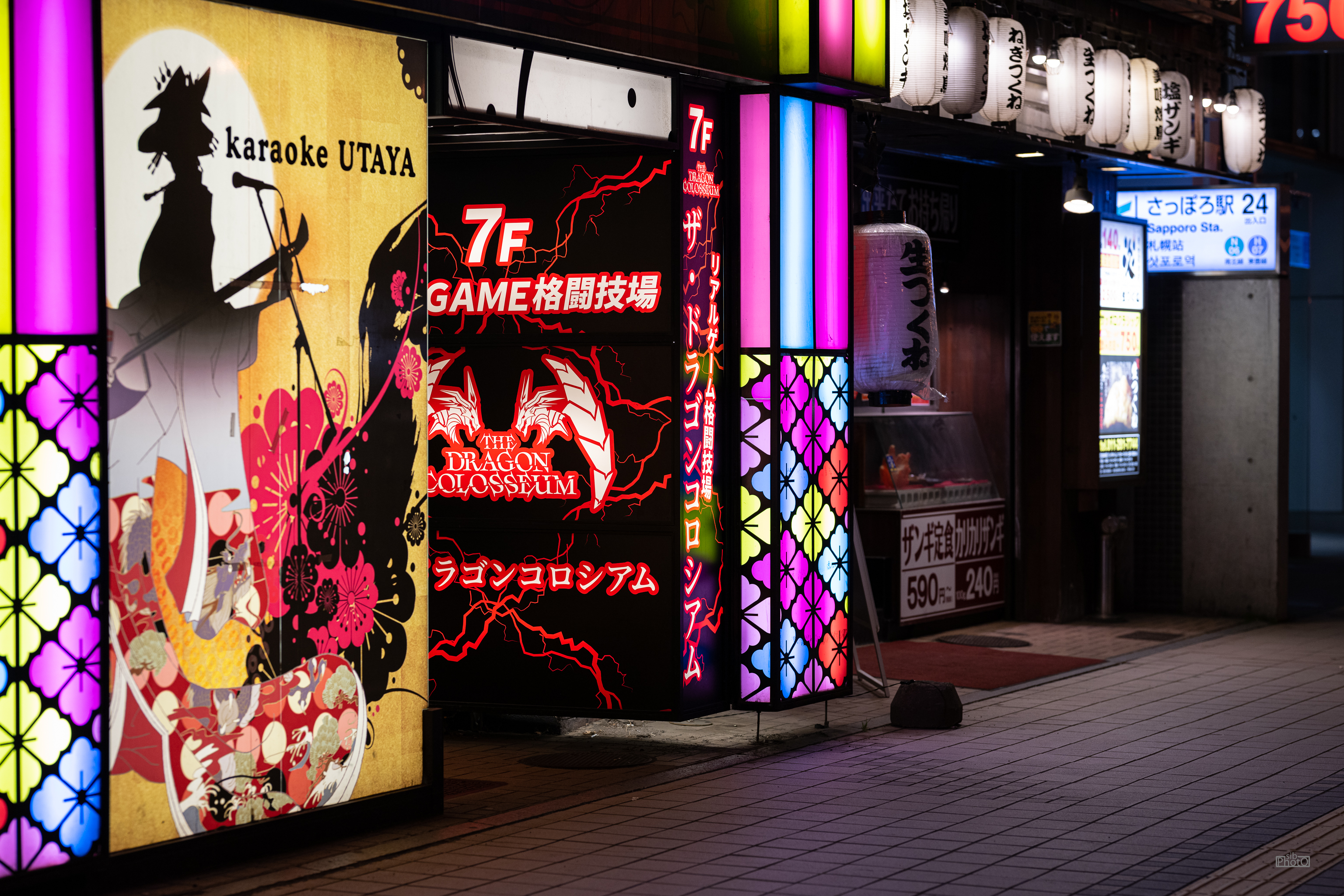
Other subjects were smaller and stranger: a Styling Lounge sign, a shoe-store window in Ginza, and the entrance to a Sapporo establishment called Dragon Colosseum. None required much explanation, although the last one raised several questions.
The trip was brief, and following the blossoms meant that we kept moving. We came home with photographs from places I had not seen on earlier visits and a longer list of places that did not fit into the schedule. That seems like a reasonable excuse to go back – although we don’t need one.


Leave a Reply